Sprint-planning guide • reviewed March 14, 2026

Sprint Planning Software for Agile Teams

Plan sprints, estimate backlog items, manage capacity, and review outcomes in one workflow instead of spreading sprint decisions across boards, side rituals, and status-chasing.

Use this page to compare sprint planning software before your team standardizes on a standalone scrum board, a general work-management tool, or another ritual that still leaves sprint decisions disconnected from the delivery workflow that has to carry them out.

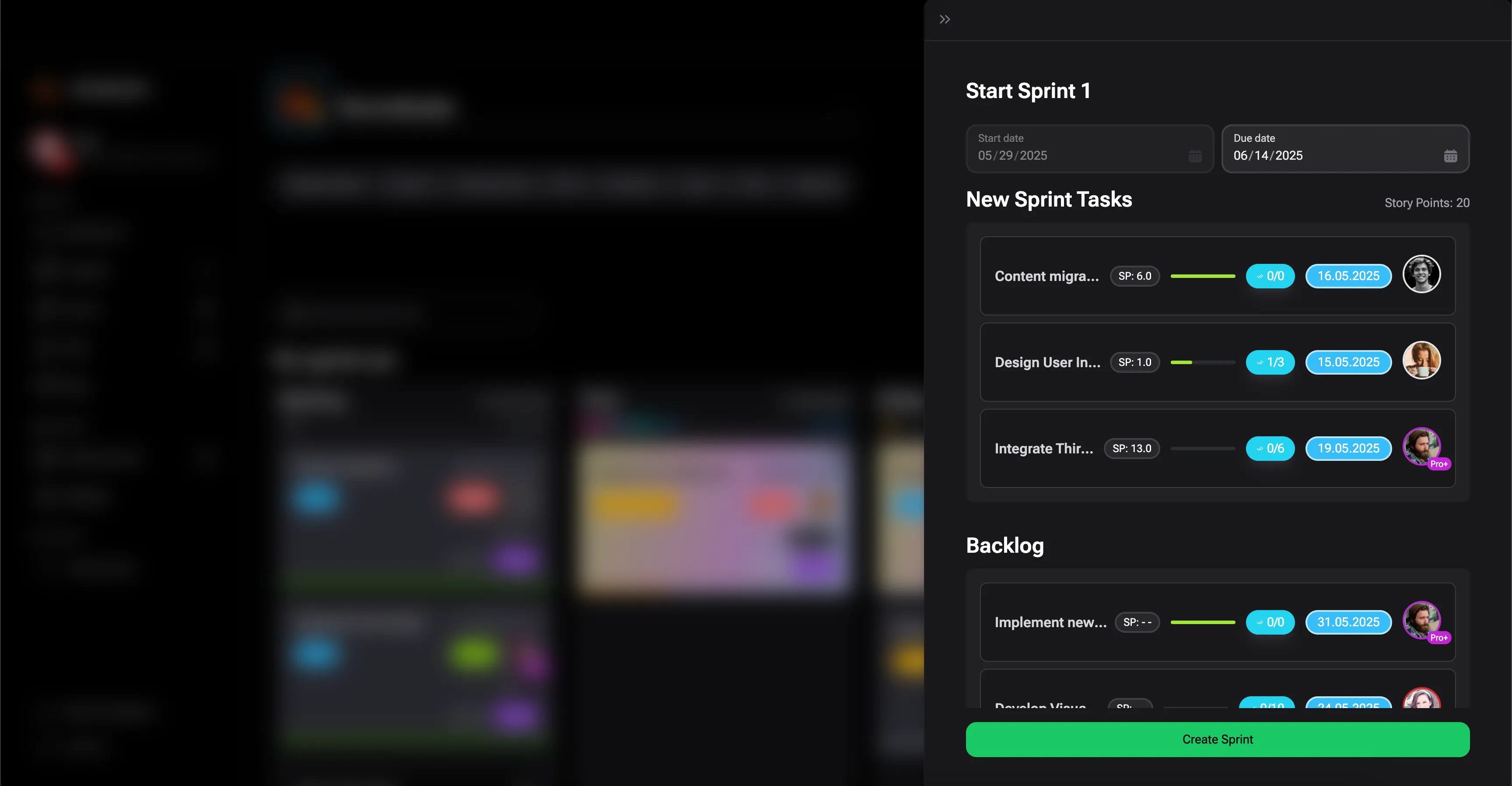
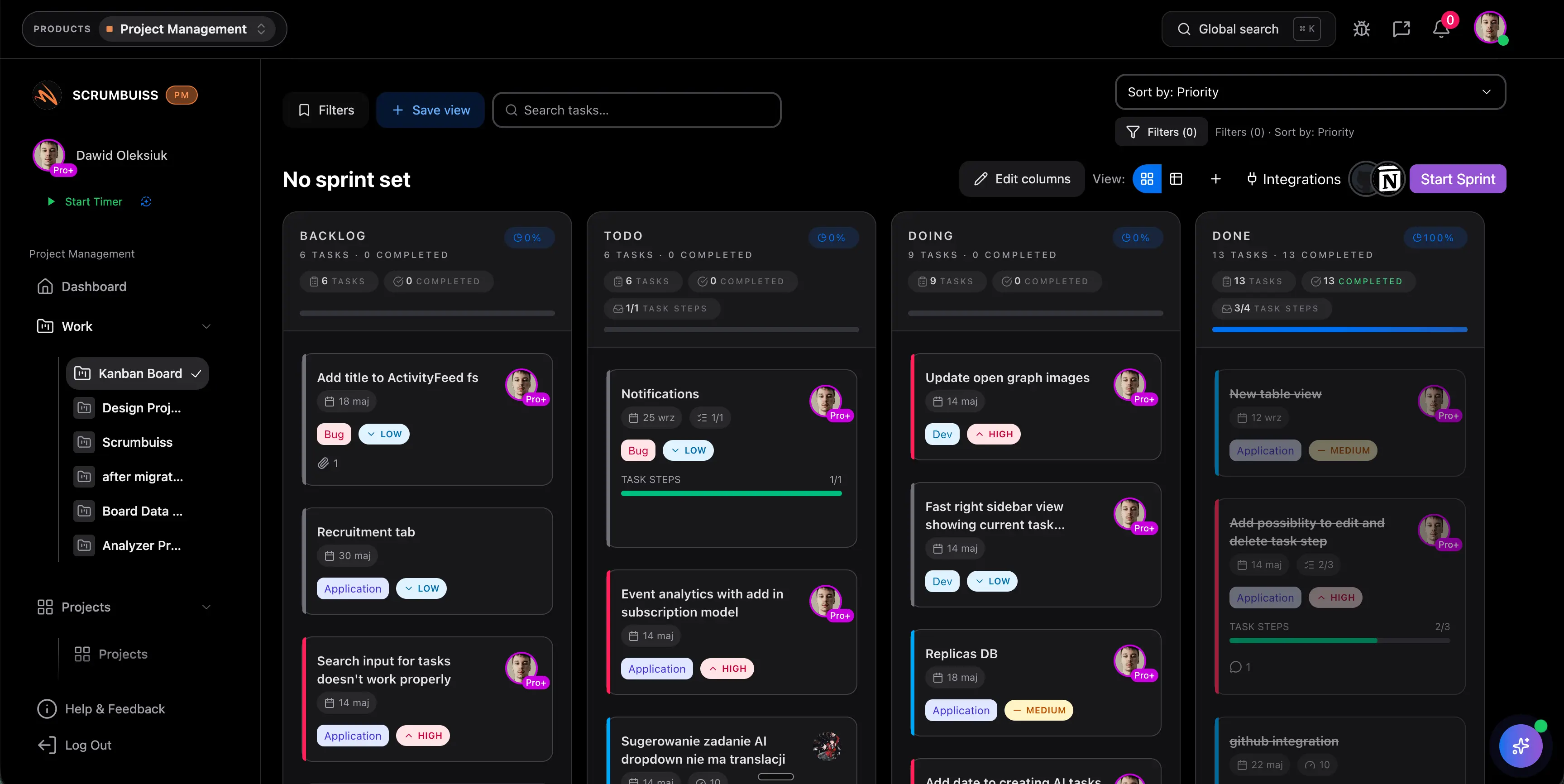
Scrumbuiss sprint planning overview

How we reviewed sprint planning software

Reviewed on March 14, 2026. This page compares one buying question: which tools help agile teams plan the next sprint with enough backlog, estimation, workload, and delivery context that the commitment still makes sense once execution starts.

  • Scrumbuiss references come from the live pricing page, the Project Delivery product page, the Software teams workflow, the Planning Poker solution page, the Workload Capacity solution page, the sprint planning template, and the Jira comparison page in this site.
  • Competitor references come from the official sprint-planning or agile-workflow pages published by Atlassian, ClickUp, Zoho, and Asana.
  • The goal is not to compare board cosmetics. It is to help teams decide whether sprint planning should live in a broader delivery operating layer or inside a more board-first or issue-first workflow.

When Scrumbuiss is a fit

The right decision depends less on one board view and more on whether sprint planning stays close enough to backlog context, capacity, and delivery follow-through that the commitment holds up during execution.

Strong fit for Scrumbuiss

Best when sprint planning should stay tightly connected to backlog context, estimation, workload review, dependencies, and stakeholder-readable delivery updates.

  • The team wants sprint commitments to reflect more than a single board column and a rough point estimate.
  • Sprint planning depends on shared visibility into capacity, blockers, and cross-team coordination before work starts.
  • Engineering, product, and delivery leads all need a readable version of the sprint plan once execution is underway.

Worth piloting carefully

A live pilot is useful when the team already runs sprints somewhere, but planning, estimation, and follow-through still get reconstructed across separate tools.

  • You can test one real refinement or sprint-planning cycle with active backlog items and current team capacity.
  • The key question is whether Scrumbuiss reduces re-entry and manual status translation rather than simply moving the ceremony.
  • Validate that the same workflow helps the team plan, execute, and review the sprint with less coordination overhead.

Probably not the best fit

A more Jira-centric or board-first tool may fit better when the team only needs a sprint board and does not want planning tied to a broader delivery workflow.

  • Your main requirement is a familiar scrum board with minimal workflow change.
  • Capacity, dependencies, and stakeholder reporting already work well somewhere else.
  • The team values a deeply established engineering stack more than a more connected planning-to-delivery operating model.

Plan the sprint

Turn backlog review, estimation, and capacity into one planning decision

Sprint planning breaks down when the team has to piece together scope, estimates, and team availability from multiple places. The stronger workflow keeps backlog context, planning poker, workload signals, and the final commitment close enough together that the sprint starts with fewer hidden assumptions.

  • Review the live backlog, estimate work, and check capacity inside the same planning flow.
  • Keep the reasoning behind the commitment visible so scope tradeoffs are not lost after the meeting ends.
  • Avoid re-entering estimates or sprint decisions into another board just to make execution possible.
Scrumbuiss sprint planning overview with backlog, estimates, and capacity context

Run the sprint

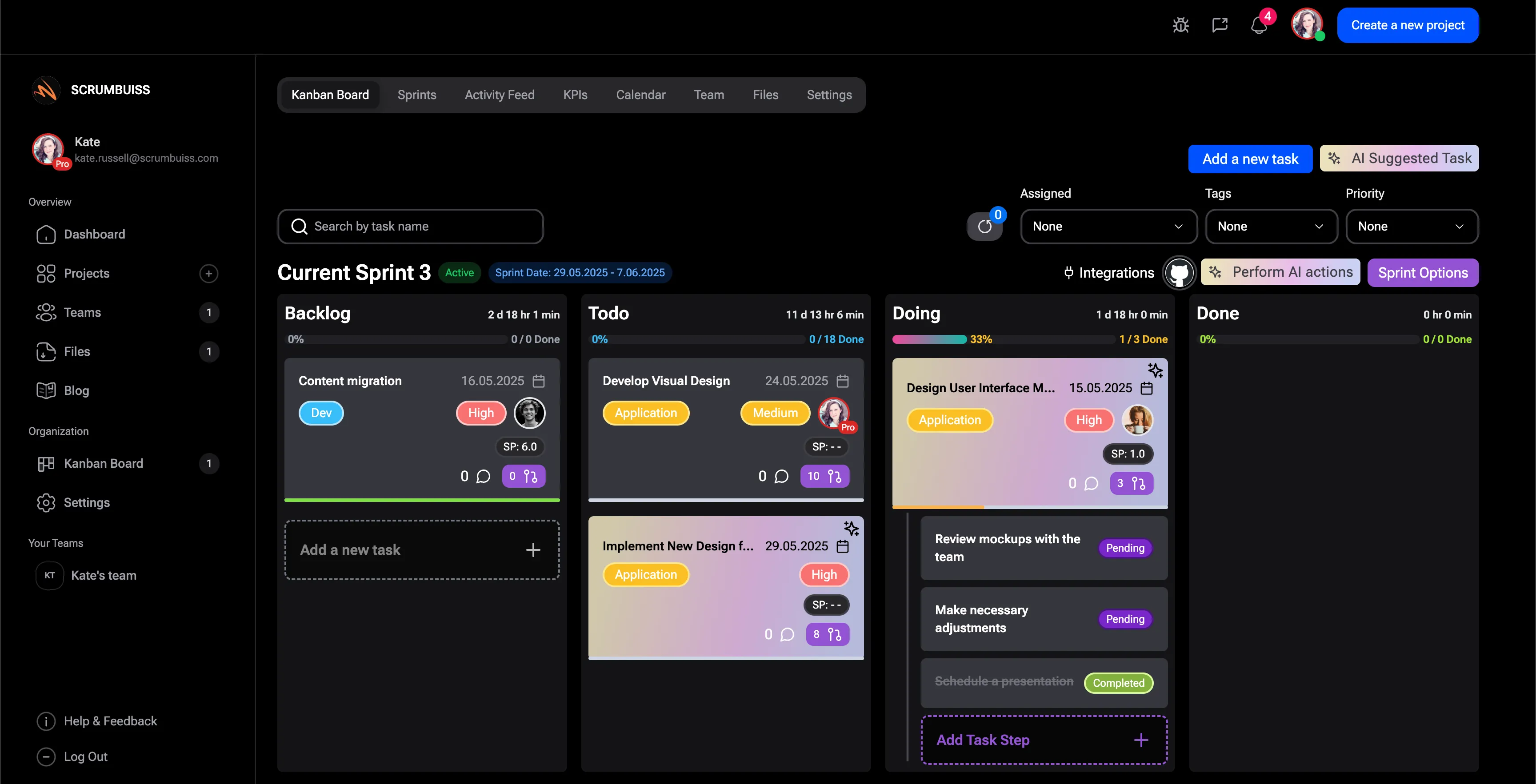
Keep execution readable once blockers, scope changes, and handoffs appear

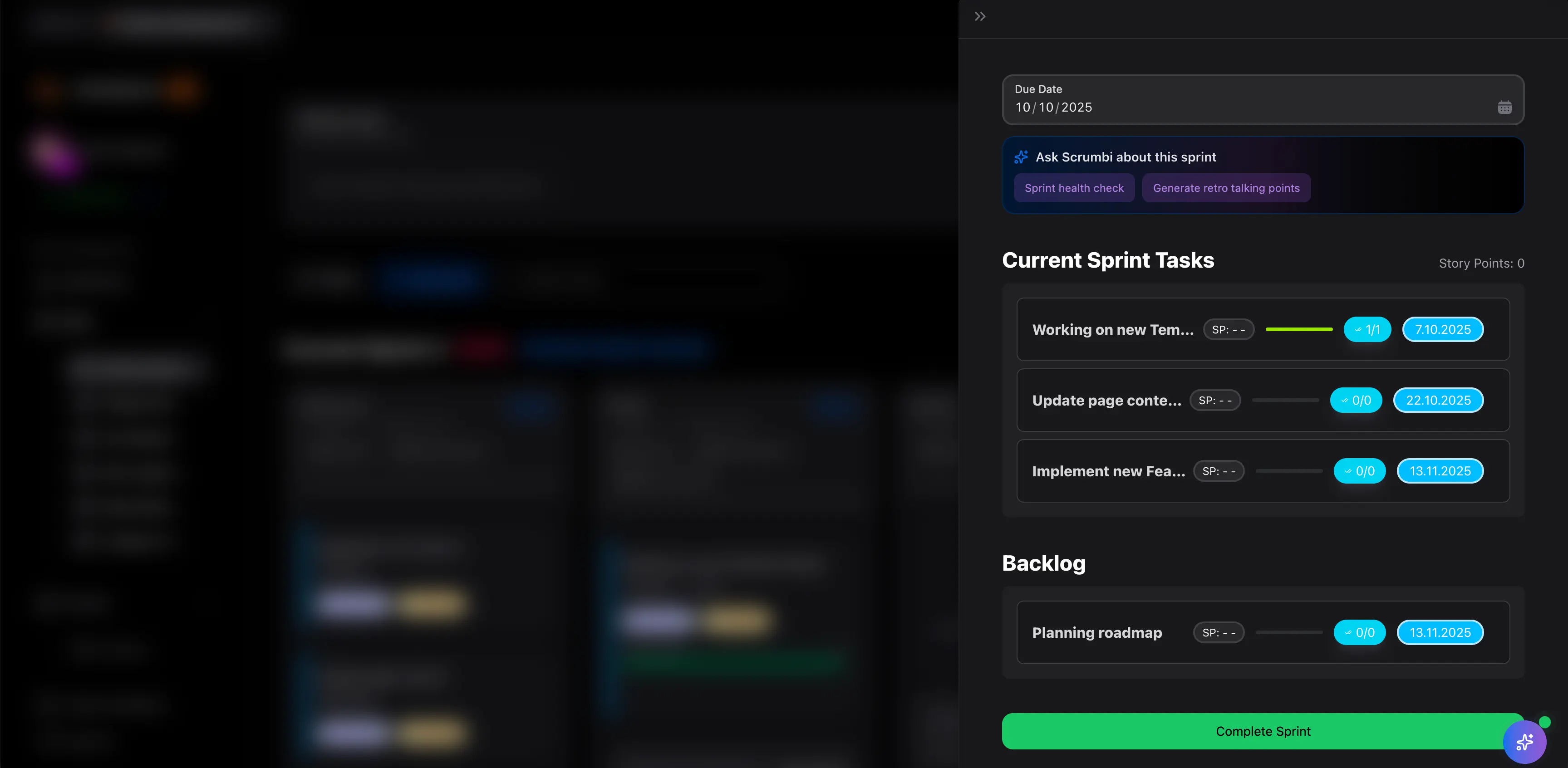
The value of sprint planning software is not proven at the end of the meeting. It is proven during execution, when work gets blocked, scope changes, or handoffs create friction. A useful sprint workflow keeps that delivery context visible instead of forcing the team to rebuild the plan from memory.

  • Carry the sprint commitment directly into daily execution without losing backlog or owner context.
  • Keep blockers, scope changes, and dependencies visible enough that the team can respond before the sprint slips.
  • Make sprint status understandable to engineering, product, and delivery leads without sending everyone into a separate system.
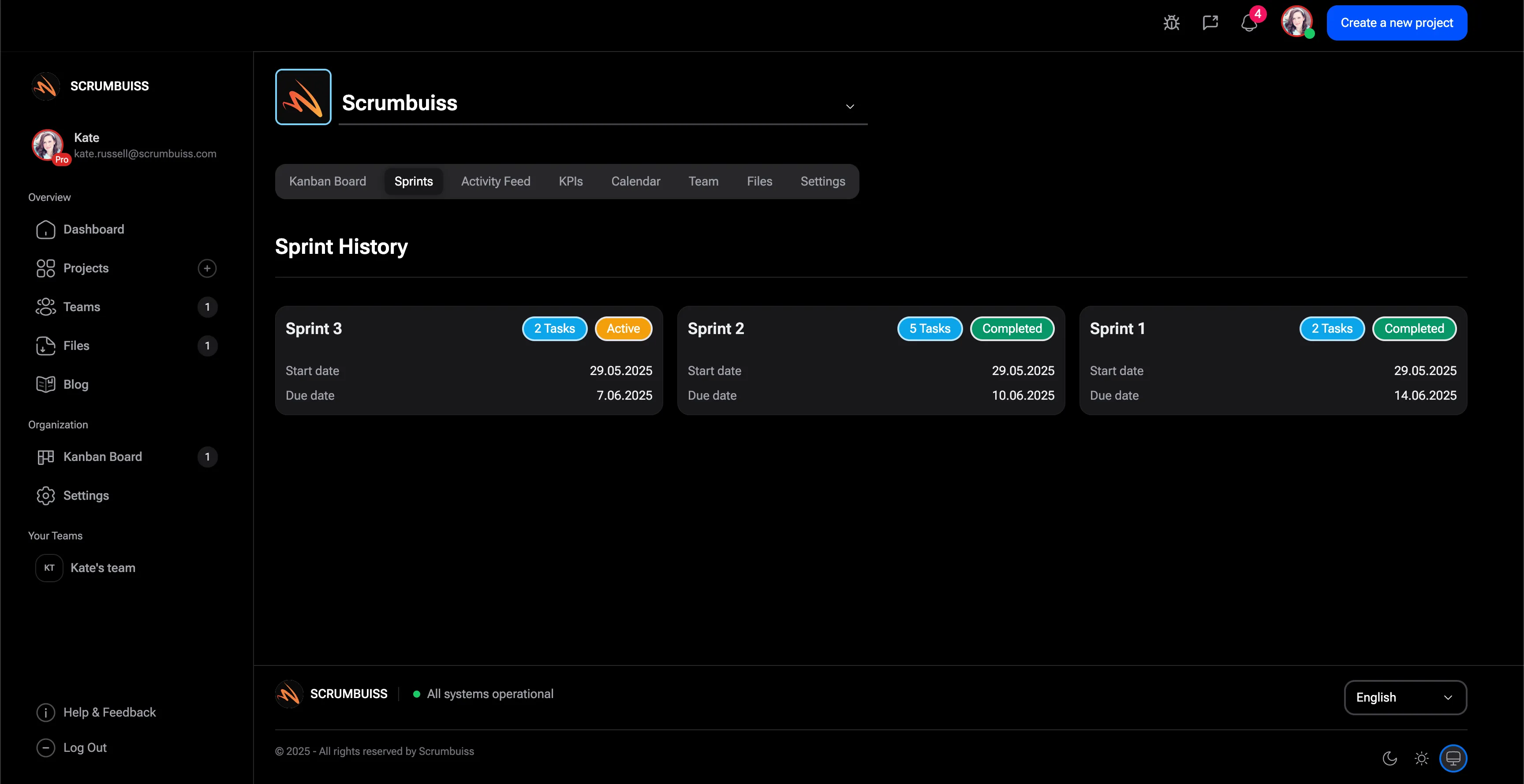
Scrumbuiss sprint execution view with blockers and delivery context

Close the loop

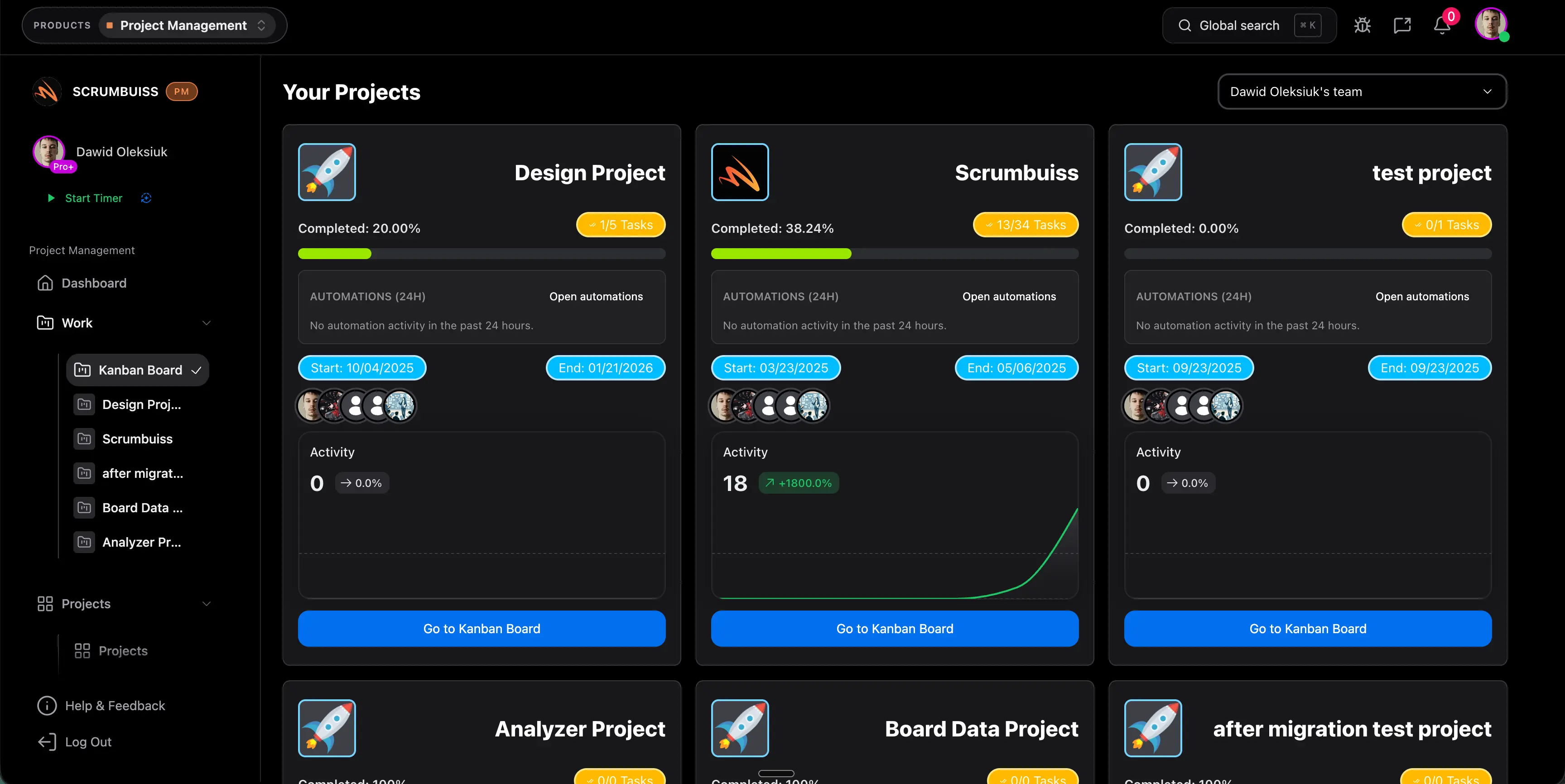
Use sprint outcomes to improve the next commitment instead of resetting every cycle

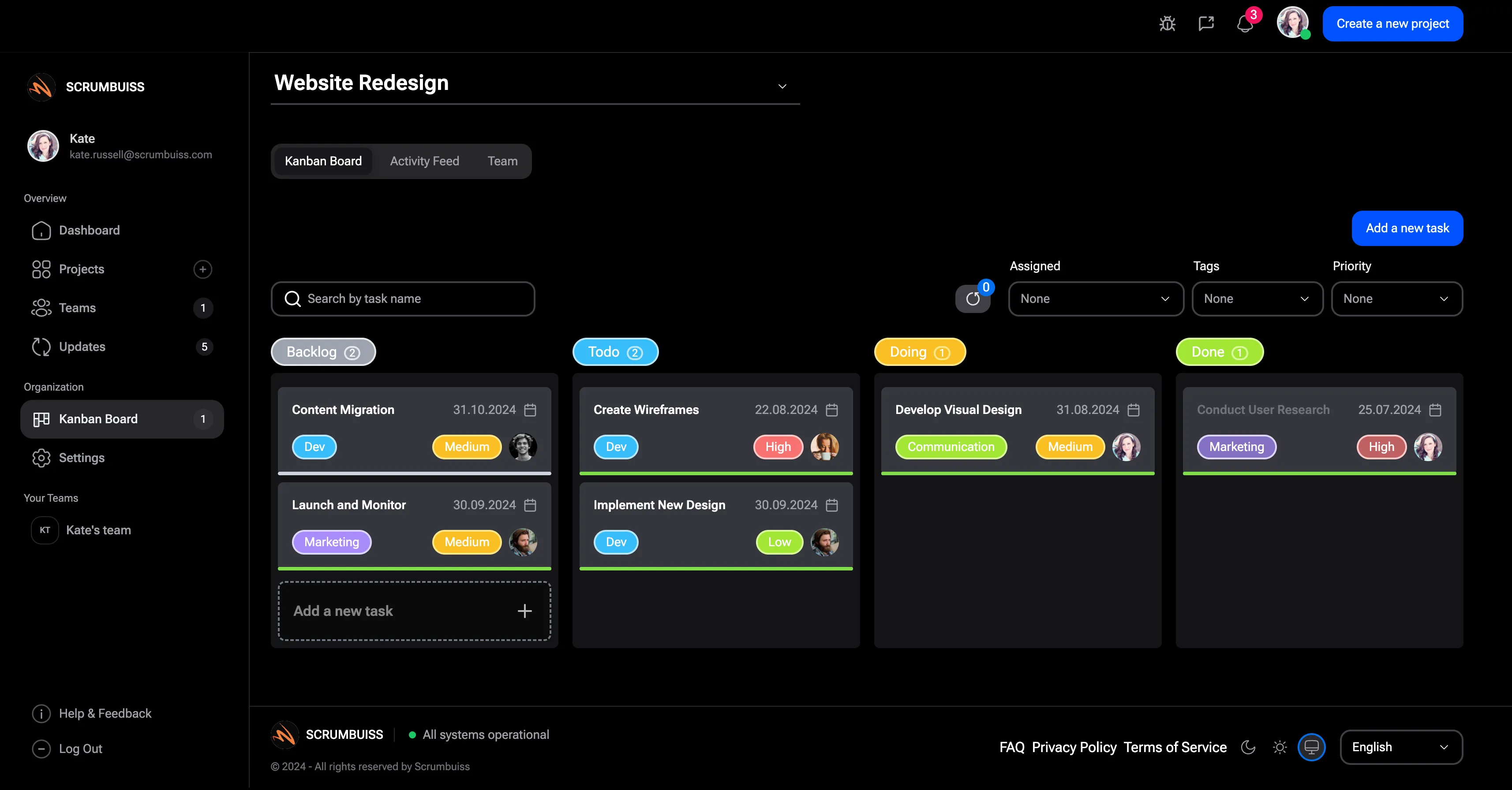
The better sprint-planning pages are not only about this week's board. They help teams learn from execution. When the team can review what actually moved, what rolled over, and where workload or estimation drift appeared, the next sprint commitment becomes more grounded.

  • Review sprint outcomes against the original commitment instead of treating each cycle as an isolated ceremony.
  • Use historical execution and workload signals to improve the next planning conversation.
  • Keep templates, estimates, and delivery reviews connected so the workflow gets stronger over time.
Scrumbuiss sprint review view used to improve the next sprint commitment

Competitor snapshot

These tools all support agile planning differently. The practical decision is whether sprint planning should live inside a broader delivery workflow or mainly inside a board-first or issue-tracking layer.

Tool Best for Sprint-planning angle Main tradeoff Why teams choose Scrumbuiss instead
Jira Scrum Boards Engineering organizations already standardized on Jira issues, scrum boards, and issue-tracker-centered sprint execution. Publicly emphasizes scrum boards for planning, tracking, and executing sprints around Jira issues inside a mature engineering ecosystem. Teams should validate how readable sprint planning, workload review, and stakeholder updates remain for people who do not want to live in the issue tracker all day. Scrumbuiss is stronger when the shortlist prioritizes sprint planning plus workload, dependencies, and delivery visibility in a more readable operating layer around the sprint itself.
ClickUp Sprints Teams that want customizable sprint workflows, automations, points, and reporting inside an all-in-one work-management platform. Publicly positions sprints around agile workflow automation, sprint points, backlog management, and customizable reporting. The workspace can become configuration-heavy if the team mainly needs a cleaner default model for planning and running sprints without extra setup drift. Scrumbuiss is stronger when teams want sprint planning connected to delivery context, capacity, and cross-functional visibility without as much workspace design overhead.
Zoho Sprints Teams that want a straightforward Scrum-oriented product for backlog, sprint, and release management without adopting a broader enterprise toolset. Publicly frames the product around agile project management, sprint planning, tracking, iteration, and execution for dynamic teams. Buyers should verify how much broader delivery planning, workload balancing, and stakeholder-ready reporting still need to happen outside the sprint tool. Scrumbuiss is stronger when sprint planning should stay close to capacity, dependencies, templates, and the surrounding delivery workflow instead of operating as a separate Scrum layer.
Asana for Engineering Cross-functional product and engineering teams that want a broader project-management workspace for planning and executing technical work. Publicly positions Asana around software development planning, tracking, and execution for engineering teams across different project views. Engineering teams should validate whether sprint-specific planning, estimation, and operational review stay structured enough once the workspace optimizes for broader collaboration. Scrumbuiss is stronger when the evaluation centers on sprint planning as an operational delivery workflow, with clearer ties to planning poker, workload review, and delivery reporting.

Review current plan availability, scrum-board limits, estimation support, and reporting features on the vendor pages before you buy. Product names are trademarks of their respective owners.

What to validate in a live pilot

The best trial is one real sprint-planning cycle, not a board demo. Use the checklist below to judge whether the workflow improves the team’s planning quality after the meeting ends.

  1. Step 1

    Pilot one active squad and one real backlog refinement or sprint-planning session.

  2. Step 2

    Use live work with current priorities, dependencies, and real team availability instead of sample stories.

  3. Step 3

    Check whether estimates, backlog context, and capacity stay together without re-entry into another system.

  4. Step 4

    Watch how the team handles blockers, scope changes, and ownership adjustments after the sprint starts.

  5. Step 5

    Run one sprint review or delivery-status conversation and confirm the plan is still readable outside engineering.

  6. Step 6

    Compare the committed sprint against actual outcomes and capture what the workflow surfaced earlier than your current process.

  7. Step 7

    Set go or no-go criteria: fewer manual updates, cleaner sprint commitments, better capacity visibility, and clearer delivery reporting.

FAQ

These are the buying and rollout questions teams usually need answered before sprint planning becomes part of the real delivery workflow.

What should teams look for in sprint planning software?

Look for software that keeps backlog context, estimation, workload visibility, and sprint execution connected. The useful version does more than host a board. It helps the team make a commitment that survives real blockers, ownership changes, and stakeholder questions after the meeting ends.

When do teams outgrow a board-only sprint workflow?

Teams usually outgrow a board-only workflow when planning depends on information the board does not explain well by itself, such as team capacity, dependencies, estimation disagreements, or stakeholder reporting. Once those decisions live in side spreadsheets, rituals, or separate tools, sprint planning becomes harder to trust.

How should workload and capacity factor into sprint planning?

Capacity should affect the sprint before the team commits, not after work is already in progress. Strong sprint planning software helps the team see who is overloaded, what tradeoffs the sprint requires, and where scope needs to change before the commitment becomes unrealistic.

Should planning poker be separate from sprint planning software?

A separate estimation tool can work, but it often creates more re-entry if the final estimate then has to be copied back into the backlog and sprint workflow. Keeping planning poker close to sprint planning is usually better when the team wants estimates to influence the actual commitment instead of becoming a disconnected ritual.

What should a live sprint-planning pilot include?

Pilot one real squad, one current backlog, and one full sprint cycle. Measure whether the team makes cleaner commitments, sees capacity constraints earlier, spends less time rebuilding status later, and can review sprint outcomes without stitching together the story from multiple tools.

How is Scrumbuiss different from Jira or ClickUp for sprint planning?

Scrumbuiss is strongest when the buying need is not only a sprint board. It keeps sprint planning closer to planning poker, workload review, dependencies, and stakeholder-readable delivery updates. Jira and ClickUp can be strong fits for teams centered on those ecosystems, but buyers should test how much planning and reporting still spill into side workflows.