Use-case evaluation hub
Reviewed March 19, 2026 4 evaluation paths 5 indexable use-case pages

Project Management Software Use Cases

The best project management software use case is not the one with the longest feature list. It is the one that matches where coordination breaks down today: sprint delivery, agency execution, operational follow-up, or the client onboarding handoff from sale to kickoff.

Reviewed on March 19, 2026. This hub is organized around real operating models already supported across Scrumbuiss products, solutions, templates, and comparisons so buyers can move from broad discovery intent into a focused pilot instead of another generic category page.

How we evaluated project management software use cases

We rebuilt this page by comparing the current Scrumbuiss workflow coverage against public use-case and team positioning from Zoho Projects, Teamwork, Clustdoc, ClickUp, and Wrike. The goal was not to produce a long industry list. The goal was to help buyers identify which operating model to evaluate first and which adjacent pages to open next.

  • We prioritized people-first content over broad vertical indexing by grouping the page around recurring workflow breakdowns: software delivery, client delivery, IT operations, and client onboarding continuity from sale to kickoff.
  • We used the existing English use-case, product, solution, template, and compare pages as the internal support layer so the hub can route buyers toward the next practical evaluation step.
  • We treated the page as a collection hub that should earn indexation on its own, with exact-match metadata, server-rendered content, clear internal links, and enough depth to justify ranking separately from the child pages.

Choose the right use-case path

Start with the row that best matches the coordination problem your team already feels every week. If more than one row sounds true, open the primary path first and use the supporting links as your second-step evaluation.

Team or workflow What is breaking down Start here What to validate

Software teams

Sprint planning, dependencies, GitHub-adjacent delivery context, and stakeholder updates still live in separate places. Project management software for software teams Validate whether sprint commitments, dependency visibility, and leadership-readable status can stay in one operating layer without rebuilding updates by hand.

Agencies

Client delivery depends on briefs, time tracking, files, workload review, and weekly reporting that are scattered across tools or spreadsheets. Project management software for agencies Validate whether kickoff, execution, utilization, file approvals, and client-ready updates become easier to run from the same workflow.

IT operations

Incidents, changes, service requests, and operational follow-up are hard to connect back to the broader delivery plan and weekly status rhythm. Project management software for IT operations Validate whether the team can keep incidents, change windows, owners, and downstream delivery work readable without defaulting to disconnected ticket updates.

Client onboarding

Deal context, agreed scope, files, and next actions disappear once a lead becomes real work, so onboarding starts with another handoff cleanup loop. Client onboarding software Validate whether contact data, deal context, intake details, files, and kickoff artifacts stay connected long enough to reduce rework between the sale and the first live delivery step.

When this use-case page is the right fit

This hub is built for workflow selection, not for browsing every possible industry. Open it when the business needs to decide which operating model deserves the first serious pilot.

Your board is no longer enough

Teams usually arrive here when the task board still works for daily status, but the surrounding planning and reporting work has already splintered into side systems.

  • Sprint planning and delivery reviews happen somewhere different from day-to-day execution.
  • Dependencies, workload, or milestones are visible only to the people maintaining the extra spreadsheet.
  • Leadership updates still need a manual translation layer every week.

Handoffs are where the workflow breaks

A tool can look capable on paper but still fail once files, approvals, briefs, or billing visibility have to survive a handoff to another person or team.

  • Client or stakeholder context is trapped in notes, chat, or email once work starts moving.
  • The latest file, approved asset, or kickoff brief is hard to find during review meetings.
  • Teams keep rebuilding the project story before every handoff, approval, or status update.

Operational follow-up keeps fragmenting delivery

Project work and operational work often share the same people and deadlines, but they are still tracked in different systems with different visibility rules.

  • Incident or change coordination affects delivery dates but does not show up cleanly in the main workflow.
  • Escalations and follow-up actions keep moving into chat or ticket tools with no broader project context.
  • The team cannot tell whether operational work is improving or damaging delivery confidence.

Customer context disappears after the sale

This becomes a use-case problem when the team is not only evaluating a CRM, but the continuity between the pipeline, the brief, and the delivery workflow.

  • Won deals still trigger manual kickoff rituals before the project starts.
  • Scope, contacts, deadlines, and promised follow-up are re-entered in another system after the handoff.
  • The first delivery meeting is spent reconstructing information the business already had.

Team workflows worth opening first

These are the strongest starting points in the current English use-case cluster. Each page already goes deeper than the hub and should be the next stop once the buyer chooses the closest operating model.

Software delivery Use case
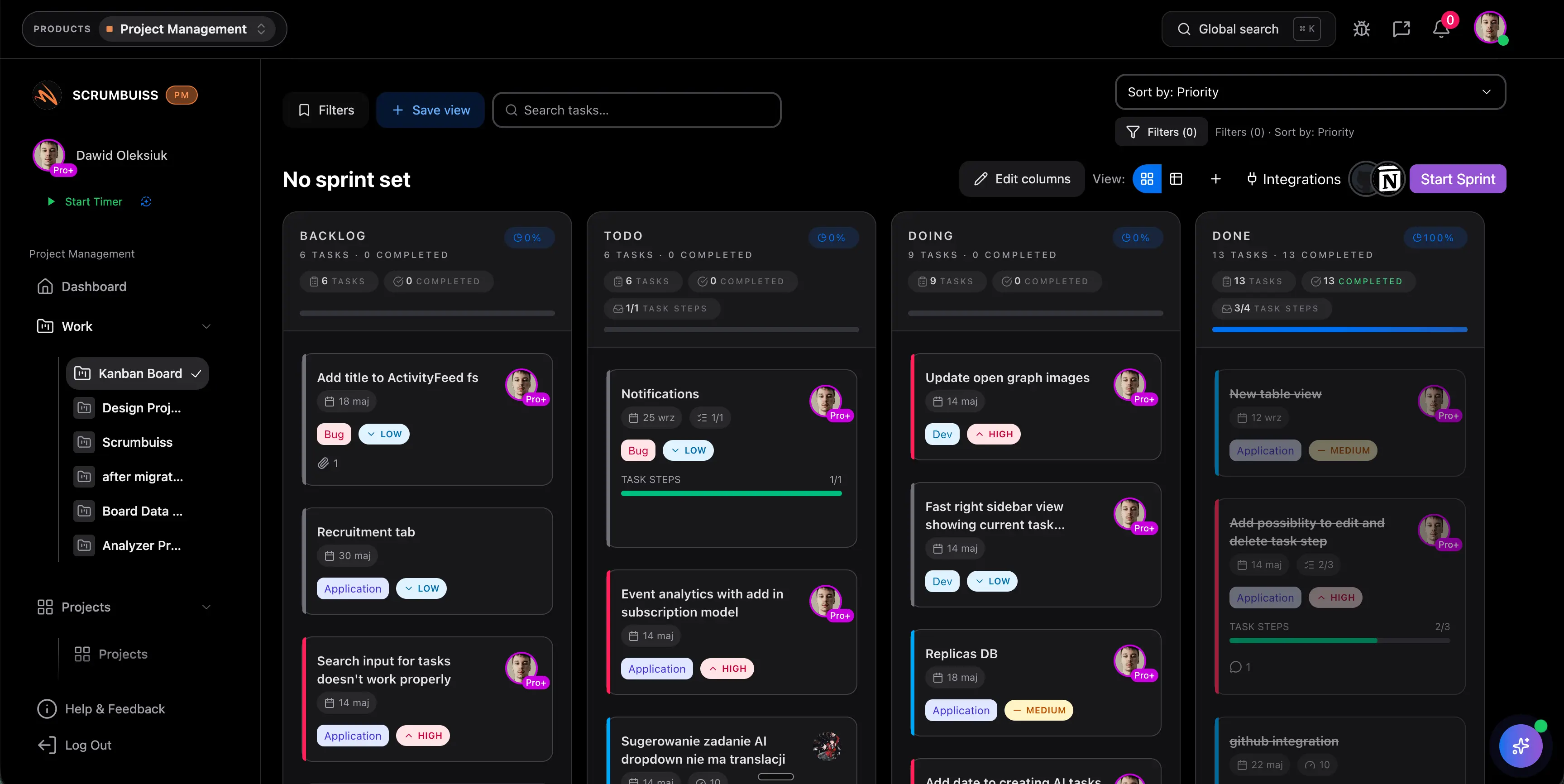
Software teams workflow screenshot

Project Management Software for Software Teams

Use this path when the shortlist depends on sprint planning, backlog execution, dependency visibility, and GitHub-connected delivery context staying readable for both engineering and leadership.

  • Sprint planning and backlog execution in one workflow
  • Dependency and timeline visibility that engineering leads can act on
  • GitHub-adjacent delivery context for handoffs and release reviews
Client delivery Use case
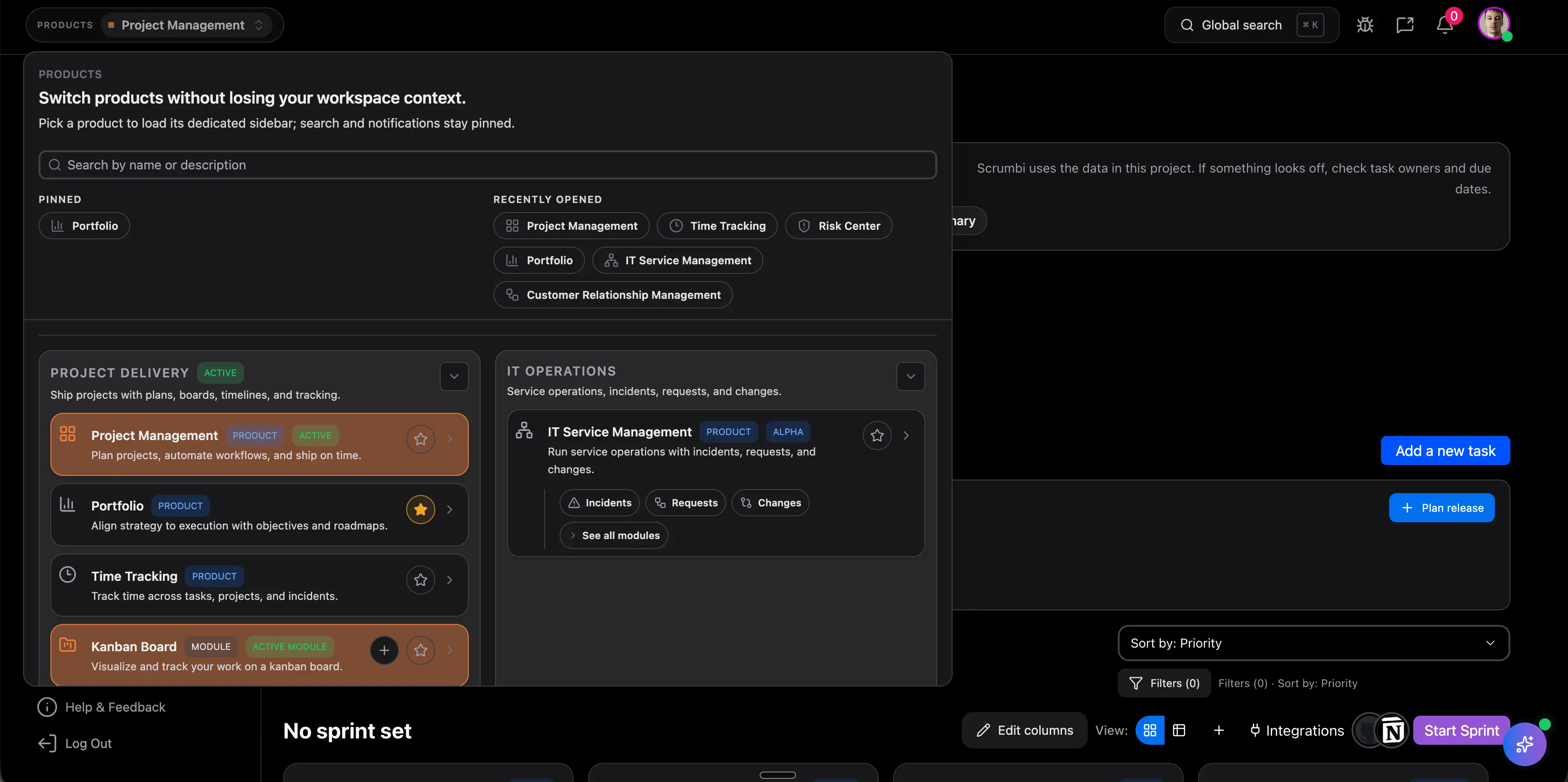
Agencies workflow screenshot

Project Management Software for Agencies

Use this path when the buyer needs one workflow for briefs, time tracking, files, workload review, and client-facing progress updates instead of a generic work-management setup.

  • Project briefs that capture scope, stakeholders, and success criteria before work starts
  • Time tracking that rolls into dashboards and account-level reporting
  • Files and shared collections tied to delivery context, not buried in separate folders
Operational coordination Use case
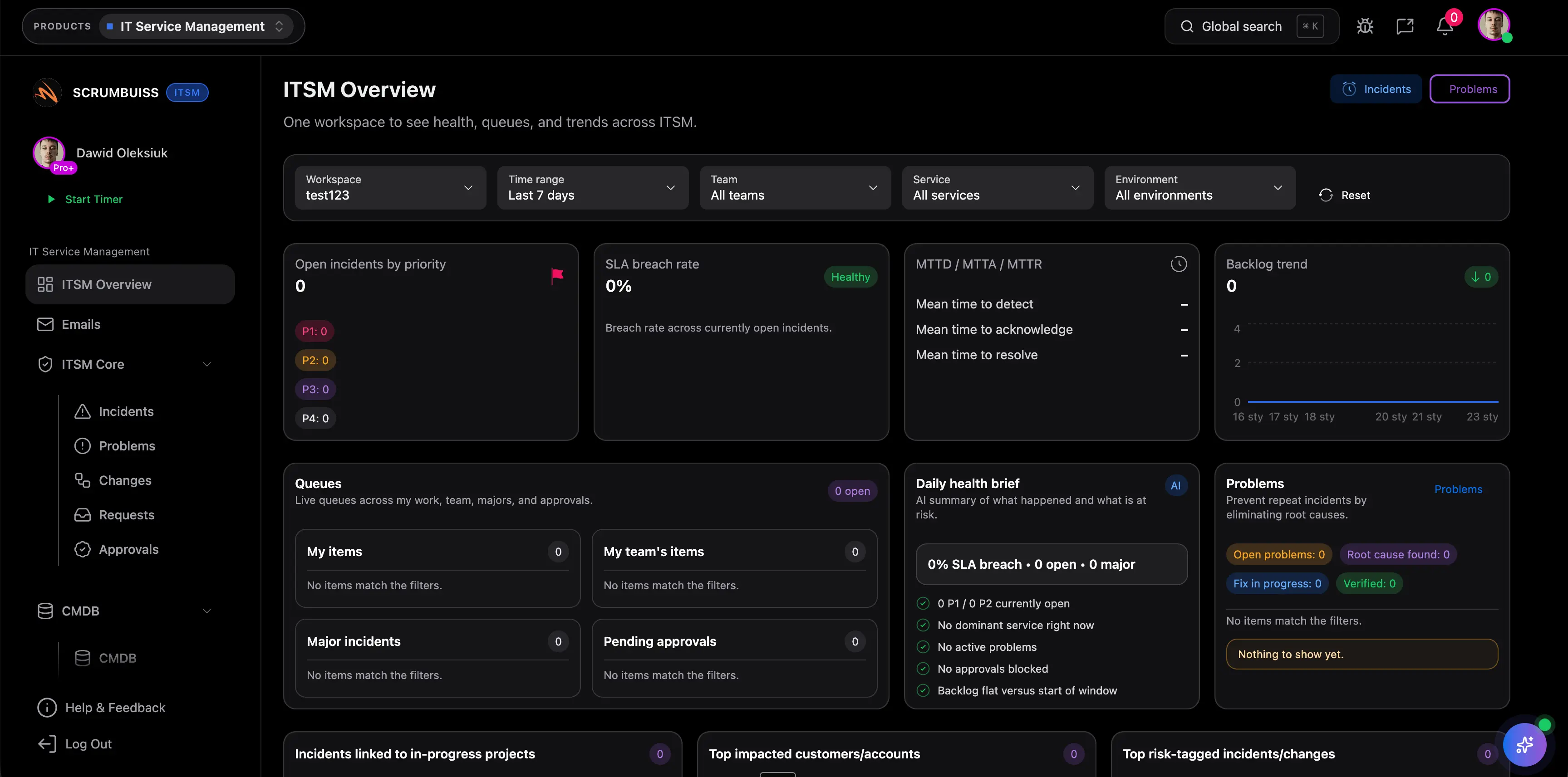
IT operations workflow screenshot

Project Management Software for IT Operations

Use this path when the real buying need includes incidents, changes, service requests, and the delivery follow-up that should stay visible after the initial ticket is created.

  • Incident coordination with clear ownership and a readable status trail
  • Change windows and scheduling that stay visible to the people affected
  • Automations for reminders, escalations, and recurring follow-up work
Client onboarding Use case
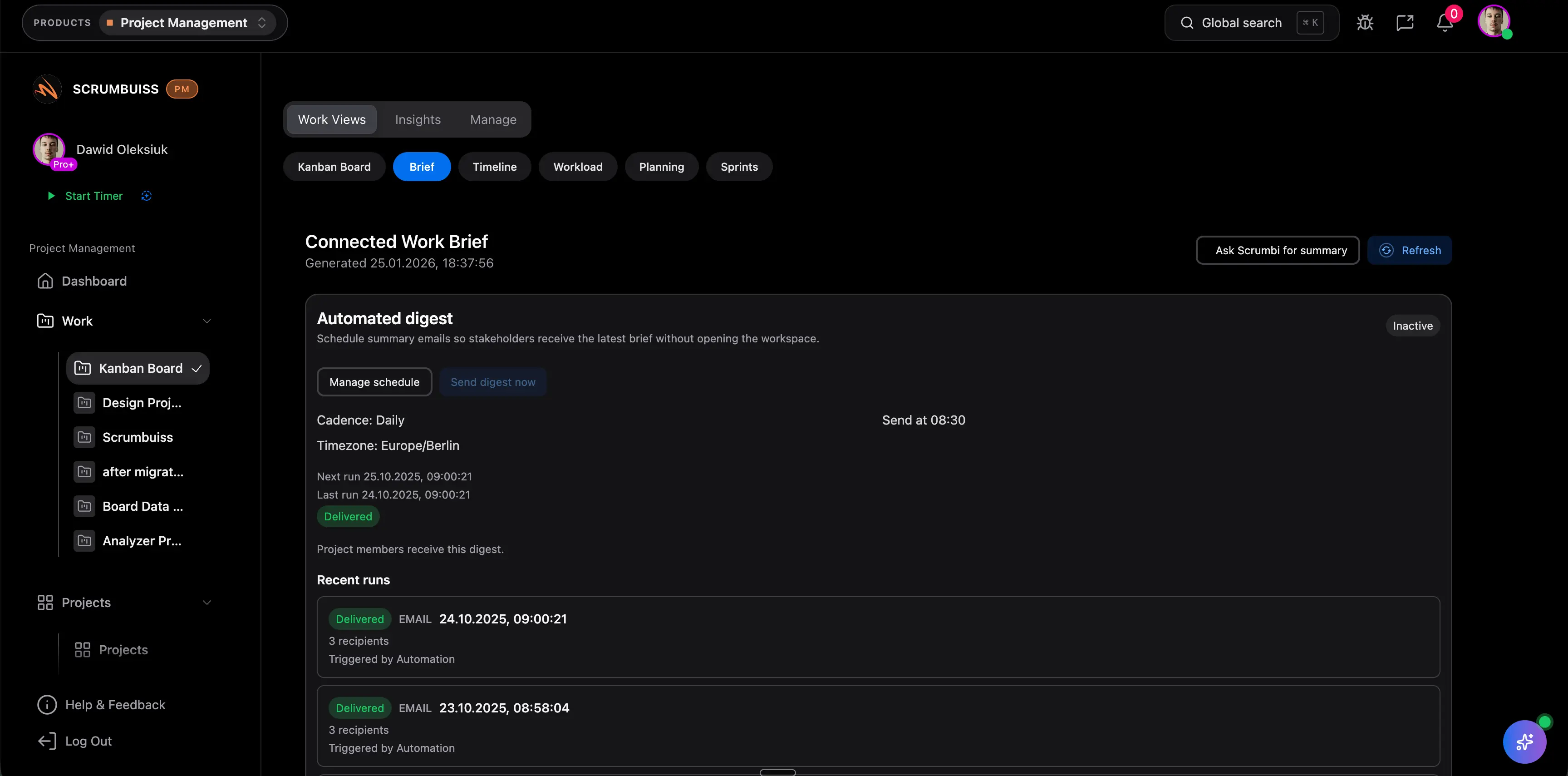
Client onboarding workflow screenshot

Client Onboarding Software for Agencies and Implementation Teams

Use this path when the shortlist depends on keeping CRM handoff, intake, briefs, files, automations, and early delivery follow-up connected from sale to kickoff.

  • Closed-won context, intake, and kickoff brief stay in one handoff path
  • Files, approvals, and first owned actions remain attached to the same onboarding record
  • Automations and reminders support follow-up before the handoff goes cold
Client onboarding continuity Product path
CRM workflow screenshot

Client onboarding workflow

Open this path when your team is less concerned with standalone CRM depth and more concerned with how deals, contacts, files, next steps, and kickoff context carry into live delivery work.

  • Keep contact, company, and scope context next to the work that follows the sale.
  • Move from intake to kickoff with forms, briefs, files, and automation support.
  • Reduce manual handoff cleanup before onboarding or client delivery starts.

Competitor snapshot

All of these vendors give buyers a legitimate entry point into project-management use cases. The useful difference is how directly each option maps a searcher from category intent into an actual workflow decision.

Vendor Best for Workflow model Main tradeoff Why Scrumbuiss is different
Scrumbuiss Teams that want a smaller, workflow-first hub connecting team scenarios to products, solutions, templates, and tool comparisons. Focused operating-model paths for software teams, agencies, IT operations, and client onboarding continuity from sale to kickoff. The hub is narrower than broad industry-list pages, so it is strongest when buyers already know the workflow problem they need to solve. Moves from discovery into concrete evaluation quickly, with adjacent pages for sprint delivery, client onboarding, IT operations, and supporting rollout assets.
Zoho Projects Buyers looking for a broad project-management use-case overview across multiple industries and departments. Large industry-by-industry list spanning IT, marketing, construction, education, events, healthcare, legal, and manufacturing. The breadth is useful, but buyers still need to translate broad industry examples into a concrete operating model and next-step pilot. Scrumbuiss is stronger when the buyer wants fewer categories and more guidance on which workflow to test first.
ClickUp Teams that want a flexible all-in-one work-management platform with broad configuration options across many team types. General project-management team positioning with strong emphasis on flexibility, customization, and one workspace for many functions. The flexibility can shift more responsibility onto the buyer to define the exact operating model, fields, and reporting conventions. Scrumbuiss is more opinionated when the team wants a clearer default path for delivery, handoff, and status readability.
Wrike Organizations comparing broader project-management use cases with an emphasis on scale, visibility, and enterprise-style coordination. Project-management use-case positioning around cross-team planning, execution, and reporting in a large collaborative workspace. The enterprise breadth is useful, but teams still need to work harder to identify the exact pilot path for a specific operating problem. Scrumbuiss is stronger when the shortlist needs a tighter route from search intent to a concrete workflow page and live pilot checklist.

Pilot checklist before you standardize on a use case

A good use-case page should help you choose what to test next. Use one live workflow, one recurring reporting moment, and one real handoff to judge whether the evaluation path is strong enough.

  1. 1 Choose one active team or service line, not a demo-only workspace.
  2. 2 Document where planning, files, updates, and handoffs live today before you recreate the workflow.
  3. 3 Pick one recurring rhythm to test, such as sprint planning, weekly client review, incident follow-up, or deal-to-kickoff handoff.
  4. 4 Define the must-keep context up front: owners, deadlines, files, scope, risks, status signals, and supporting conversations.
  5. 5 Build the smallest realistic workflow that still includes the handoff and the reporting step, not only the task board.
  6. 6 Set go or no-go criteria in advance: less manual status translation, clearer handoffs, better workload visibility, and fewer duplicate systems.
  7. 7 Run at least one full review cycle inside the pilot before you judge the page or the workflow fit.

Project management software use cases FAQ

What is a project management software use-case page supposed to help me decide?

A strong use-case page should help you identify the operating model to test first, not just list generic features. It should show where coordination breaks down, which workflow pattern fits that problem, and what adjacent pages or tools you should open next.

How is a use-case page different from a feature page or a product page?

A use-case page is team- or workflow-centered. It helps buyers decide which operating model fits. A feature page is narrower and usually covers one capability such as dashboards or forms. A product page is even narrower, focusing on the exact Scrumbuiss product workflow and whether that specific implementation fits your team.

Why does this page focus on software teams, agencies, IT operations, and client onboarding?

Those are the clearest workflow paths currently supported by the English cluster and the strongest matches for recurring search intent already connected to Scrumbuiss products, solutions, and comparison pages. A shorter, clearer hub is more useful than a generic list of every possible industry.

Can a team fit more than one use case?

Yes. Many buyers fit more than one path. A software consultancy may fit both software teams and agencies. A delivery team supporting production systems may fit both software teams and IT operations. Start with the row where coordination pain is highest, then use the supporting links to evaluate the adjacent path second.

Why is client onboarding now a dedicated use-case page?

Because client onboarding is a distinct buyer problem with its own search intent, competitor set, and evaluation criteria. Teams searching for it usually need to compare CRM handoff, intake, briefs, files, and kickoff continuity directly instead of being routed through a broader CRM page.

What should be included in a live use-case pilot?

Include one real team, one recurring review rhythm, one real handoff, and the context that usually gets lost along the way. The pilot should test readability during actual work, not only whether the initial setup looks clean in a demo workspace.

When should I move from this hub to a comparison page?

Move to a comparison page once you know the workflow path and now need a tool-to-tool decision. The hub chooses the operating model first. The comparison page helps you evaluate tradeoffs between vendors once that model is clear.

Unlock Agile Success
Get started or contact us today!