Notion integration guide • reviewed 2026-03-15

Best Data Connectors for Project Management Tools With Notion

Bring Notion pages, databases, and pre built project context into planning, briefs, delivery reviews, and stakeholder reporting so team members can keep documentation close to the work without forcing the entire operating workflow inside Notion itself.

Use this page to compare point integrations, search-and-preview integrations, and docs-plus-delivery workflows before you standardize on a broader project-management setup.

This page is for teams that already rely on Notion for documentation or databases and need the delivery workflow around that context to stay readable.

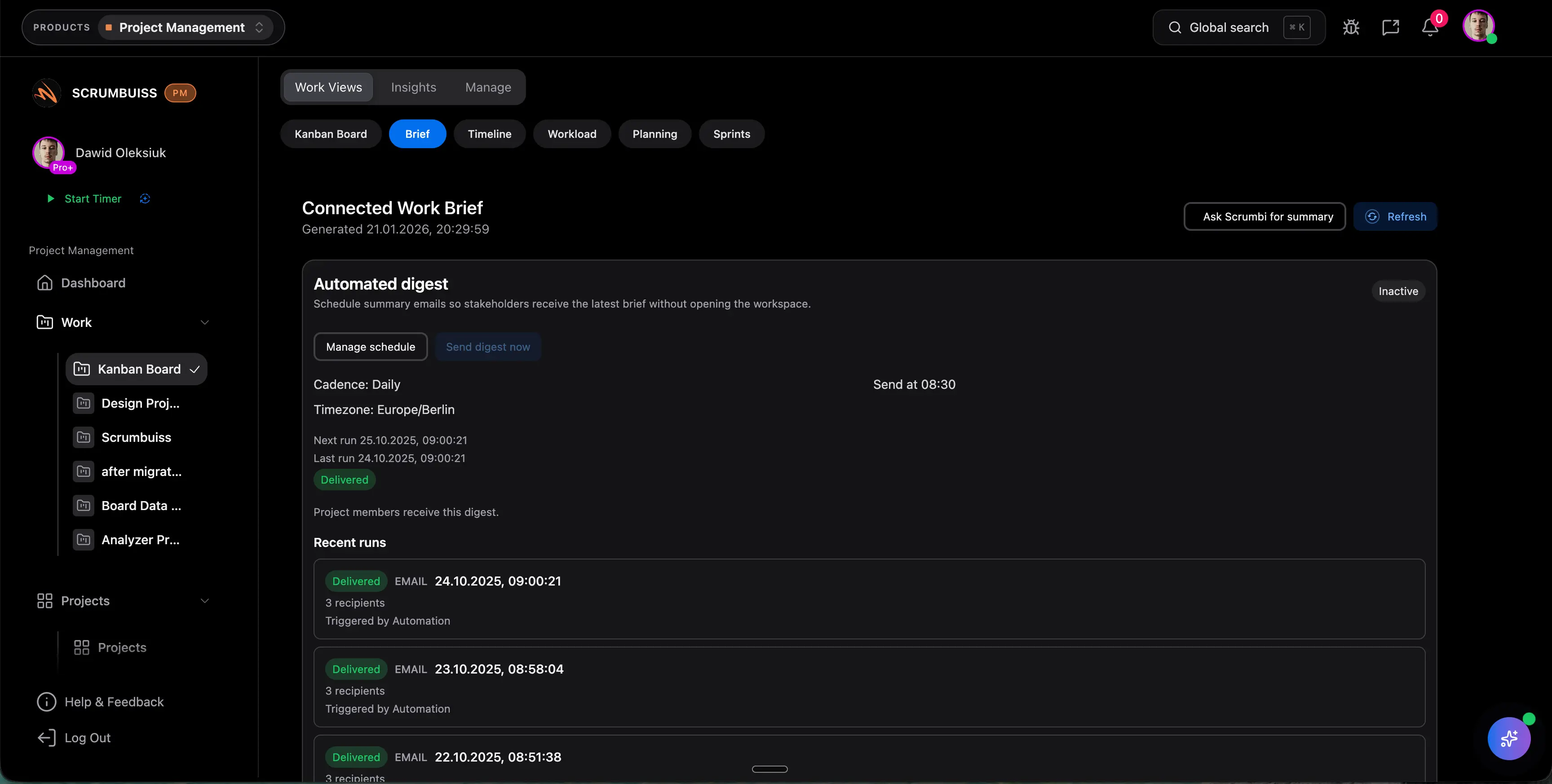
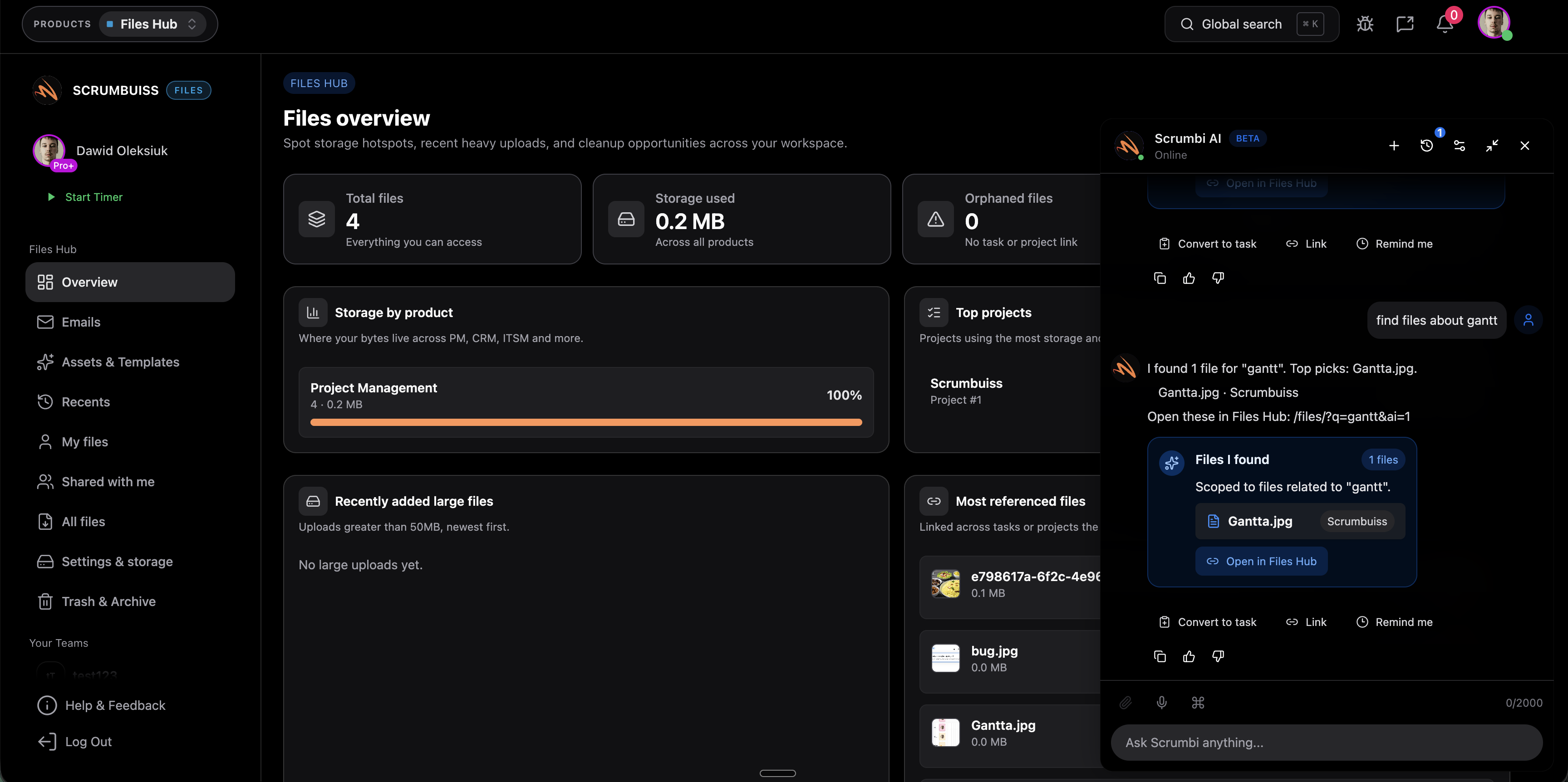
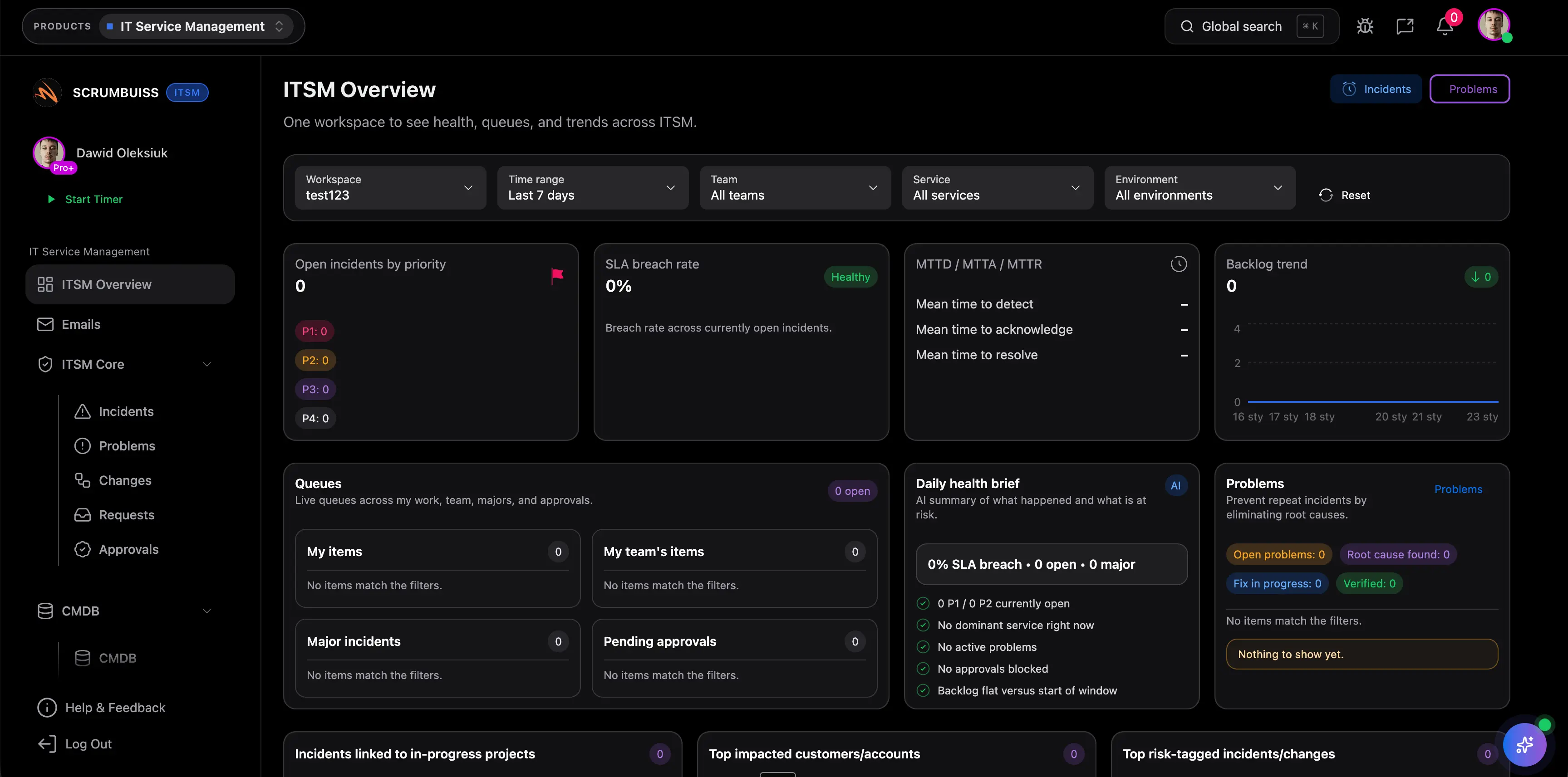
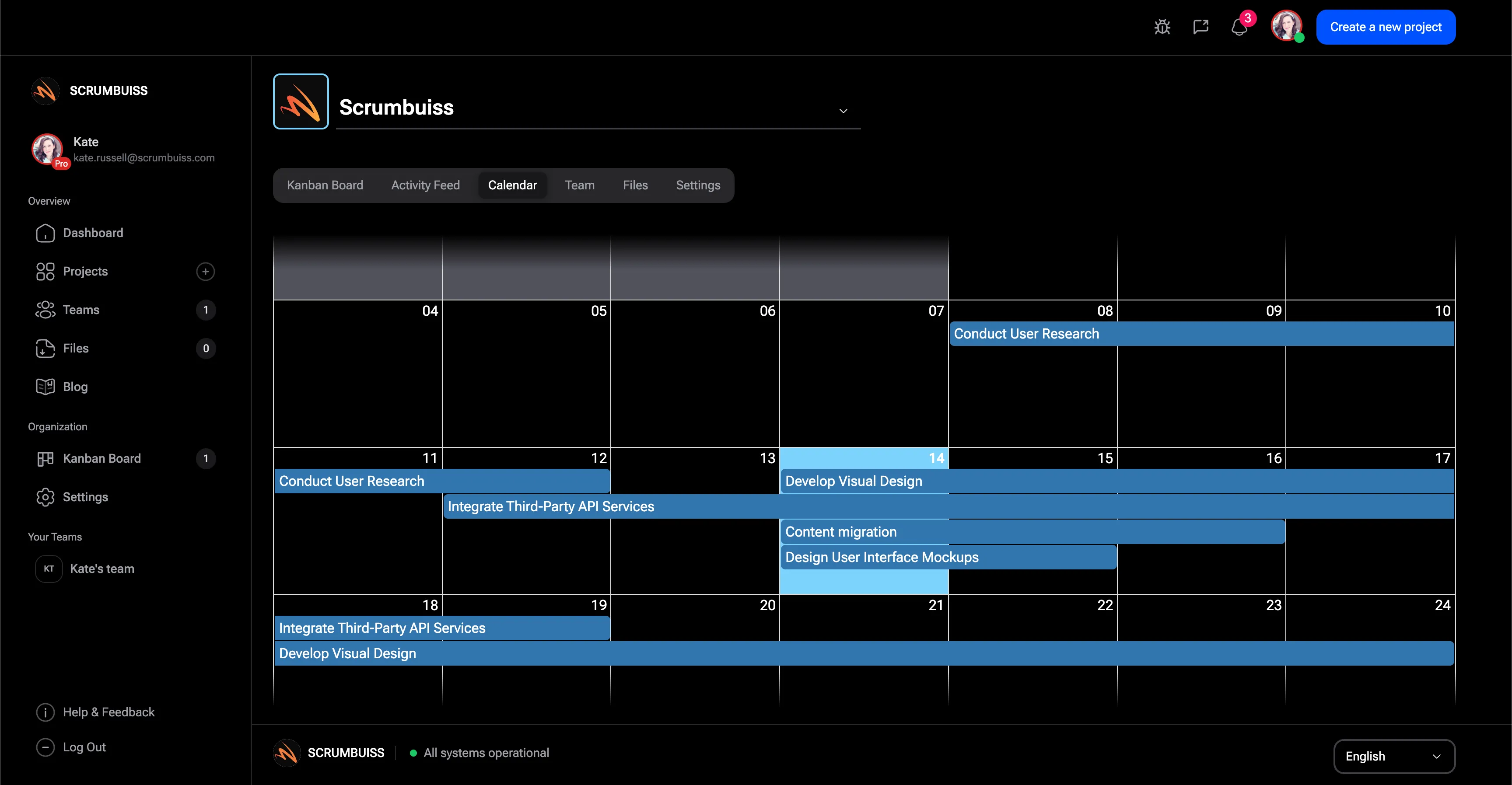
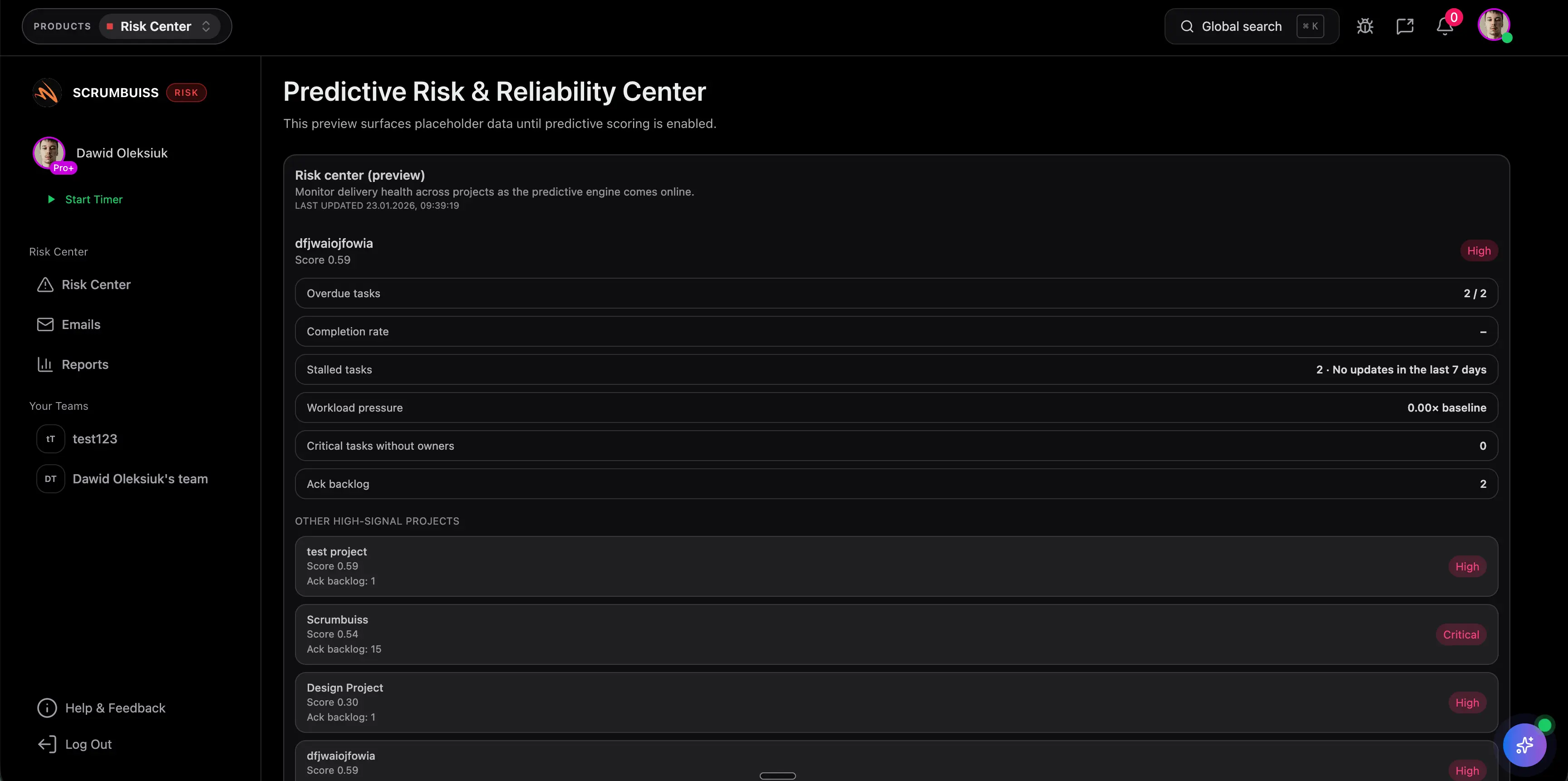
Scrumbuiss project brief and Notion-connected context overview

How we reviewed Notion-connected project management tools

Reviewed on March 15, 2026. This page compares one workflow: how teams use Notion as documentation and structured context while keeping project delivery, visibility, and rollout discipline readable for the people who still need to execute and report on the work.

  • Scrumbuiss references come from the live pricing page plus the Project Delivery and AI Assistant product pages, the Project Brief solution page, and the Software teams workflow page in this site.
  • Competitor references come from the official Notion integration or product pages published by Asana, ClickUp, and Notion.
  • The goal is not to score every database feature. It is to help teams decide between point integration, search-and-preview integration, or keeping docs and delivery inside one broader operating layer.

When Scrumbuiss is a fit

The right decision depends less on one Notion checkbox and more on whether documentation stays useful after kickoff, planning, and stakeholder review begin.

Strong fit for Scrumbuiss

Best when Notion should remain valuable project context, but the team still needs a clearer operating layer for execution, status reviews, and cross-functional visibility.

  • Specs, briefs, SOPs, or onboarding docs already live in Notion and people still reference them every week.
  • Delivery leads need tasks, timelines, sprint views, and stakeholder reporting to stay readable outside the doc workspace.
  • The team wants linked context, not another copy-paste loop between docs and project tracking.

Worth testing carefully

Run a live pilot if Notion is already central to how your team stores knowledge, but project status still gets rebuilt manually during planning, handoff, or weekly reporting.

  • Teams already maintain useful pages and databases in Notion, but execution happens elsewhere.
  • The biggest friction is not writing docs. It is turning those docs into visible delivery context after kickoff.
  • One team can test the workflow with a real project brief, one active database, and one recurring review cycle before wider rollout.

Probably not the best fit

A simpler setup may fit better when Notion itself should remain the full workspace for docs, databases, and project tracking, or when the team only needs lightweight doc links.

  • The team wants to design the entire project-management model directly inside Notion.
  • There is little need for workload visibility, delivery governance, or stakeholder-ready reporting outside Notion.
  • Simple page links are enough and nobody needs a stronger operating layer around execution.

Delivery context

Turn Notion pages into project context instead of separate reading material

Documentation is only useful if the team can find it at the moment a decision needs to be made. A Notion-connected workflow should keep specs, meeting notes, and process pages close to the task, brief, or milestone where they matter, not buried in a second tab people forget to reopen.

  • Keep project briefs, specs, and reference docs visible from the work that depends on them.
  • Reduce the gap between where the team documents decisions and where they execute them.
  • Make it easier for delivery leads and stakeholders to understand why a decision changed without hunting through separate doc trees.
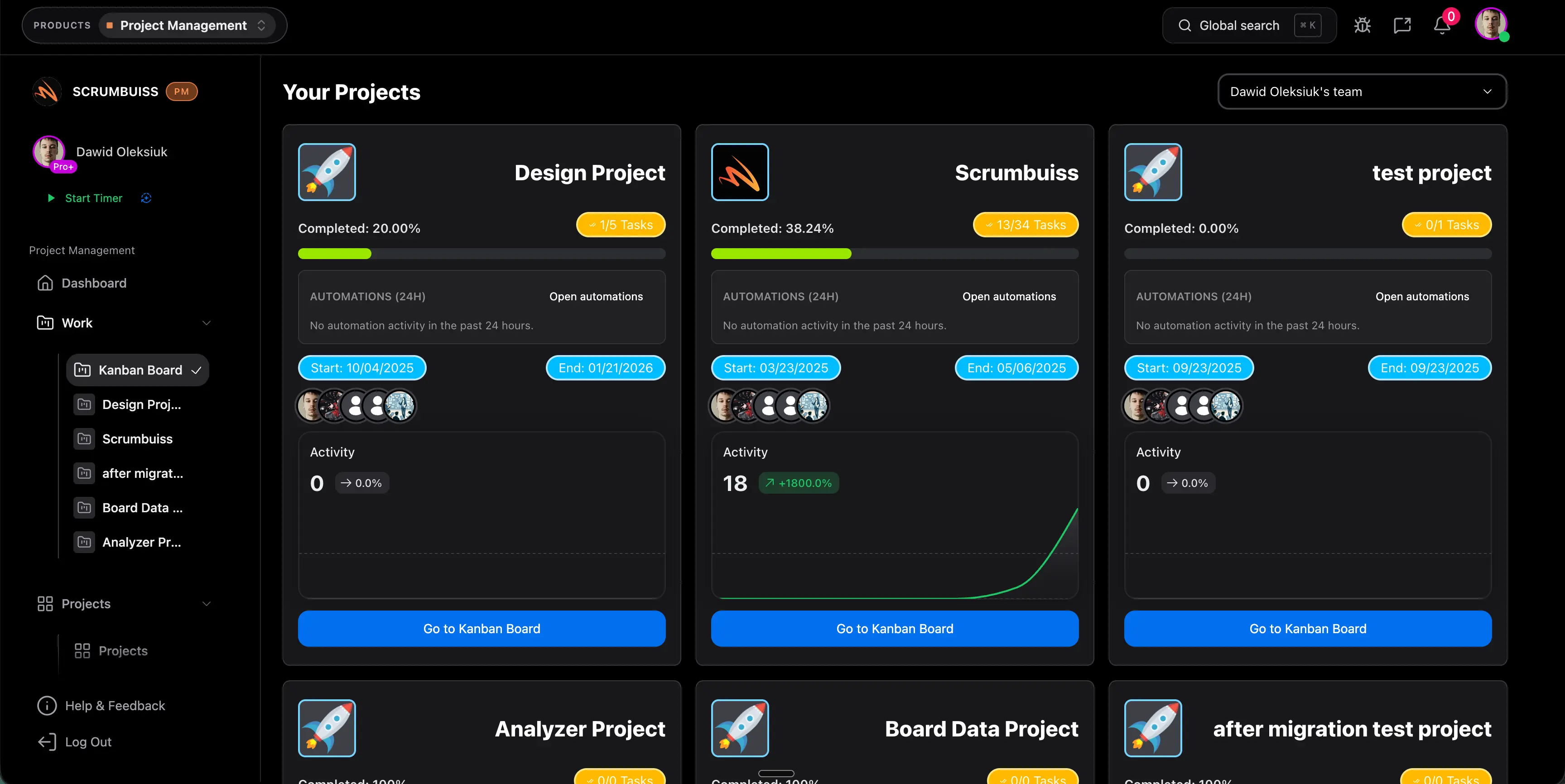
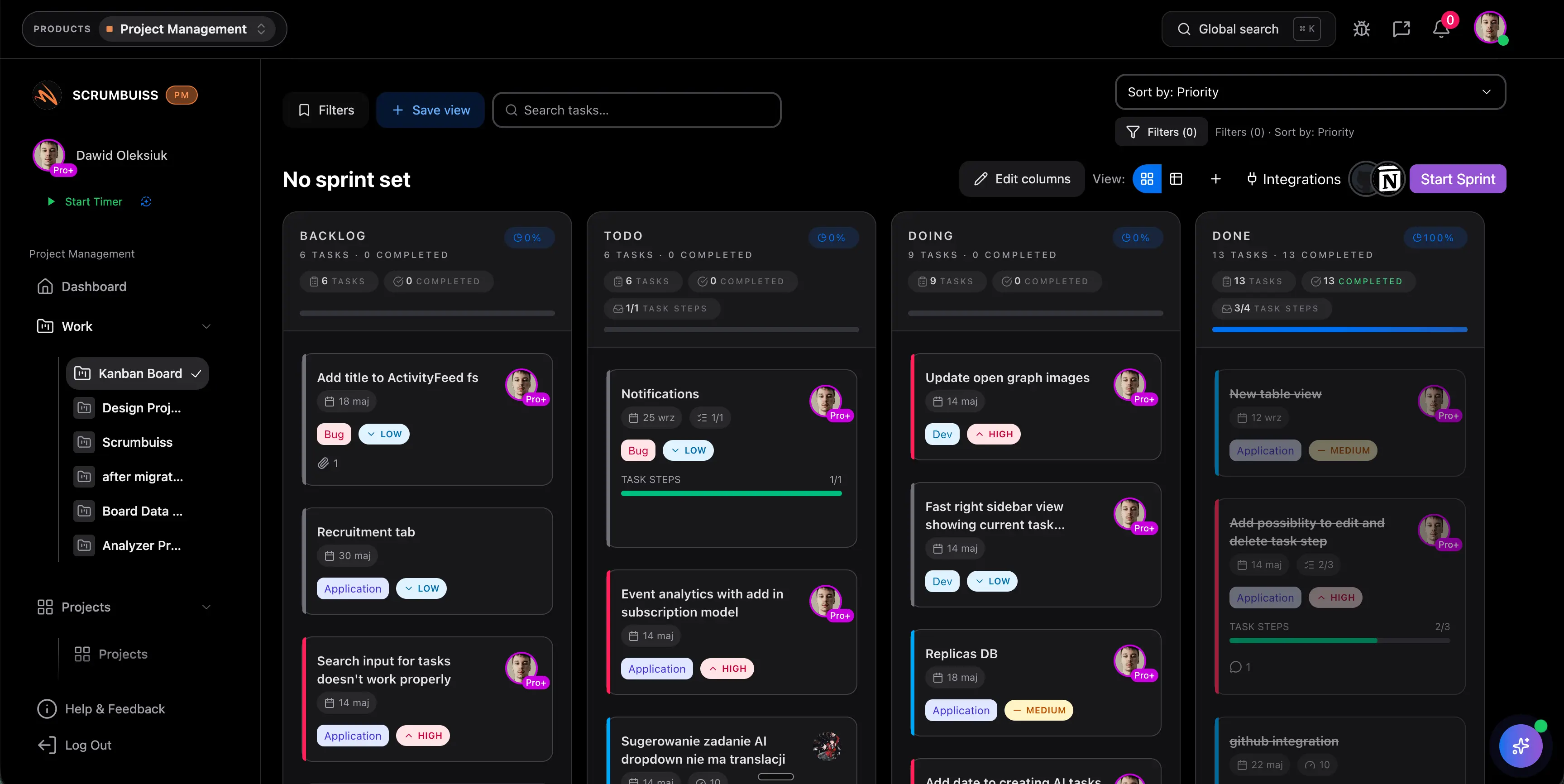
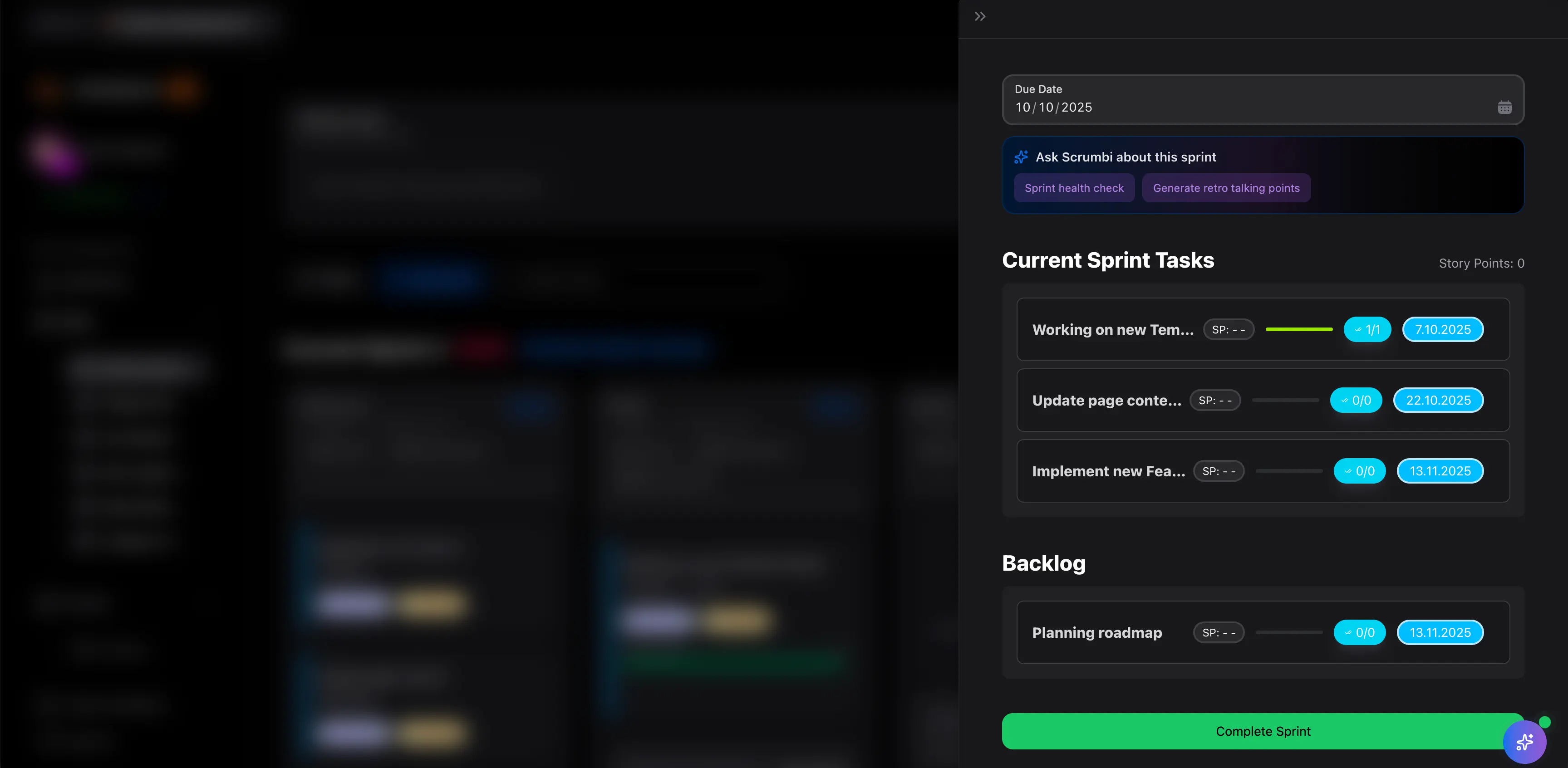
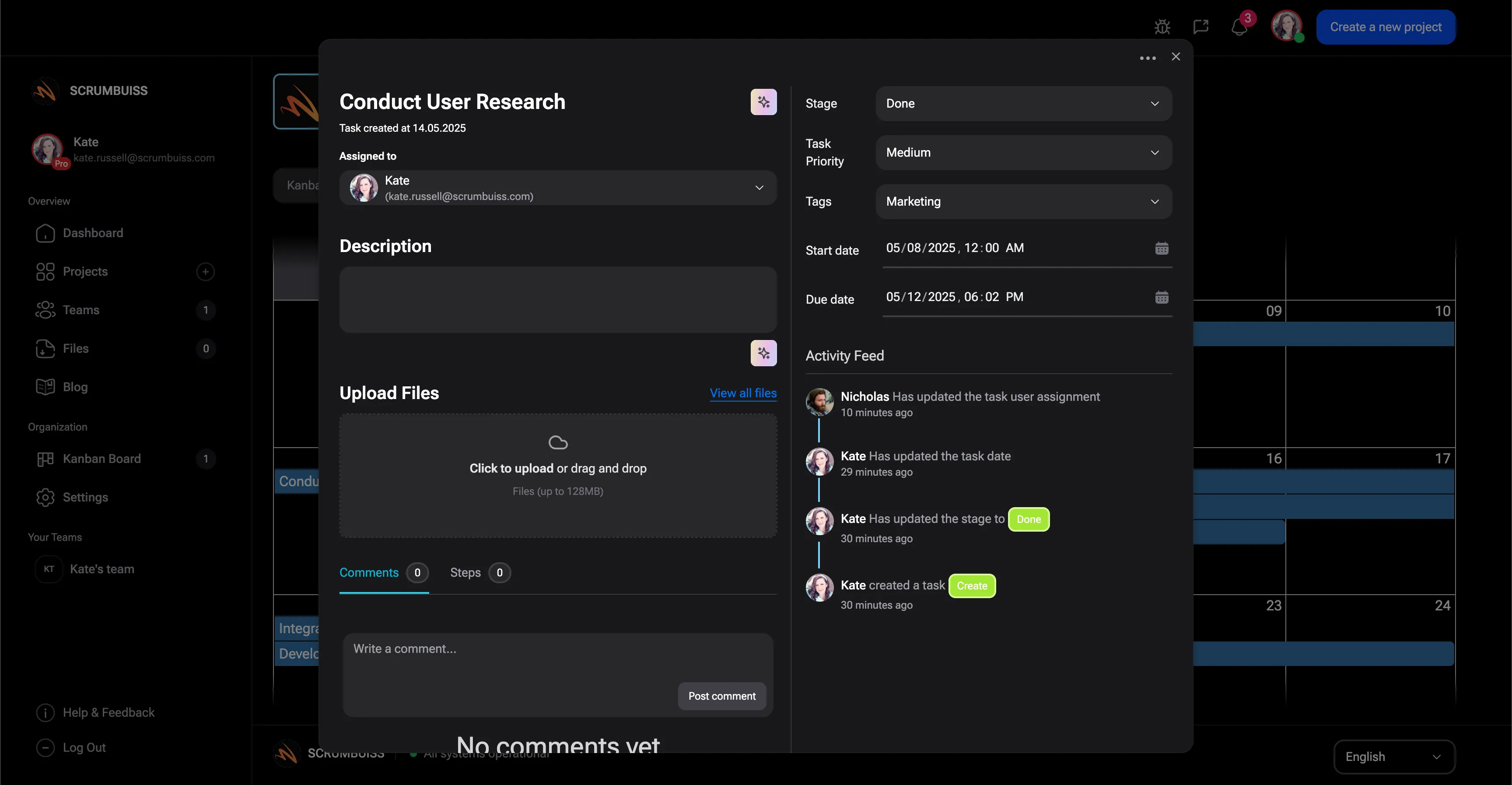
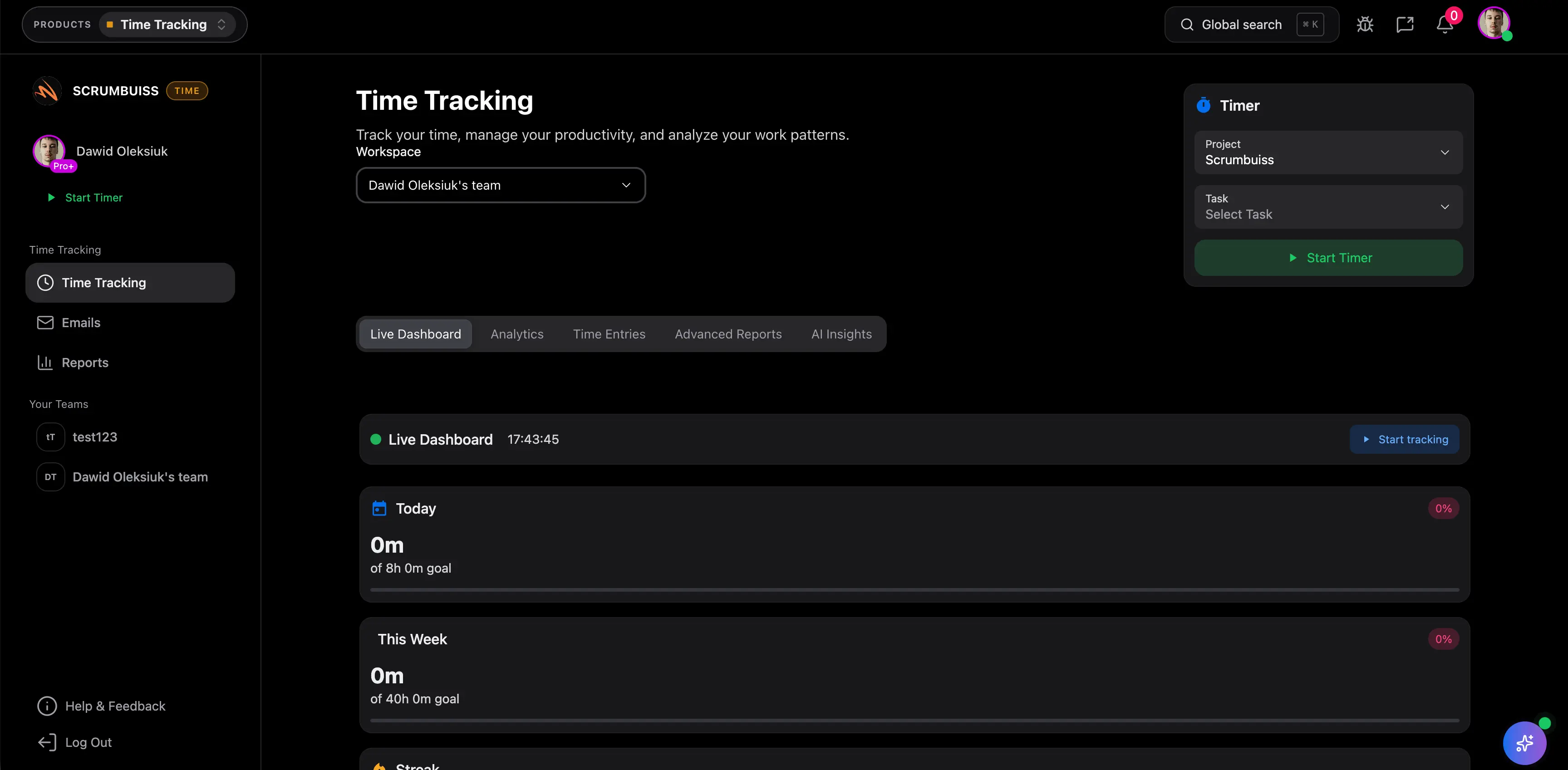
Scrumbuiss project brief with connected context

Database context

Link Notion databases to briefs, tasks, and reporting without rebuilding the story

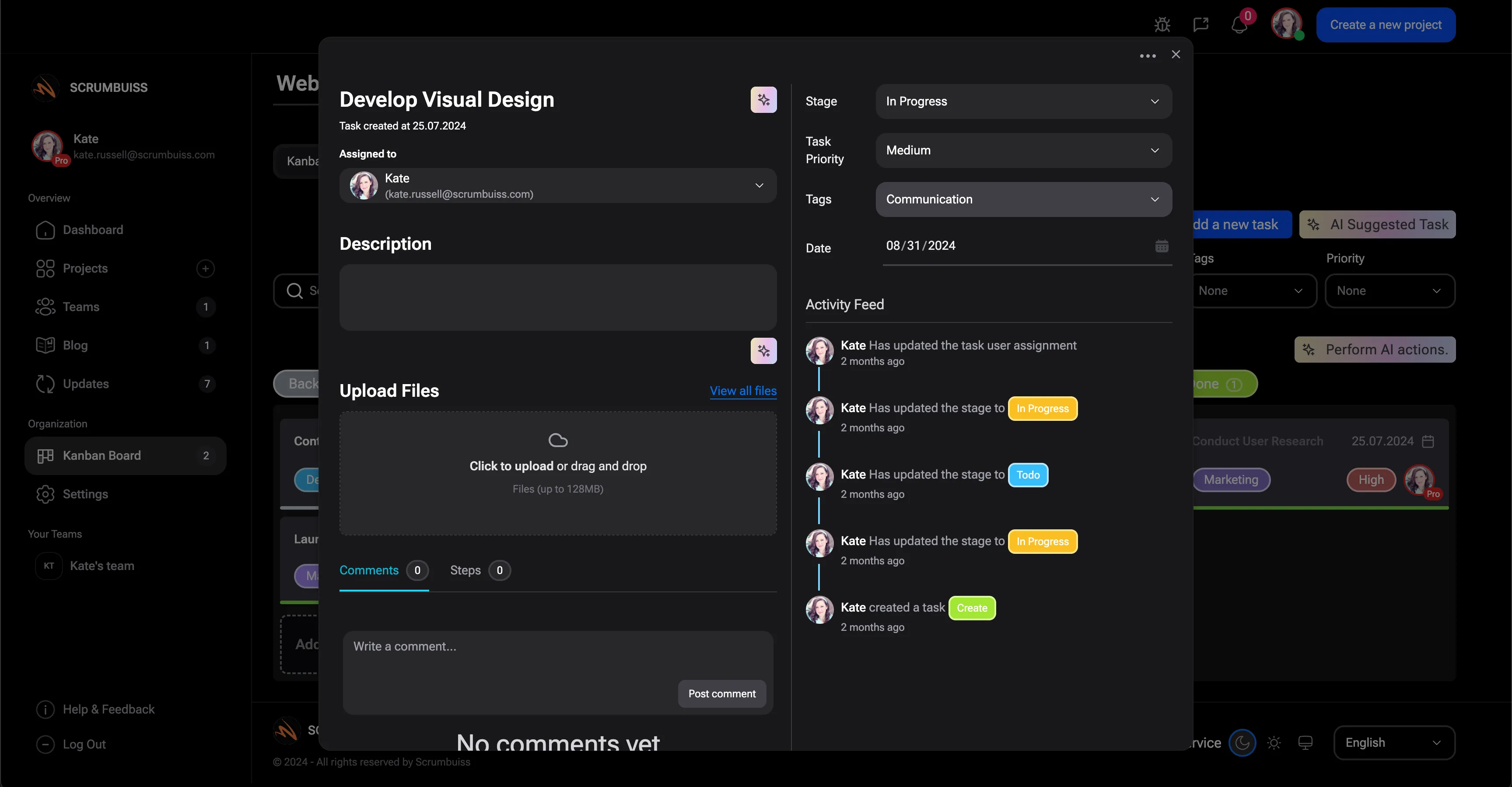
The real test is not whether a Notion database can be connected. It is whether the database meaningfully improves planning and review workflows. Searchability, previews, access rules, and readable database context all matter if the team wants structured knowledge to support delivery instead of becoming another system people have to reconcile by hand.

  • Validate whether teams can search the right pages and databases without exposing the wrong private content.
  • Check whether previews and database references stay useful in briefs, tasks, and review workflows instead of becoming dead links.
  • Make sure database context improves reporting and handoffs instead of forcing people to summarize the same information twice.
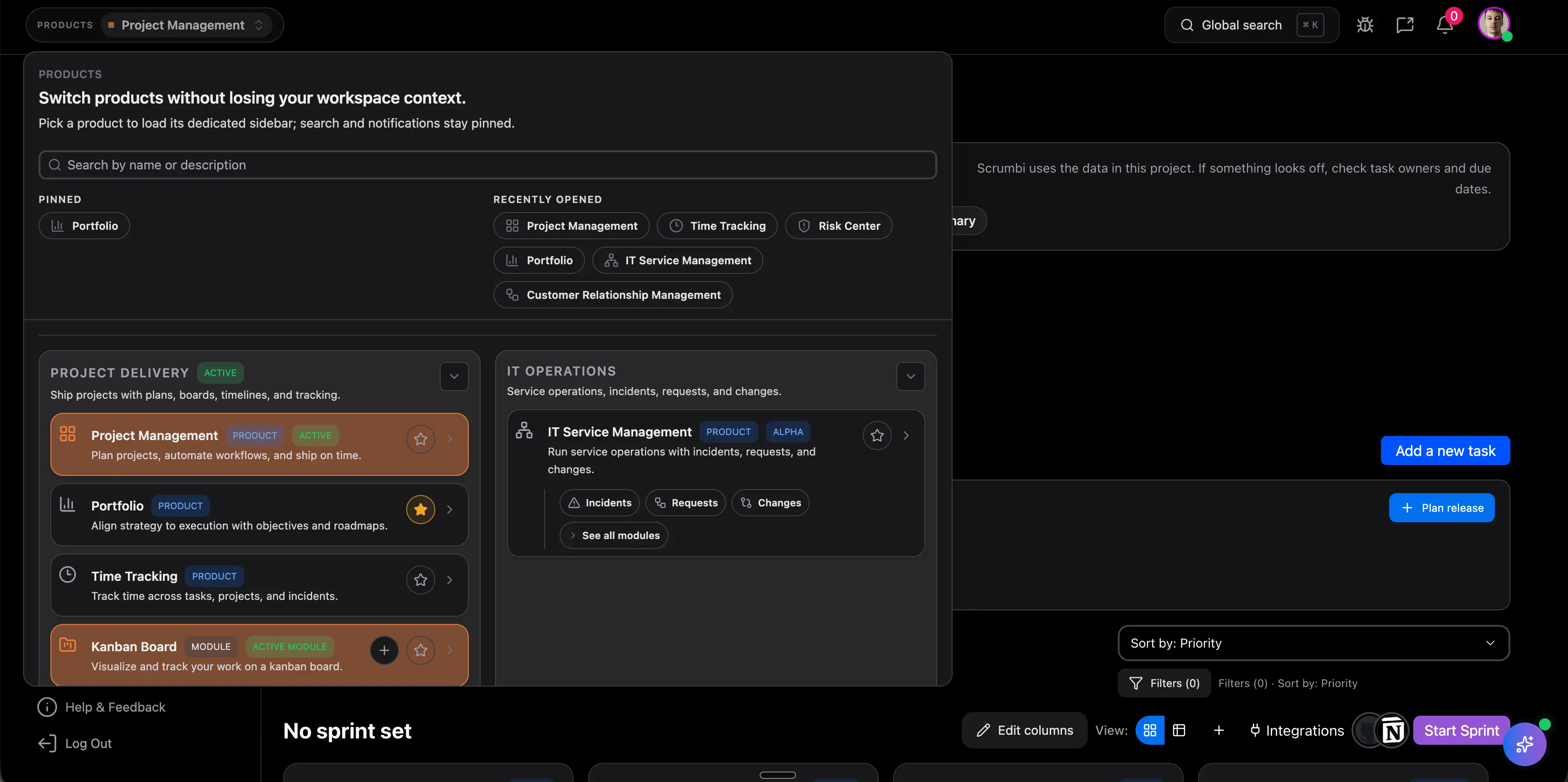
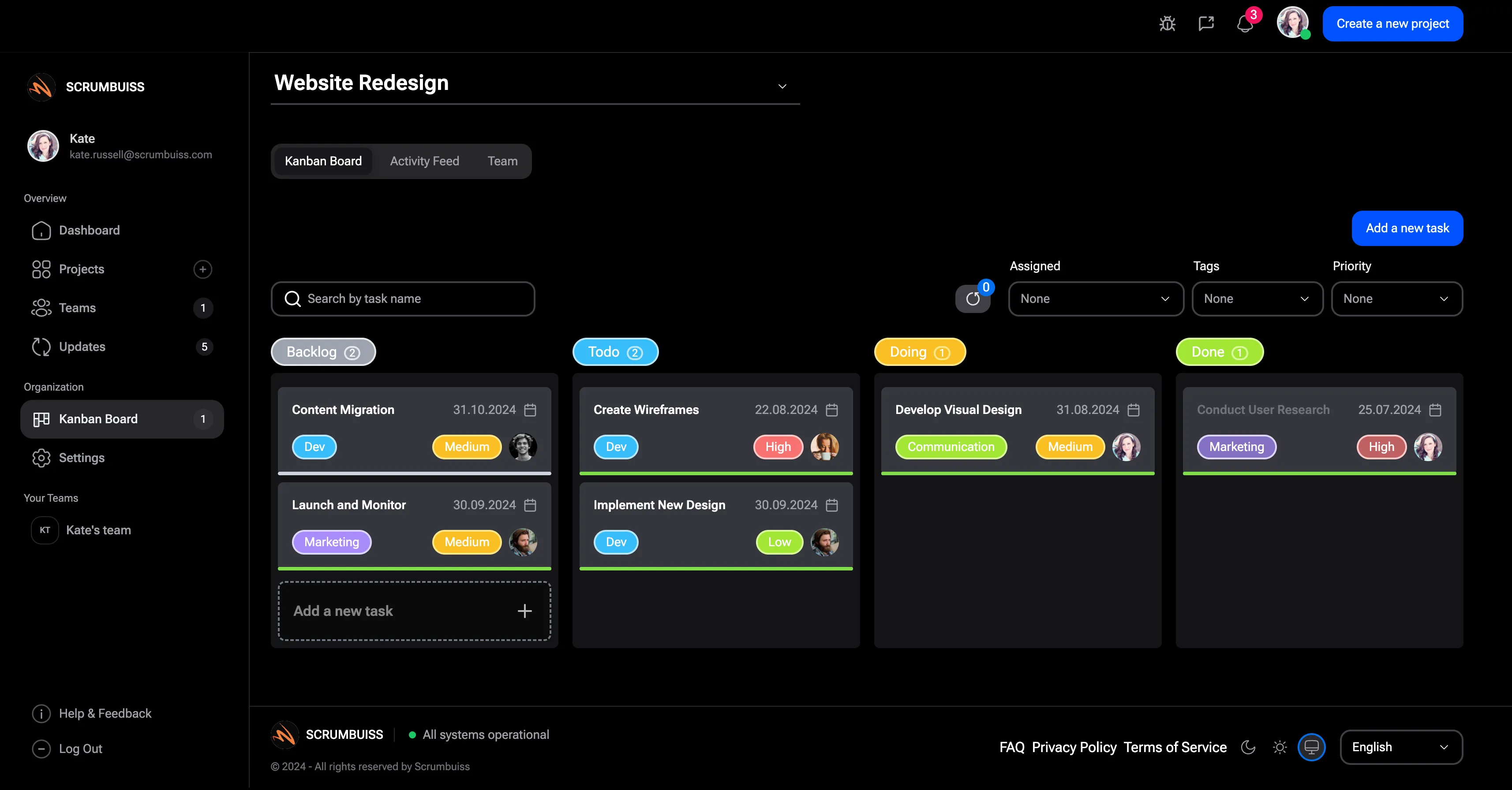
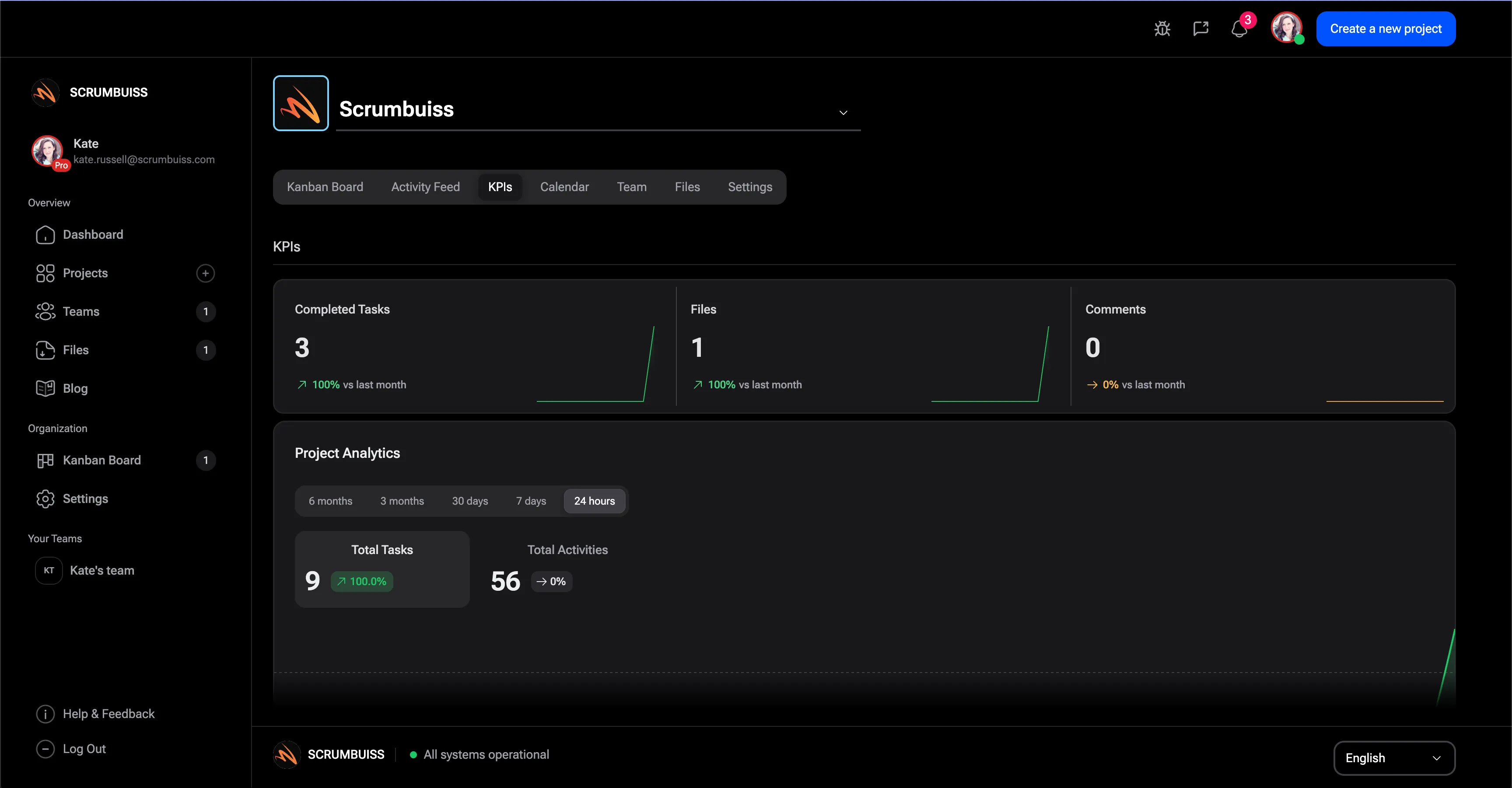
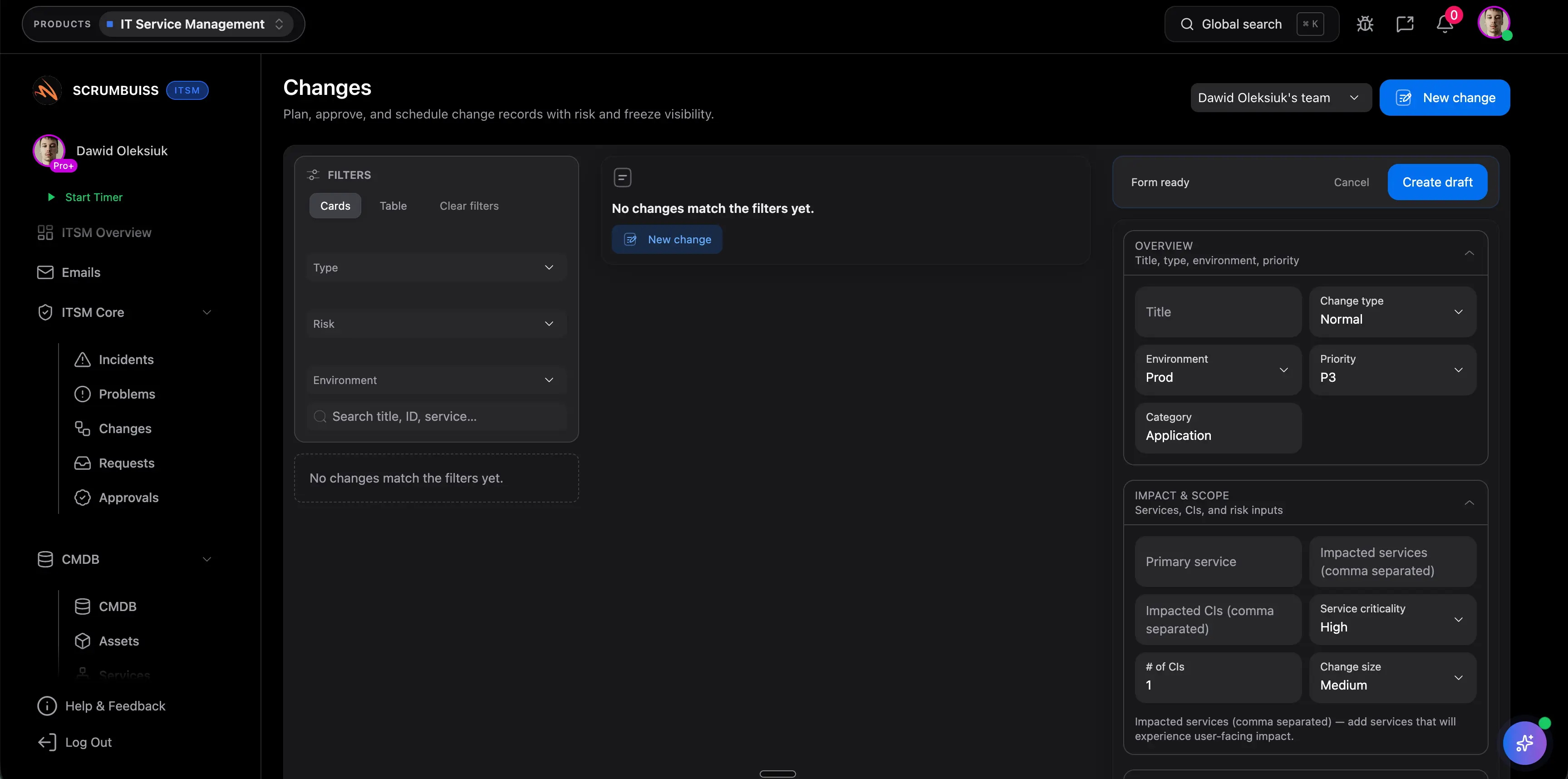
Scrumbuiss task view with connected documentation context

Onboarding and handoffs

Keep onboarding and stakeholder handoffs tied to the work, not trapped in the wiki

Notion is often where teams keep team handbooks, standards, and client context. That becomes valuable during onboarding, scope changes, and cross-functional handoffs only if the next action is obvious from the same workflow. Scrumbuiss is strongest when those docs stay connected to delivery decisions, not when the team is expected to run every operational step inside the doc tool.

  • Use Notion for reusable knowledge while keeping execution and follow-up visible in the delivery workflow.
  • Shorten onboarding by connecting runbooks, briefs, and current project context to the work a new teammate actually touches.
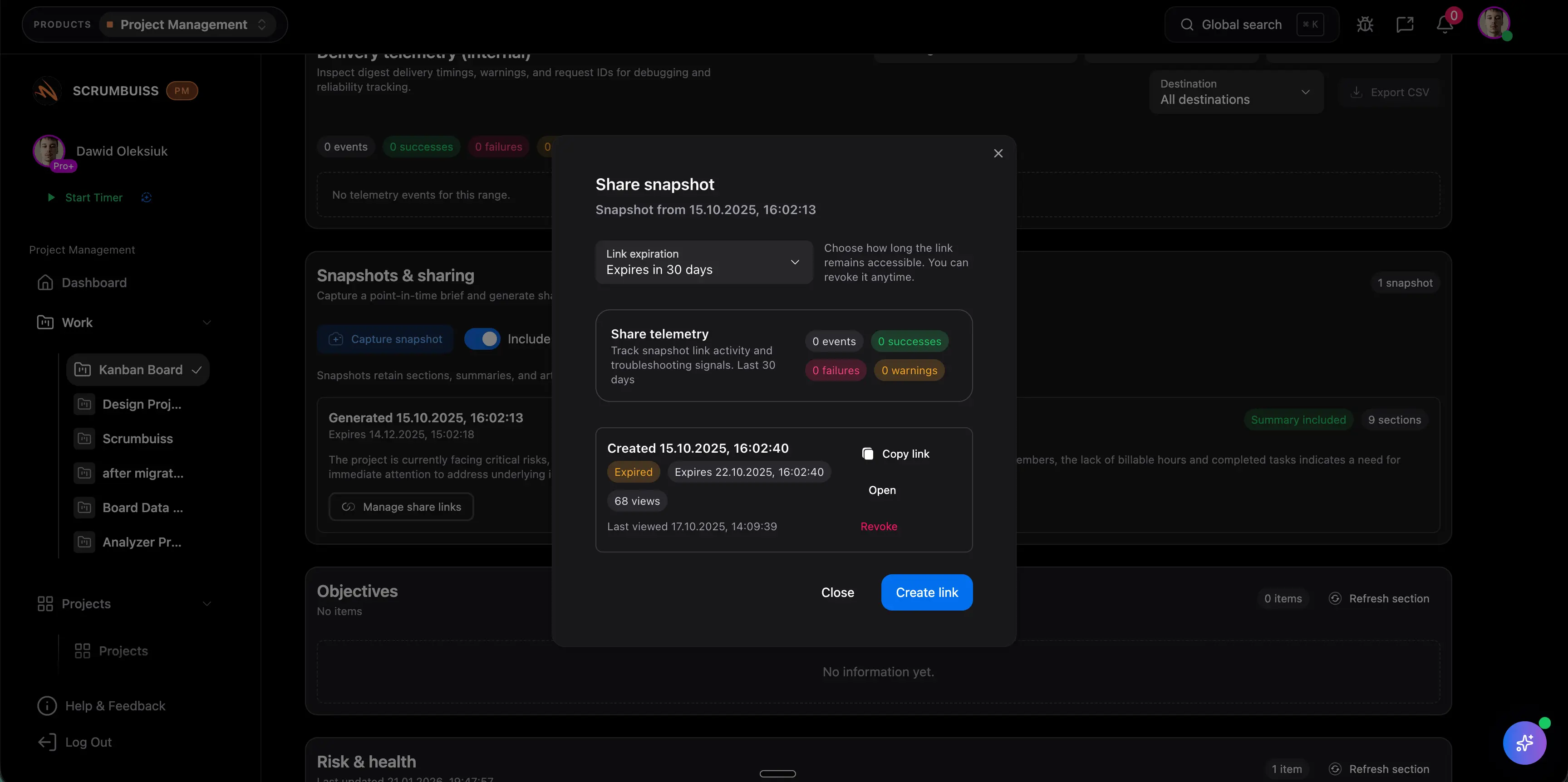
  • Give stakeholders one place to understand the task status and the supporting context behind it.
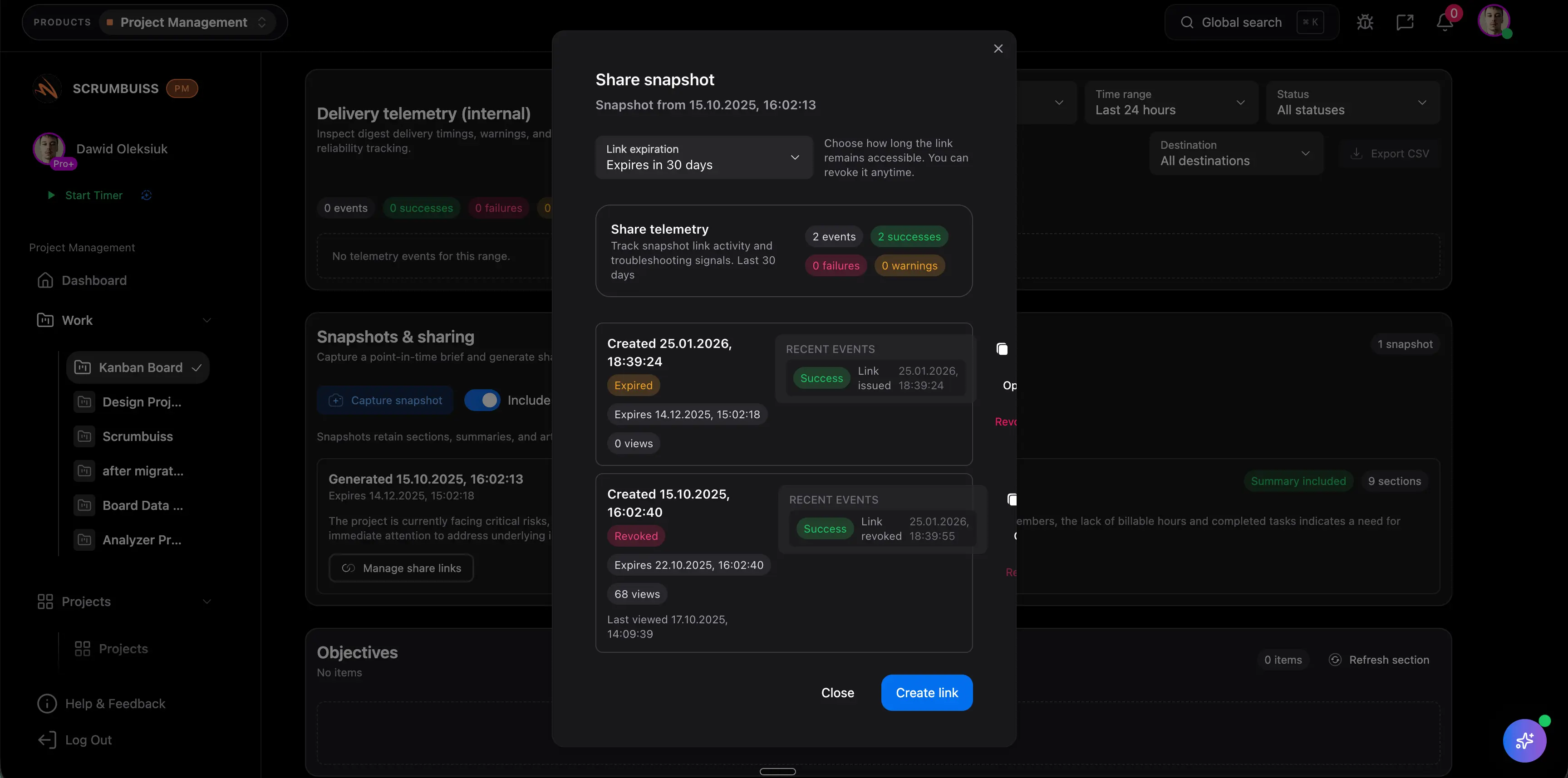
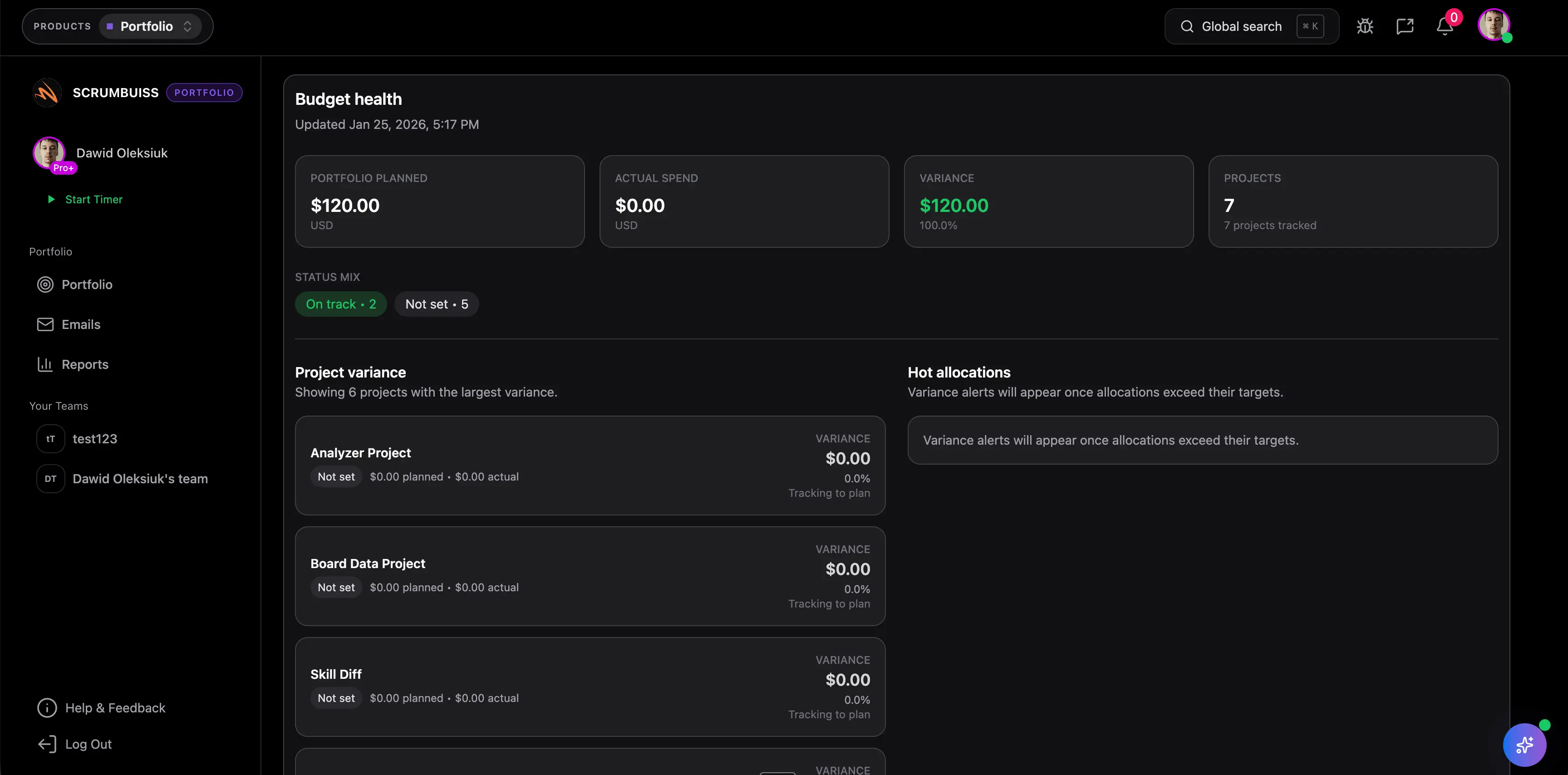
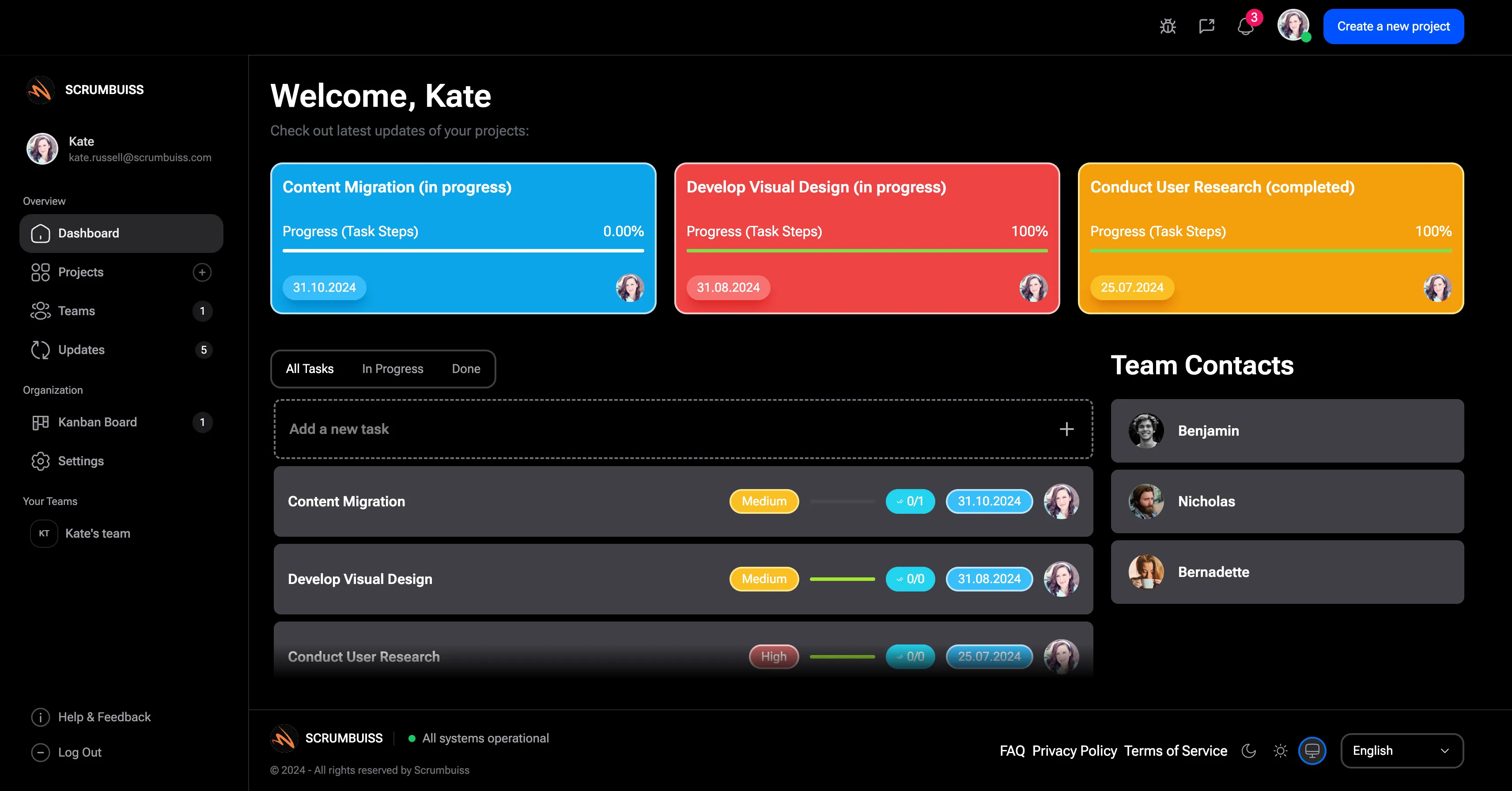
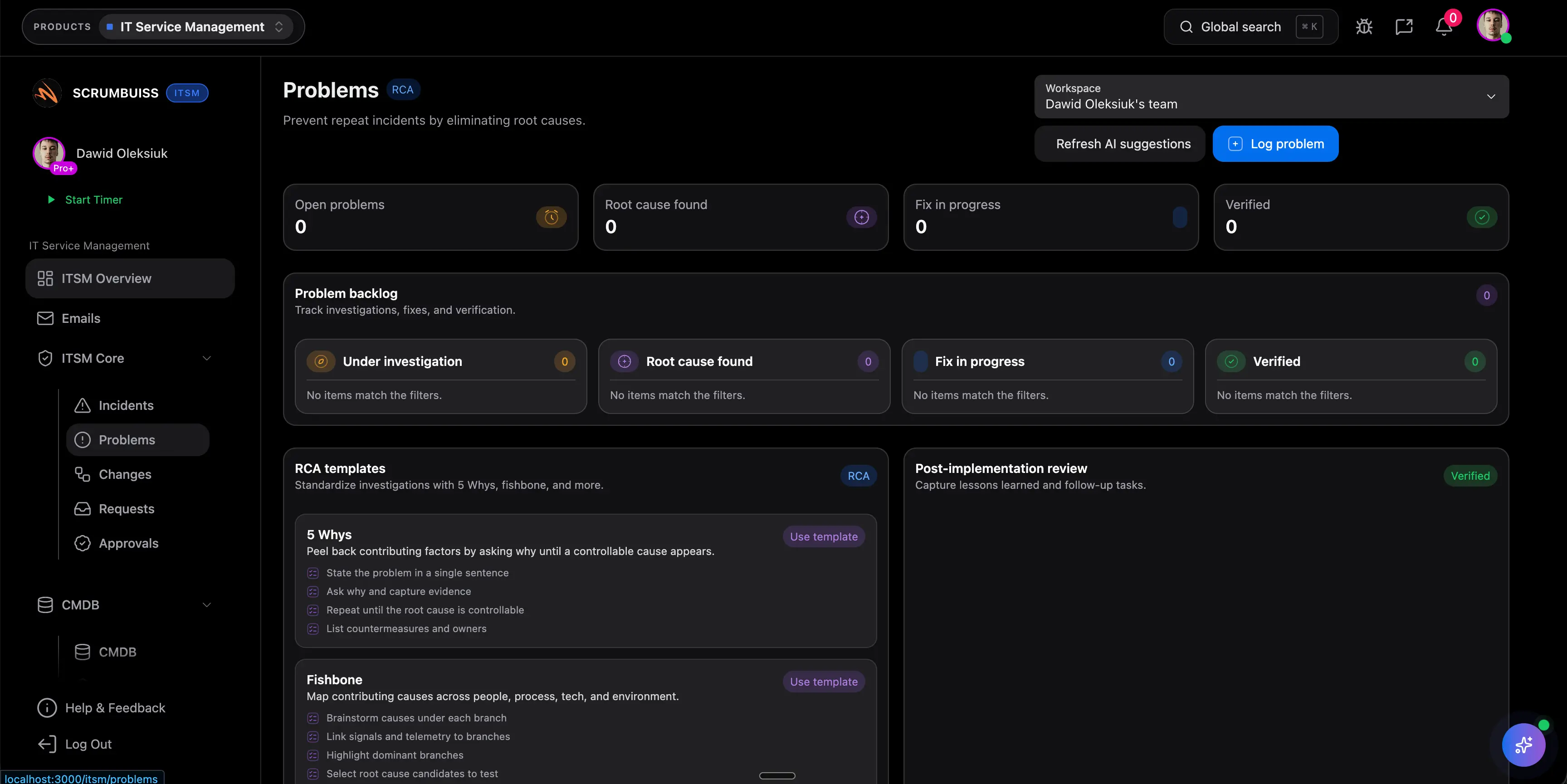
Scrumbuiss stakeholder sharing and project context

Competitor snapshot for Notion-connected project management

These options all connect to Notion differently. The useful buying question is whether Notion stays a linked documentation layer, a searchable reference system, or the primary workspace where the team is expected to build the whole project model itself.

Tool Best for Notion angle Main tradeoff Why teams choose Scrumbuiss instead
Asana + Notion Cross-functional teams that want Asana tasks and projects previewed or synced inside Notion pages and databases. Asana publicly positions the app around previewing and syncing Asana tasks and projects inside Notion pages and databases. It keeps docs and task management connected, but still leaves teams operating across two separate layers when status review and reporting need to stay tight. Scrumbuiss is stronger when the team wants project briefs, execution, and stakeholder visibility in one operating layer while still keeping Notion as contextual documentation.
ClickUp + Notion Teams that want Connected Search, link previews, and page creation around Notion content inside a broader work-management workspace. ClickUp publicly positions the integration around searching Notion pages and databases, previewing links, and creating new Notion pages from ClickUp. Search plus preview integration is useful, but teams still need to prove that documentation context improves planning and reporting instead of becoming a separate reference surface. Scrumbuiss is stronger when the goal is a more opinionated delivery layer around briefs, timelines, and review workflows, with Notion attached as context instead of a parallel workspace to reconcile.
Notion as the primary workspace Teams willing to run docs, wikis, and project databases inside one highly flexible workspace. Notion publicly positions itself as one place for notes, docs, and projects, with shared databases that teams can use to manage project work together. That flexibility is attractive, but it usually means the team still has to design governance, reporting conventions, and operational discipline for itself. Scrumbuiss is stronger when the team wants a more structured delivery operating layer with project visibility, rollout discipline, and stakeholder-ready reporting while still keeping Notion in the workflow.

Review exact permissions, preview behavior, workspace limits, and setup details on the vendor pages before you buy. Product names are trademarks of their respective owners.

Evaluation checklist for a Notion integration pilot

Use this checklist to test one live documentation-to-delivery workflow instead of stopping at a link-preview demo.

  1. Step 1

    Choose one active team, one recurring review meeting, and one Notion page or database that already matters to the workflow.

  2. Step 2

    Decide whether the pilot is testing point links, searchable context, or a broader docs-plus-delivery operating model.

  3. Step 3

    Review permissions carefully so the right Notion pages and databases are accessible without exposing unrelated private spaces.

  4. Step 4

    Link the selected docs and databases to a real project brief, task flow, and weekly status review instead of sample data.

  5. Step 5

    Check whether previews, mentions, and search results stay readable enough for people outside the doc authoring workflow.

  6. Step 6

    Measure whether stakeholders can follow delivery progress and supporting context without asking someone to rebuild the story manually.

  7. Step 7

    Standardize only after one full planning-to-review cycle runs cleanly with less copy-paste and fewer context gaps.

FAQ

These are the buying and rollout questions teams usually need answered before Notion becomes part of a real delivery workflow.

What should project management software with Notion integration actually help with?

It should make Notion documentation useful inside the broader delivery workflow. That usually means linking pages and databases to briefs, tasks, planning rituals, and stakeholder reviews so the team can act on the context instead of treating docs as a separate archive.

When is Scrumbuiss a better fit than using Notion as the main project workspace?

Scrumbuiss is usually a better fit when the team wants Notion to stay valuable for documentation, but needs a more structured operating layer for project execution, timelines, workload review, and stakeholder reporting. If Notion should remain the full build-your-own system, that is a different evaluation path.

How is this different from a simple Notion link preview?

A link preview only proves that one tool can display another tool's URL. A real evaluation checks whether the linked pages and databases improve searchability, handoffs, planning decisions, and reporting once the project is active and multiple people need the context.

Which permissions questions matter most during the pilot?

Validate who can search or preview pages, whether private databases are protected correctly, and whether the connected content is scoped tightly enough for the team using it. Permission mistakes can make the integration look better in a demo than it feels in live use.

Should we compare Scrumbuiss against Asana + Notion or ClickUp + Notion?

Yes. Those are useful comparison paths because they represent different models: Asana + Notion for task-and-doc coordination, ClickUp + Notion for search and preview connectivity inside a broader workspace, and Notion itself as the primary flexible workspace. The right comparison depends on where your weekly operating workflow should live.

Who should be involved in the evaluation?

Include the person who owns the documentation structure in Notion, the person who runs project planning or delivery review, and at least one stakeholder who consumes updates without living in either tool all day. If those viewpoints are not aligned, the pilot misses the real workflow pressure.

Related workflows

Use cases where teams usually need docs, database context, and execution to stay connected after kickoff.

Software teams

Use case

Project management software for software teams that keeps sprint planning, dependencies, GitHub-adjacent delivery visibility, and stakeholder reporting in one workflow.

  • Sprint planning and backlog execution in one workflow
  • Dependency and timeline visibility that engineering leads can act on
  • GitHub-adjacent delivery context for handoffs and release reviews
Software teams screenshot

Agencies

Use case

Project management software for agencies that keeps time tracking, files, workload visibility, and reporting in one workflow.

  • Project briefs that capture scope, stakeholders, and success criteria before work starts
  • Time tracking that rolls into dashboards and account-level reporting
  • Files and shared collections tied to delivery context, not buried in separate folders
Agencies screenshot

Client project management

Use case

Client project management software for agencies that keeps intake, briefs, files, approvals, time tracking, workload, and client-visible status in one workflow.

  • One workflow from request intake to kickoff, delivery, and client-ready status
  • Files, briefs, and approvals stay attached to the same client record
  • Time tracking and workload review stay close to the work being delivered
Client project management screenshot

IT operations

Use case

Project management software for IT operations that keeps incidents, change windows, automations, and Slack-connected updates visible in one delivery workflow.

  • Incident coordination with clear ownership and a readable status trail
  • Change windows and scheduling that stay visible to the people affected
  • Automations for reminders, escalations, and recurring follow-up work
IT operations screenshot

Related templates

Templates teams usually use to support briefs, onboarding context, and delivery reviews behind Notion-connected workflows.

Sprint planning template

Template

Download a free sprint planning and backlog planning template with sprint goal, selected backlog items, capacity, dependencies, and a reusable checklist.

  • Sprint goal, selected work, and owners in one planning sheet
  • Backlog planning columns for priority, estimate, owner, dependency, and definition of done
  • Capacity and availability checks before the team commits
Sprint planning template screenshot

Kanban board template

Template

Download a free Kanban board template with columns, Kanban card fields, WIP limit prompts, priorities, owners, due dates, blockers, and review notes.

  • Kanban board template with ready-to-adapt columns, card fields, and workflow review prompts
  • Kanban card template fields for owner, priority, due date, blocker, acceptance note, and next action
  • WIP limit prompts that help the board show flow problems instead of becoming a task parking lot
Kanban board template screenshot

Project charter template

Template

Download a free project charter template for project goals, scope, stakeholders, assumptions, risks, milestones, success criteria, and approval readiness.

  • Define project goals, sponsor, owner, scope, and success criteria before delivery starts
  • Capture assumptions, constraints, risks, dependencies, and milestone expectations in one outline
  • Clarify stakeholder roles, decision rights, and approval readiness before the first kickoff
Project charter template screenshot

Stakeholder matrix template

Template

Download a free stakeholder matrix template for stakeholder mapping, influence, interest, decision rights, communication cadence, owners, and next actions.

  • Map stakeholder roles, interest, influence, decision rights, concerns, and communication cadence
  • Clarify who owns follow-up before project intake, kickoff, or delivery handoff
  • Use the CSV format to compare stakeholders quickly during charter, brief, or status review
Stakeholder matrix template screenshot

Project development plan template Excel

Template

Download a free project development plan template for Excel with phases, milestones, owners, dependencies, risks, status fields, Gantt chart inputs, and deliverable tracking for project teams.

  • Project development plan template structure for phases, milestones, owners, dependencies, dates, and deliverables
  • Spreadsheet-friendly CSV you can open in Excel, Google Sheets, or another planning tool
  • Example project plan rows that show how scope, risks, project timelines, and acceptance criteria stay connected
Project development plan template Excel screenshot

Project roadmap template

Template

Download a free project roadmap template with objectives, initiatives, themes, milestones, dependencies, capacity notes, risks, success metrics, and review fields.

  • Project roadmap template structure for objectives, initiatives, themes, milestones, owners, and priorities
  • Spreadsheet-friendly CSV for roadmap planning before initiatives move into portfolio or delivery software
  • Fields for dependencies, capacity notes, risks, success metrics, decisions, and review dates
Project roadmap template screenshot

Project schedule template

Template

Download a free project schedule template for weekly planning, milestones, owners, dependencies, blockers, schedule risk, and next steps.

  • Weekly project schedule structure for dates, owners, milestones, dependencies, and next steps
  • Spreadsheet-friendly CSV that can be opened in Excel, Google Sheets, or a project calendar workflow
  • Fields for schedule risk, blockers, status, notes, and follow-up ownership
Project schedule template screenshot

Meeting agenda template

Template

Download a free meeting agenda template for project meetings, kickoff reviews, decisions, action items, owners, risks, and follow-up summaries.

  • Meeting agenda format for purpose, attendees, agenda topics, decisions, and follow-up
  • Markdown template you can copy into docs before recurring meetings move into a live workflow
  • Fields for action items, owners, due dates, risks, parking lot items, and next review date
Meeting agenda template screenshot

Project KPI dashboard template

Template

Download a free project KPI dashboard template with example delivery metrics, status rules, owner fields, and a weekly reporting structure for project teams.

  • Project KPI dashboard structure for delivery, workload, risk, schedule, and stakeholder reporting
  • Filled example metrics for progress, blocked work, overdue tasks, workload pressure, and risk exposure
  • Status rules that make KPI reviews easier to run without turning the dashboard into vanity reporting
Project KPI dashboard template screenshot

Project status report template

Template

Download a free project status report template with progress, milestones, blockers, risks, decisions, next steps, and stakeholder update fields.

  • Project status report structure for progress, milestones, blockers, risks, decisions, and next steps
  • Spreadsheet-friendly CSV that can be opened in Excel, Google Sheets, or a project reporting workflow
  • Fields for audience, reporting period, evidence links, update owner, and decision follow-up
Project status report template screenshot

Project brief template

Template

Download a free project brief template with a filled example, one-page outline, and practical checklist for aligning scope, stakeholders, milestones, and handoffs.

  • One-page brief for kickoff alignment and cleaner handoffs
  • Scope, non-goals, stakeholders, milestones, and acceptance criteria in one place
  • Filled example outline you can adapt for agencies or cross-functional delivery teams
Project brief template screenshot

Risk register template

Template

Download a free risk register and risk matrix template in CSV format with sample risks, 1 to 5 scoring, owners, trigger signals, and weekly review steps.

  • Exact-match CSV template for Excel or Google Sheets with scoring, owners, statuses, and review dates
  • Simple likelihood x impact risk matrix model for prioritizing project risk without a heavy governance process
  • Six realistic example risks covering vendors, staffing, approvals, performance, and dependency drift
Risk register template screenshot

Client handoff template

Template

Download a free client handoff template for sales-to-delivery handoff, client onboarding, kickoff readiness, stakeholders, scope, files, risks, and next actions.

  • Sales-to-delivery handoff outline for client onboarding and implementation kickoff
  • Fields for account summary, stakeholders, promised scope, success criteria, files, risks, and open questions
  • Action item table with owners, due dates, and kickoff follow-up
Client handoff template screenshot

Scope of work template

Template

Download a free scope of work template with example deliverables, exclusions, acceptance criteria, milestones, assumptions, and approval checkpoints.

  • Scope of work outline for deliverables, exclusions, assumptions, milestones, and approval checkpoints
  • Filled example you can adapt for agency projects, implementation work, and internal delivery handoffs
  • Acceptance criteria prompts that reduce vague sign-off and late change requests
Scope of work template screenshot

Timesheet template

Template

Download a free timesheet template with date, person, project, task, client, billable status, estimated hours, actual hours, variance, notes, and approval status.

  • Timesheet template for project time tracking, work logs, and lightweight time study review
  • CSV format you can open in Excel, Google Sheets, or another time tracker spreadsheet
  • Billable and non-billable fields for client work, internal work, and delivery reporting
Timesheet template screenshot

IT change management template

Template

Download a free IT change management template with change ID, service, owner, risk, impact, approval, rollout, rollback, communications, and post-change checks.

  • IT change management template for ITSM, service desk, and operational change workflows
  • Change request fields for owner, service, change type, risk, impact, approvals, and planned window
  • Rollout, rollback, communication, and post-change check fields in one spreadsheet-friendly CSV
IT change management template screenshot

Root cause analysis template

Template

Download a free root cause analysis template with issue details, incident timeline, 5 whys prompts, evidence, corrective actions, owners, and verification checks.

  • Root cause analysis format for incidents, failed handoffs, process issues, and recurring delivery problems
  • 5 whys prompts, timeline fields, evidence notes, contributing factors, and corrective actions in one CSV
  • Owner, due date, verification check, and status fields so RCA follow-up does not stop at the meeting
Root cause analysis template screenshot

Security review checklist template

Template

Download a free security review checklist template for software rollout, vendor review, application security risk assessment, evidence review, follow-up, and approval decisions.

  • Software security review checklist for project management tool rollout, vendor review, and application security risk assessment
  • Evidence-needed, public-source, risk-level, owner, follow-up, decision, and notes fields in one CSV
  • Practical review areas for access, data handling, sharing, integrations, admin visibility, incident reporting, and rollout controls
Security review checklist template screenshot

Incident postmortem template

Template

Download a free incident postmortem template with a blameless example, timeline, impact summary, root cause section, and follow-up checklist.

  • Blameless review structure for timeline, impact, root cause, and contributing factors
  • Filled authentication outage example you can adapt after real incidents
  • Communication notes, customer impact summary, and follow-up ownership in one outline
Incident postmortem template screenshot