Project roadmap template
Download a free project roadmap template with objectives, initiatives, themes, milestones, dependencies, capacity notes, risks, success metrics, and review fields.
Use this project roadmap template to align initiatives, objectives, priorities, milestones, dependencies, capacity notes, risks, and success metrics before the roadmap moves into Scrumbuiss Portfolio.
What this project roadmap template helps you organize
Use these checkpoints to keep roadmap planning connected to real capacity, delivery risk, and portfolio decisions.
- ✓ Project roadmap template structure for objectives, initiatives, themes, milestones, owners, and priorities
- ✓ Spreadsheet-friendly CSV for roadmap planning before initiatives move into portfolio or delivery software
- ✓ Fields for dependencies, capacity notes, risks, success metrics, decisions, and review dates
- ✓ Review checklist for keeping roadmap updates tied to portfolio reporting and delivery reality
When to use this template
A roadmap template is most useful when leadership needs a shared view of priorities before every initiative is fully planned.
- Use it when stakeholders need a roadmap view before the team commits every initiative into a detailed project plan.
- Use it when product, delivery, or portfolio leaders need to compare initiatives by objective, timing, capacity, and risk.
- Use it when roadmap planning currently lives in slide decks that drift away from delivery status and portfolio reporting.
- Use it when a lightweight CSV is enough to align priorities before moving the roadmap into a live portfolio workflow.
What is inside the roadmap template
The CSV keeps objectives, initiatives, owners, priority, timing, dependencies, capacity, risks, decisions, and success metrics in one planning view.
What to include in a project roadmap
A practical roadmap connects outcomes, sequencing, capacity, dependencies, risk, and the next portfolio review.
Objective
Connect each initiative to the business, customer, or delivery outcome it is meant to support.
Initiative and theme
Group related work under themes so stakeholders can understand the roadmap without reading every project detail.
Priority and timeframe
Show relative priority and expected timing so roadmap tradeoffs are visible before the team commits to dates.
Dependencies and capacity
Capture cross-team dependencies, staffing pressure, and availability notes that could change the roadmap order.
Risk and decision needs
Name the uncertainty, approval, funding, scope, or sequencing decision that could block the roadmap item.
Success metric
Add the metric or signal that will tell the team whether the initiative created the intended outcome.
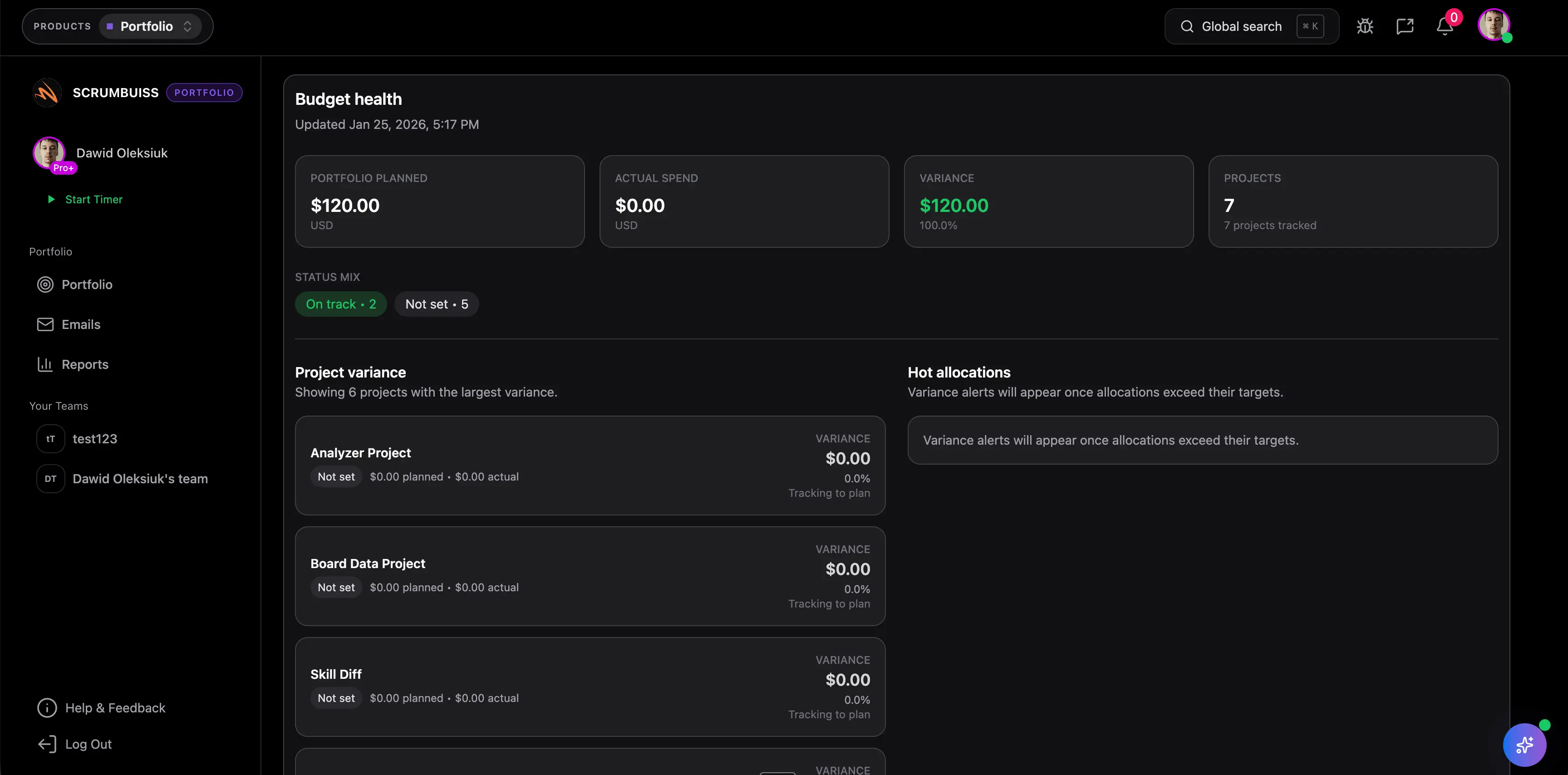
Project roadmap example structure
Use this example structure for quarterly roadmap planning, portfolio review, or product roadmap alignment.
Current quarter commitments
List committed initiatives with owners, milestones, dependencies, risk level, and expected outcome.
Next quarter candidates
Capture likely initiatives that need prioritization, capacity review, or stakeholder decision before commitment.
Roadmap risks
Show staffing, vendor, approval, or technical risks that could affect initiative sequence or milestone timing.
Decision queue
List unresolved roadmap decisions with decision owner, due date, and the initiative affected.
Portfolio review
Use the next review date and portfolio link to keep roadmap planning attached to live project status.
Roadmap review checklist
Run this checklist before presenting the roadmap as a committed plan or using it in a portfolio review.
- Confirm every initiative links to a clear objective or portfolio outcome.
- Check that priority and timeframe reflect current capacity, not only stakeholder preference.
- Review dependencies before presenting the roadmap as committed.
- Add risk notes for initiatives where schedule, staffing, or approvals are uncertain.
- Name the decision owner when a roadmap item is waiting on prioritization or approval.
- Link the roadmap to the portfolio, timeline, dashboard, or project plan where delivery will continue.
Common roadmap mistakes
These patterns usually turn roadmaps into stale slides that no longer reflect delivery reality.
- Treating a roadmap as a promise of fixed dates instead of a prioritization and sequencing view.
- Listing initiatives without objectives, success metrics, or owner accountability.
- Ignoring capacity until the roadmap is already approved by stakeholders.
- Separating roadmap updates from portfolio reporting, delivery status, and risk review.
- Letting old roadmap items stay visible after the decision, dependency, or objective has changed.
How to use this roadmap template
Start in the CSV, align the initiative sequence, then move into Scrumbuiss when roadmap, capacity, risk, and portfolio reporting need live context.
Group initiatives under objectives
Start by naming the outcome each initiative supports so roadmap conversations stay tied to strategy, customers, or delivery goals.
Review timing against capacity and dependencies
Check timeframe, owner availability, cross-team dependencies, and risks before marking an initiative as committed.
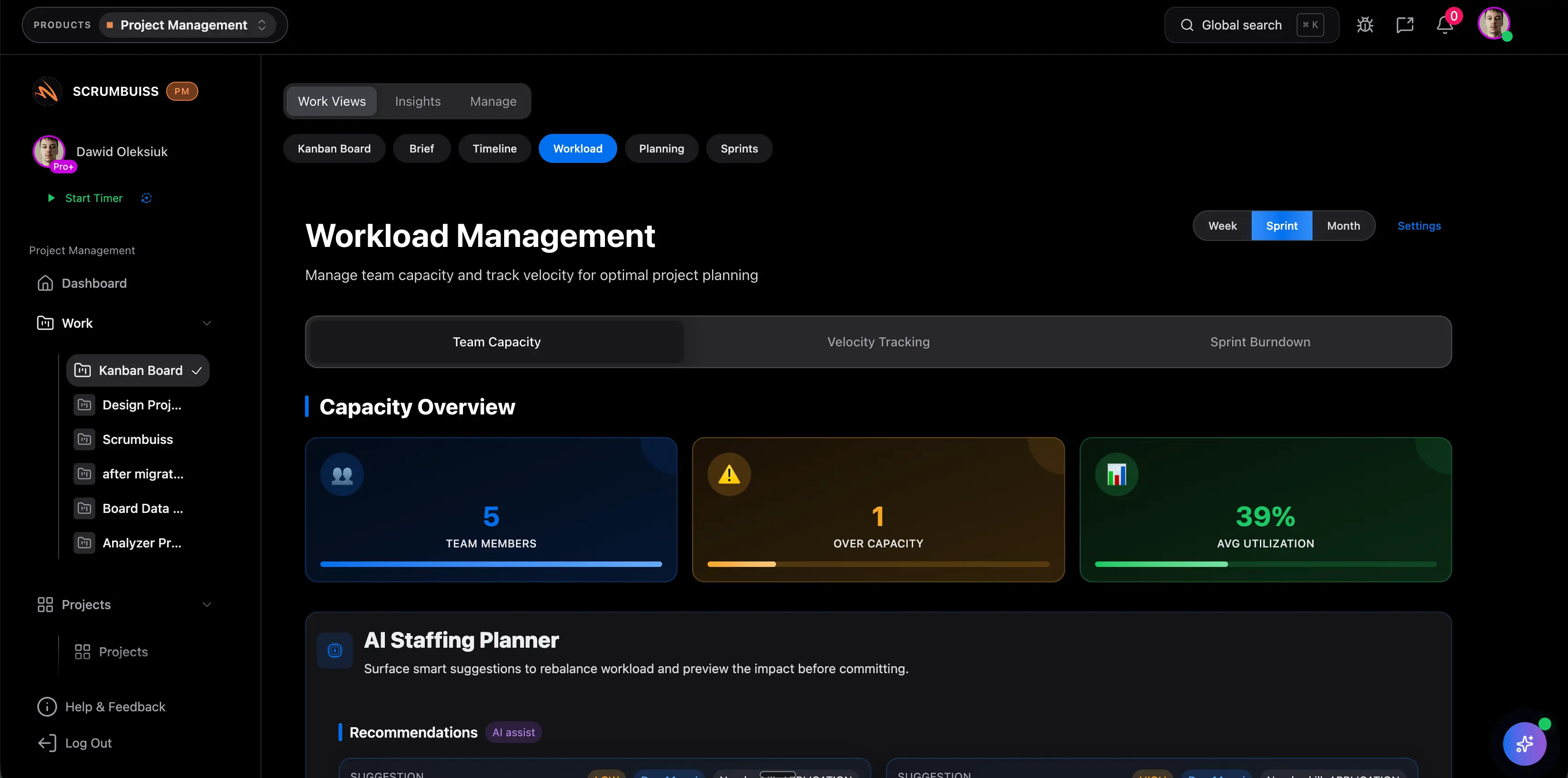
Move roadmap review into portfolio workflow
Connect the roadmap to portfolio views, dashboards, risks, and timelines when weekly reporting needs current delivery context.
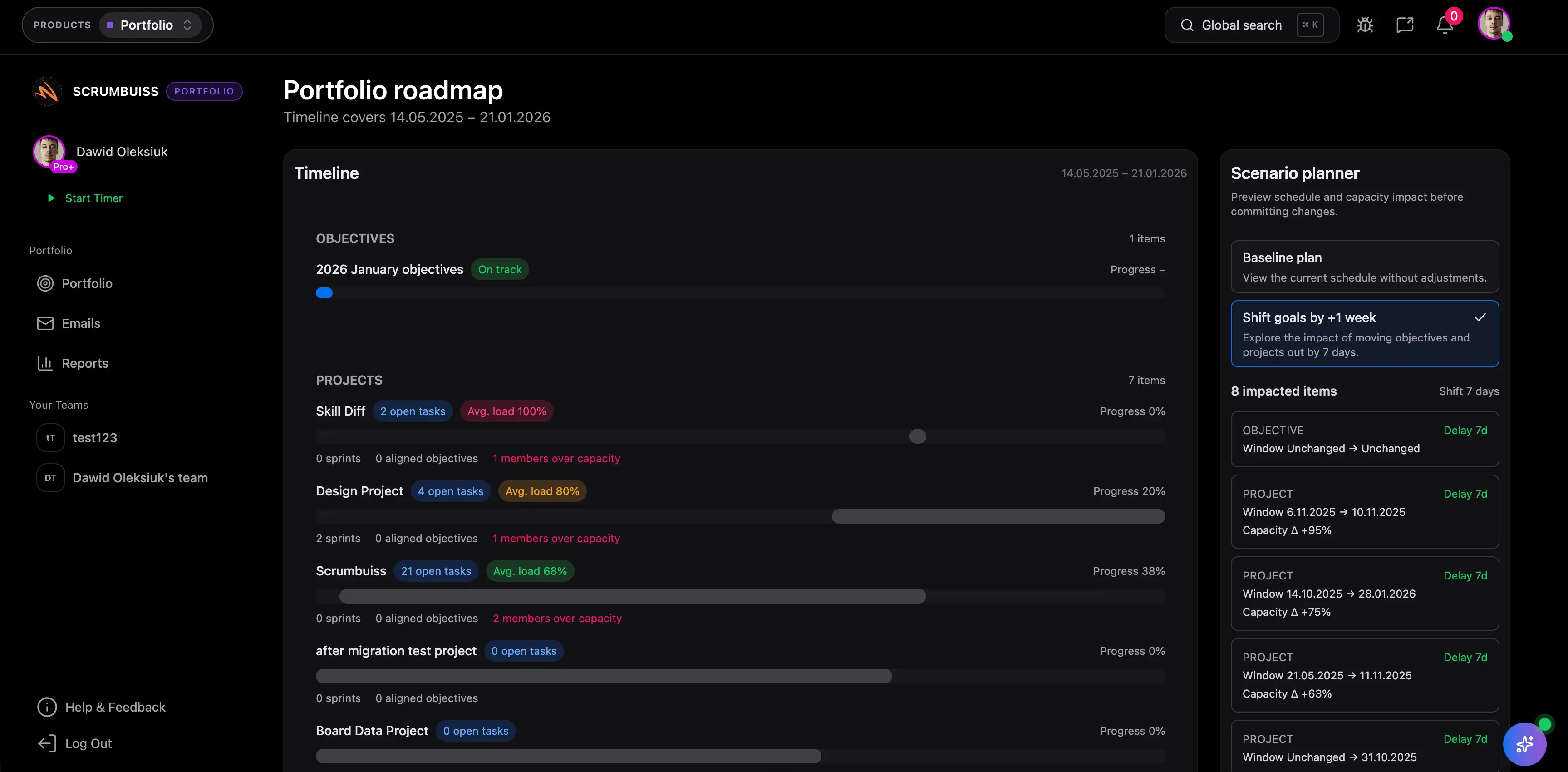
Related roadmap and portfolio workflows
Use these Scrumbuiss pages when roadmap planning needs portfolio visibility, timeline context, workload review, risk tracking, and stakeholder reporting.
Recommended workflows
These workflows benefit from a clear roadmap before initiatives move into detailed delivery planning.
Software teams
Use caseProject management software for software teams that keeps sprint planning, dependencies, GitHub-adjacent delivery visibility, and stakeholder reporting in one workflow.
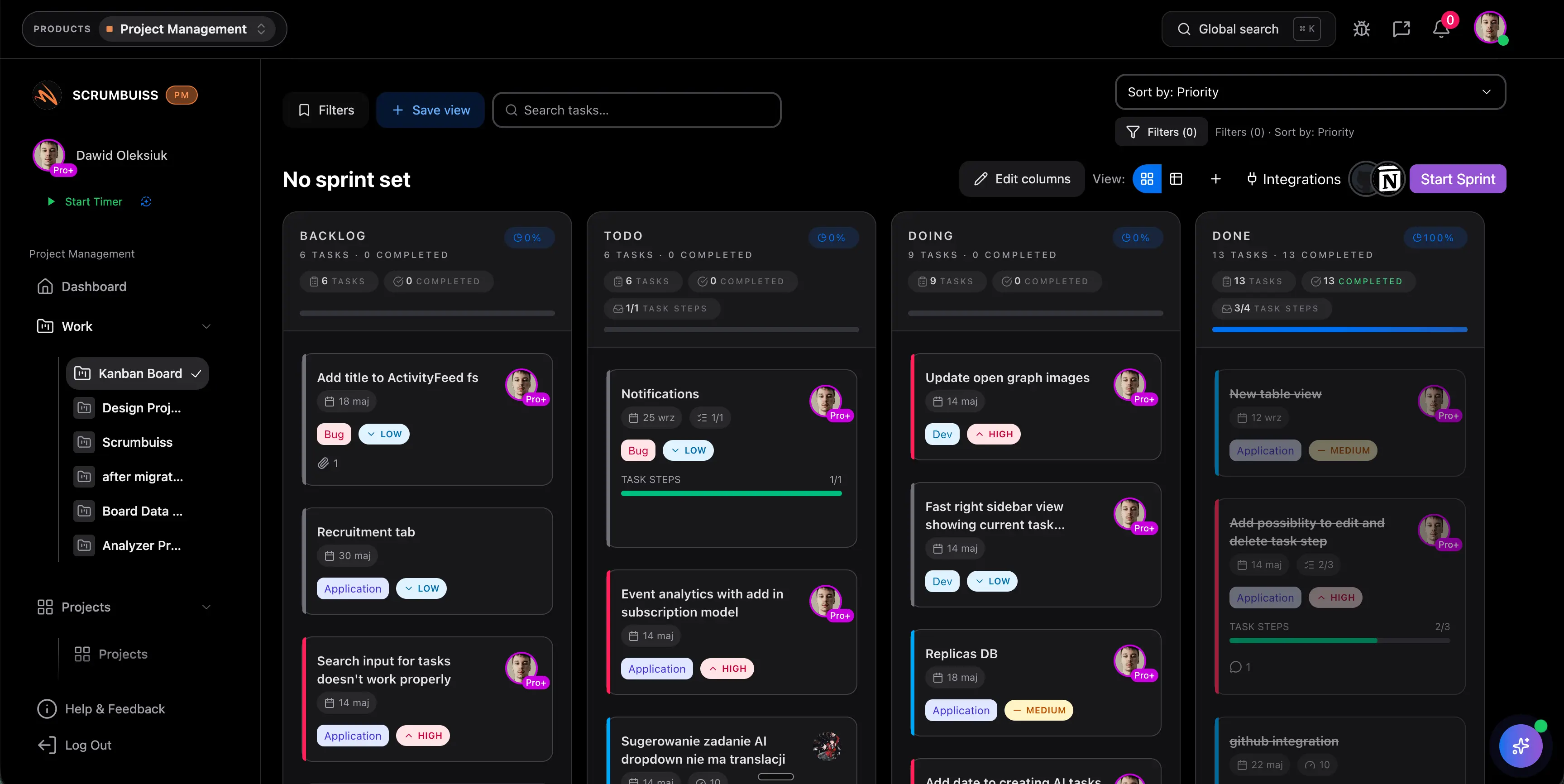
Client project management
Use caseClient project management software for agencies that keeps intake, briefs, files, approvals, time tracking, workload, and client-visible status in one workflow.
Agencies
Use caseProject management software for agencies that keeps time tracking, files, workload visibility, and reporting in one workflow.
Need more ideas? Browse use cases .
Project roadmap template FAQ
What is a project roadmap template? +
A project roadmap template is a reusable structure for organizing initiatives, objectives, themes, owners, priorities, timing, dependencies, risks, success metrics, and review decisions.
What should a project roadmap include? +
Include the objective, initiative, theme, owner, priority, timeframe, target milestone, dependencies, capacity notes, risks, status, success metric, decisions needed, and next review date.
How is a project roadmap different from a project plan? +
A roadmap shows the sequence, priority, timing, and outcome logic across initiatives. A project plan goes deeper into tasks, owners, dates, deliverables, dependencies, and execution details for one project or workstream.
Can this roadmap template be used for product roadmap planning? +
Yes. It works for product roadmap planning when the team needs to connect initiatives to objectives, success metrics, dependencies, capacity, and decision timing before moving work into delivery.
Can I use this roadmap template in Excel or Google Sheets? +
Yes. The downloadable CSV opens in Excel, Google Sheets, and most spreadsheet tools. It is a lightweight starting point before roadmap and portfolio work move into a live system.
When should roadmap planning move into portfolio software? +
Move beyond a spreadsheet when roadmap decisions depend on live project status, capacity pressure, delivery risk, dependencies, and stakeholder reporting that should not be rebuilt manually before each review.