Scope of work template
Download a free scope of work template with example deliverables, exclusions, acceptance criteria, milestones, assumptions, and approval checkpoints.
Use this scope of work template to set clear boundaries before kickoff, then keep the same scope attached to project intake, briefs, files, approvals, and delivery work in Scrumbuiss.
What this scope of work template helps you do
Use these checkpoints to reduce ambiguity before delivery starts and before stakeholders begin requesting adjacent work.
- ✓ Scope of work outline for deliverables, exclusions, assumptions, milestones, and approval checkpoints
- ✓ Filled example you can adapt for agency projects, implementation work, and internal delivery handoffs
- ✓ Acceptance criteria prompts that reduce vague sign-off and late change requests
- ✓ Markdown format you can copy into docs first, then attach to project briefs and delivery work in Scrumbuiss
When to use this template
A scope of work template is most useful before kickoff, during client handoffs, and whenever delivery expectations need a written boundary.
- Use it before kickoff when a client, stakeholder, or internal team needs a clear agreement on what will and will not be delivered.
- Use it when scope keeps changing in chat, email, or sales notes and the delivery team needs one working reference.
- Use it when acceptance criteria and approval steps need to be visible before work starts.
- Use it when project brief, intake, and delivery details need a contract-like outline without becoming a full legal document.
What is inside the scope of work template
The template covers scope, exclusions, milestones, acceptance criteria, ownership, dependencies, and change-control notes.
What to include in a scope of work
A useful SOW makes deliverables, non-goals, approval expectations, and change handling visible before work starts.
Project objective
State the business outcome and why the work exists so scope decisions can be judged against the same goal.
Deliverables
List the tangible outputs the team will provide, including format, expected level of detail, and ownership where useful.
Exclusions
Name what is out of scope so stakeholders can distinguish a missed requirement from a future change request.
Milestones
Capture the major dates, review points, and handoff assumptions that define the delivery path.
Acceptance criteria
Define how each deliverable will be approved so sign-off is based on visible conditions instead of subjective preference.
Change control
Explain how new requests, dependency changes, or timeline shifts will be reviewed before they alter the committed scope.
Filled scope of work example
Use this example as a practical reference for writing scope around a client onboarding or implementation project.
Objective
Create a client onboarding workspace that gives customers one place to submit files, review project status, and approve launch assets.
In scope
Configure the onboarding project, build the intake form, migrate the launch checklist, connect required files, and publish the shared brief.
Out of scope
Billing setup, CRM migration, legal copy review, and custom white-label portal design are excluded from this phase.
Milestones
Kickoff on May 26, first workspace review on June 3, stakeholder approval on June 10, and launch handoff on June 14.
Acceptance criteria
The client can submit required files, see assigned project status, approve the final checklist, and access the shared kickoff brief.
Change control
New requests are logged through project intake, reviewed by the delivery lead, and accepted only when impact on timeline and owner capacity is clear.
Scope review checklist
Run this checklist before the project kickoff or before you share the SOW with a client or approver.
- Confirm every deliverable has an owner, expected output, and acceptance condition.
- Review exclusions with stakeholders before kickoff so non-goals are explicit.
- Check that milestones reflect real dependencies, approval windows, and team capacity.
- Name the approver for each sign-off point instead of relying on a generic stakeholder group.
- Define how new requests are captured, evaluated, and either accepted or deferred.
- Link the SOW to the project brief or intake record so delivery work starts from the same scope.
Common scope of work mistakes
These patterns usually create scope creep, late rework, and approval confusion.
- Writing deliverables too broadly, which leaves the team arguing about what completion means later.
- Skipping exclusions, which makes every adjacent request look like part of the original agreement.
- Treating the SOW as a static document that is not connected to project intake, briefs, files, or delivery status.
- Leaving approvals vague until the final review, when rework is most expensive.
- Changing scope without recording the impact on schedule, workload, risk, or cost.
How to use this scope of work template
Start with the Markdown outline, confirm scope boundaries, and connect it to Scrumbuiss when intake, approvals, and delivery status need to stay aligned.
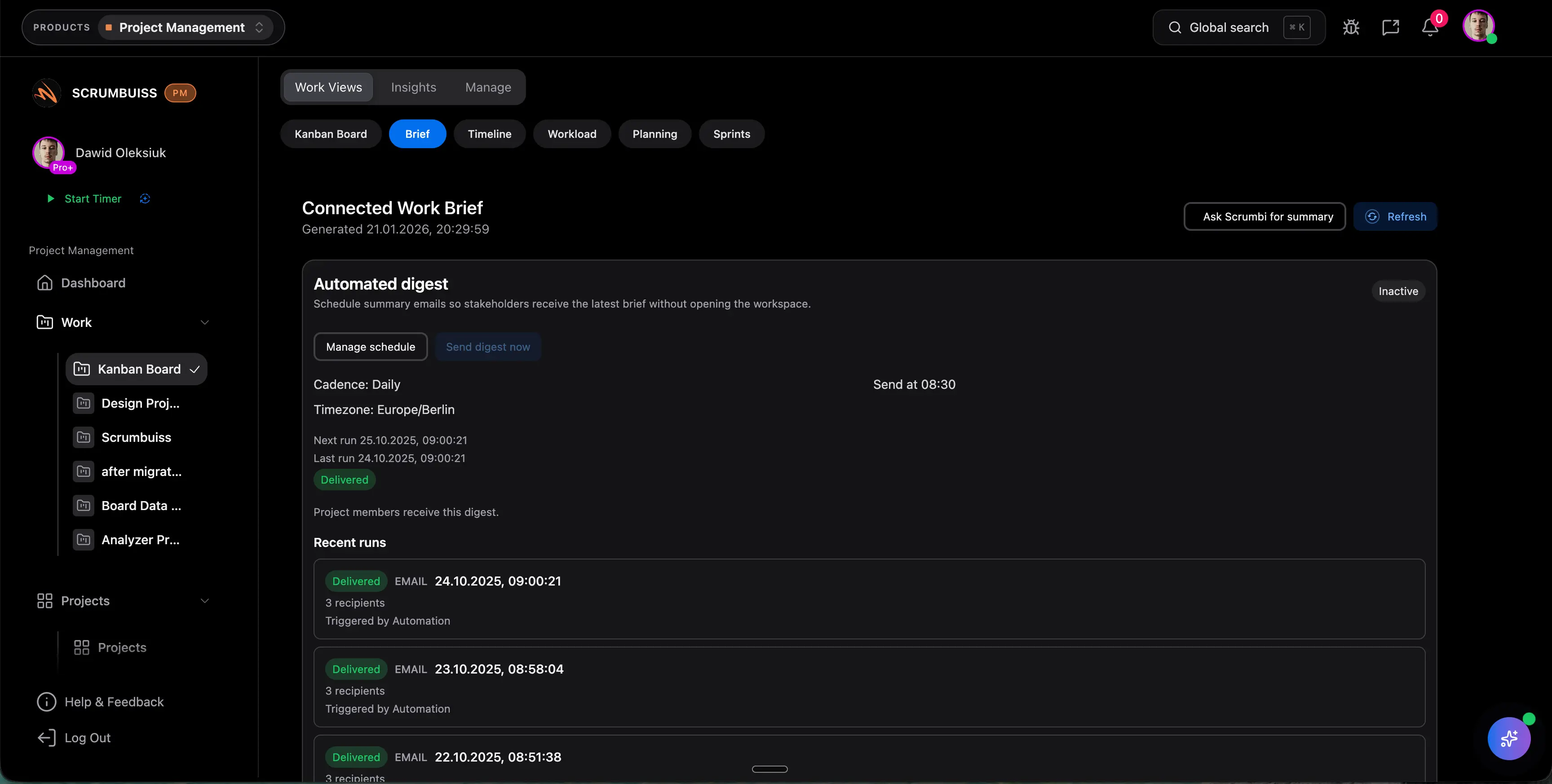
Draft scope before kickoff
Write the objective, deliverables, exclusions, and acceptance criteria before the project starts so kickoff can resolve gaps instead of discovering them.
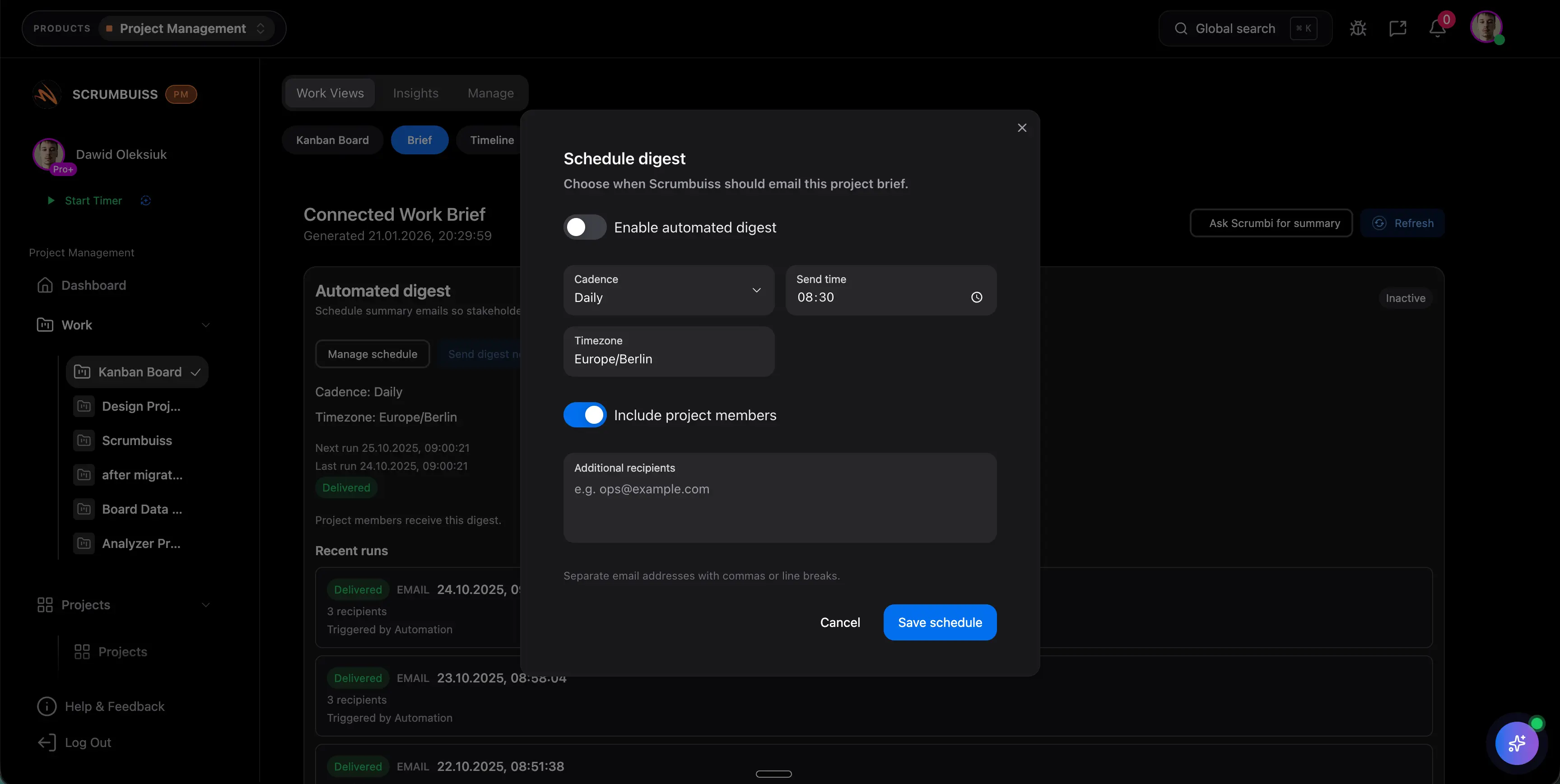
Confirm approvals and dependencies
Name approvers, review windows, required files, and external dependencies so the scope does not rely on hidden assumptions.
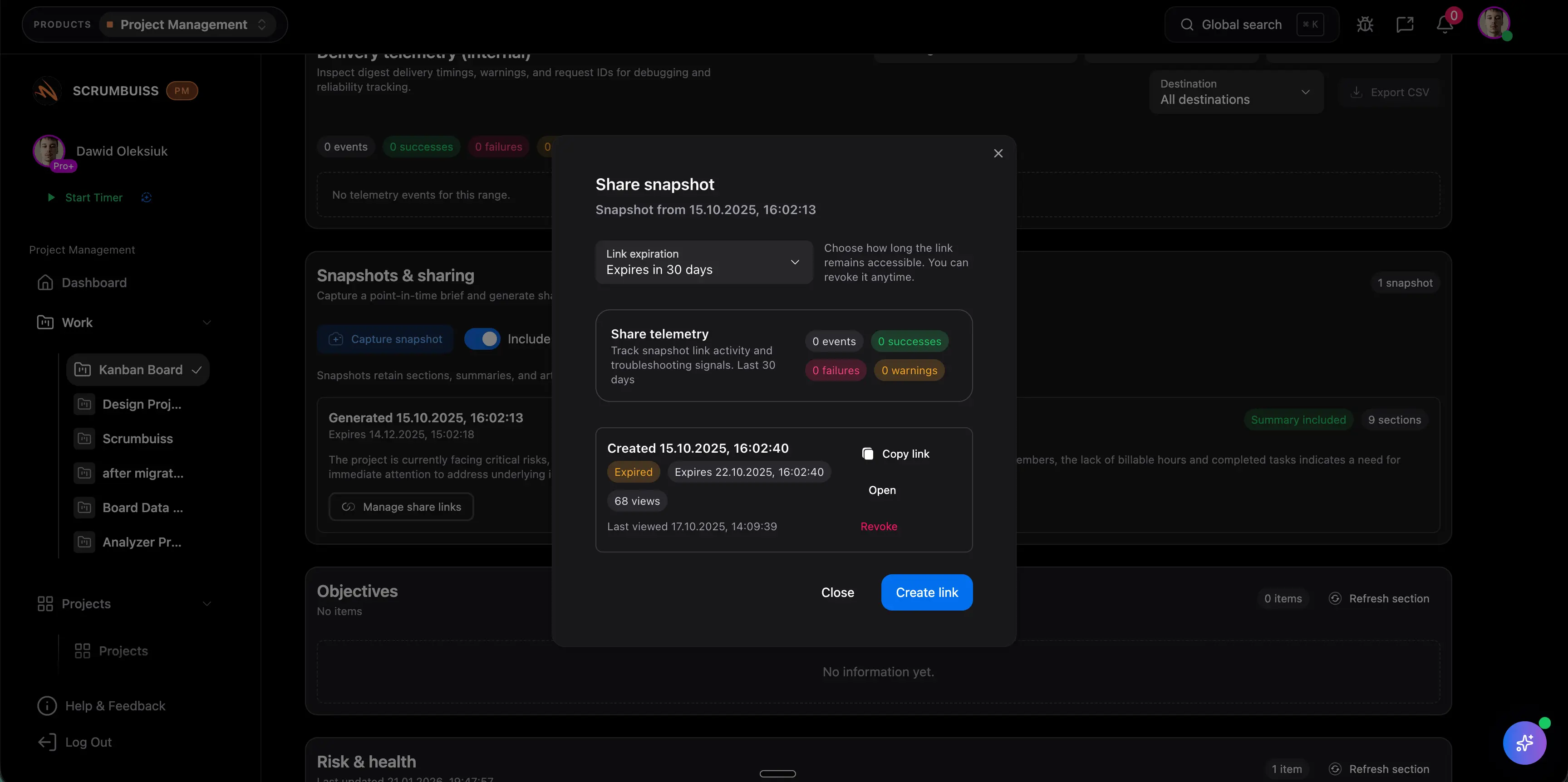
Connect scope to delivery work
Keep the SOW linked to the project brief, intake record, files, and status updates so scope changes can be reviewed in context.
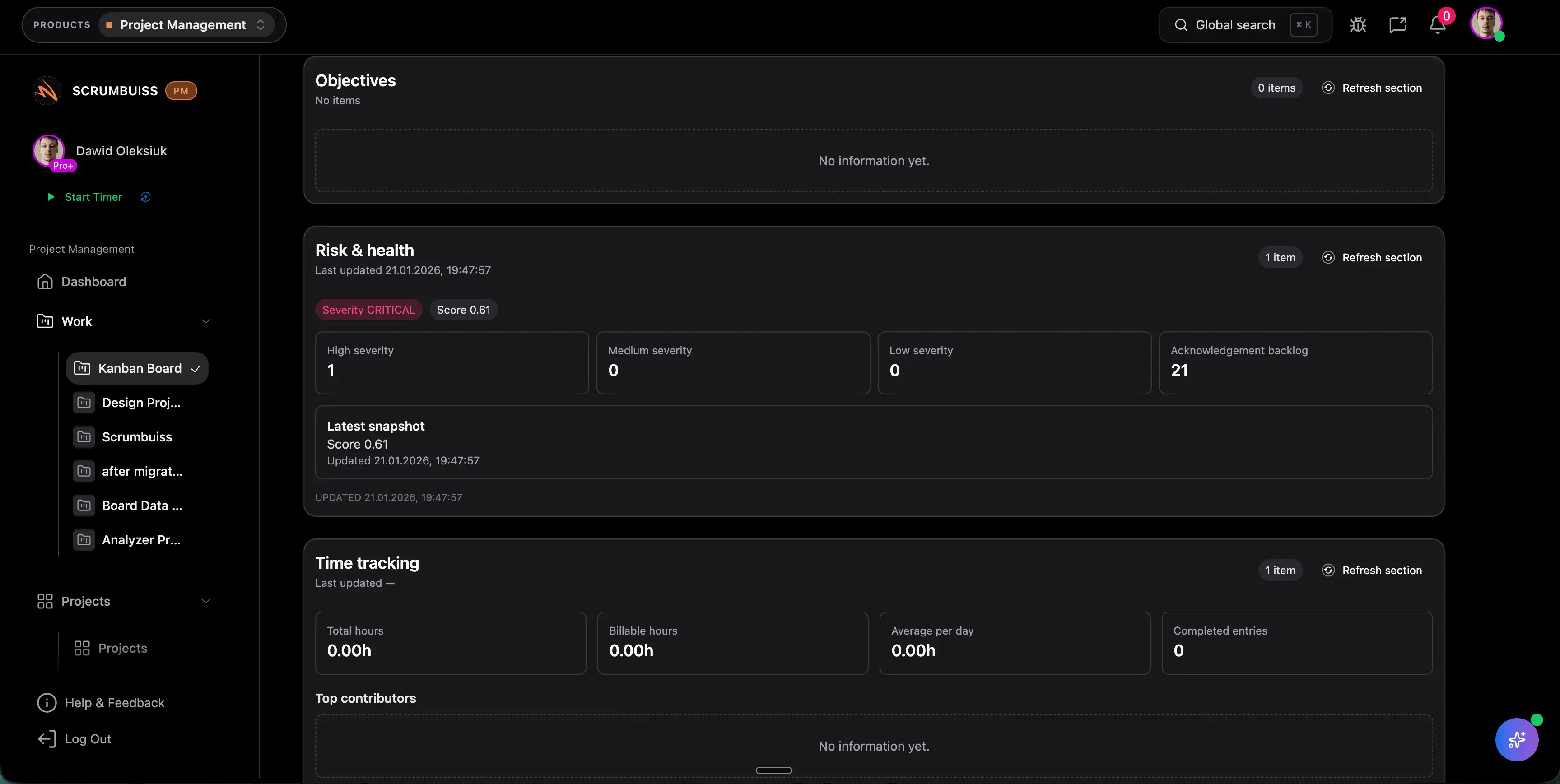
Related scope workflows
Use these Scrumbuiss pages when the SOW needs to stay attached to intake, briefs, client collaboration, files, and delivery reporting.
Recommended workflows
These workflows benefit from a clear scope of work before kickoff and during client-facing delivery.
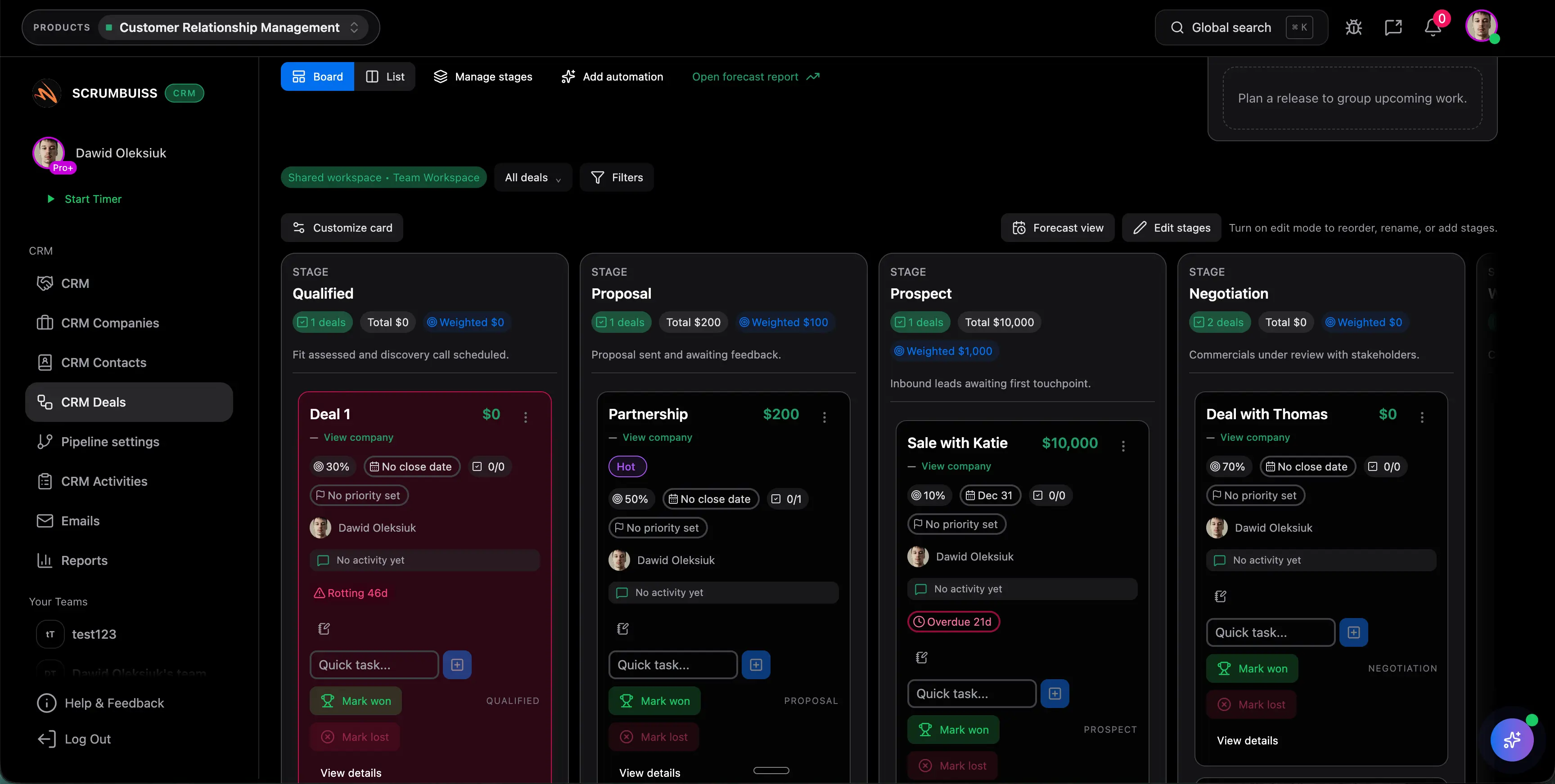
Sales pipelines
Use caseSales pipeline software for teams that need lead management, deal follow-up, CRM activity, and sales-to-delivery handoff in one workflow.
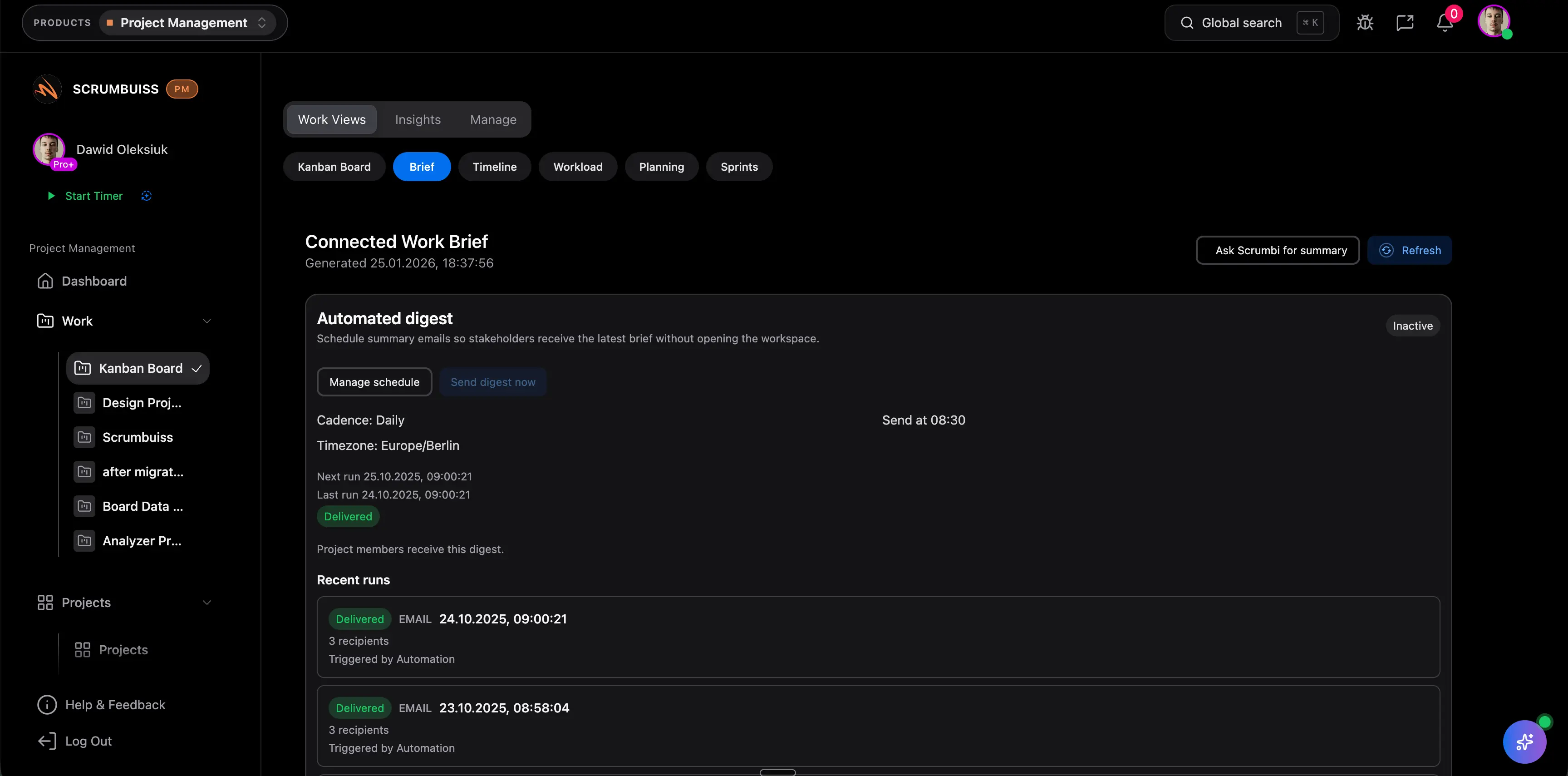
Client onboarding
Use caseClient onboarding software for agencies and implementation teams that keeps the closed-won handoff, kickoff brief, files, approvals, and first status cycle in one workflow.
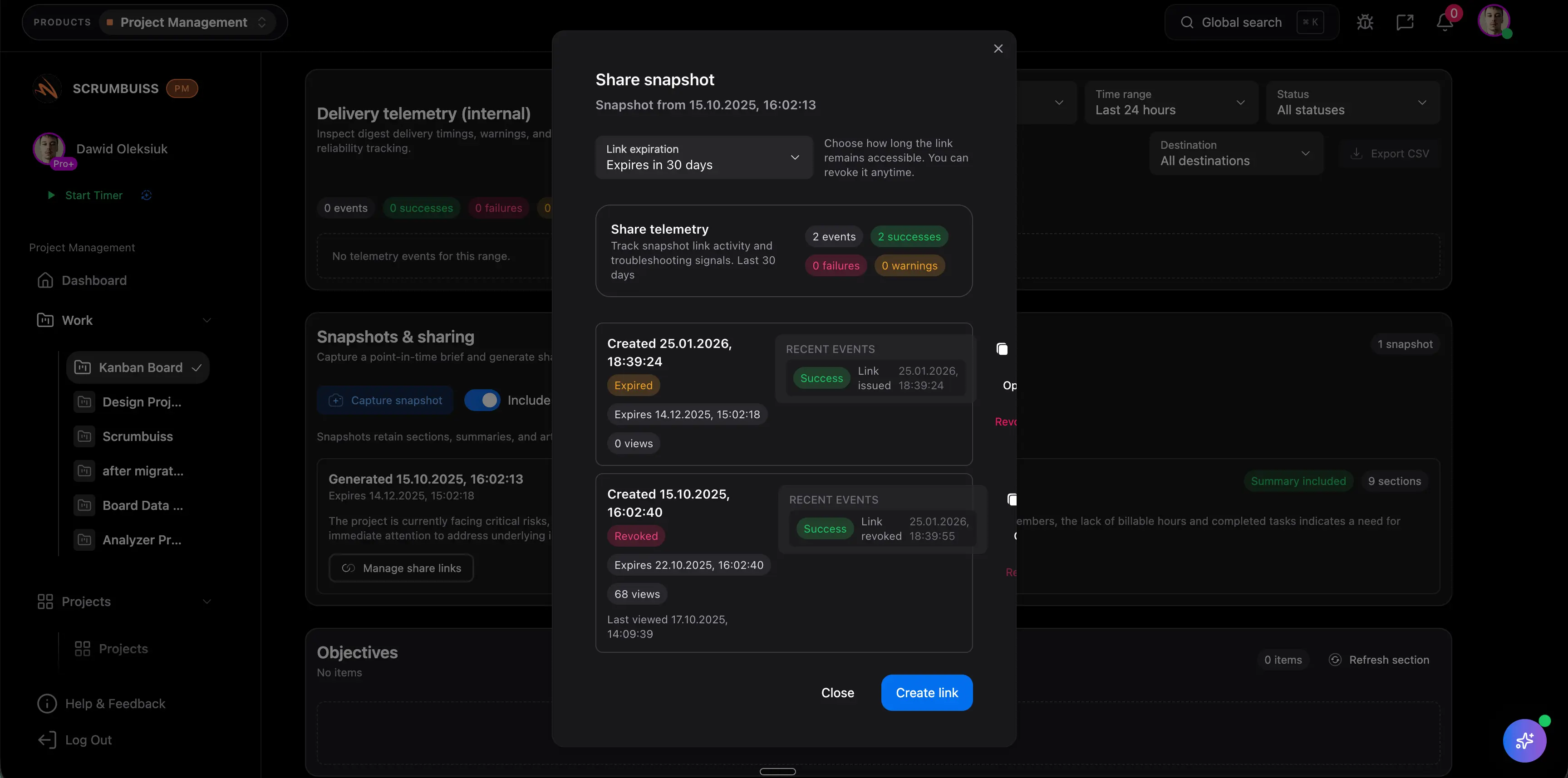
Client project management
Use caseClient project management software for agencies that keeps intake, briefs, files, approvals, time tracking, workload, and client-visible status in one workflow.
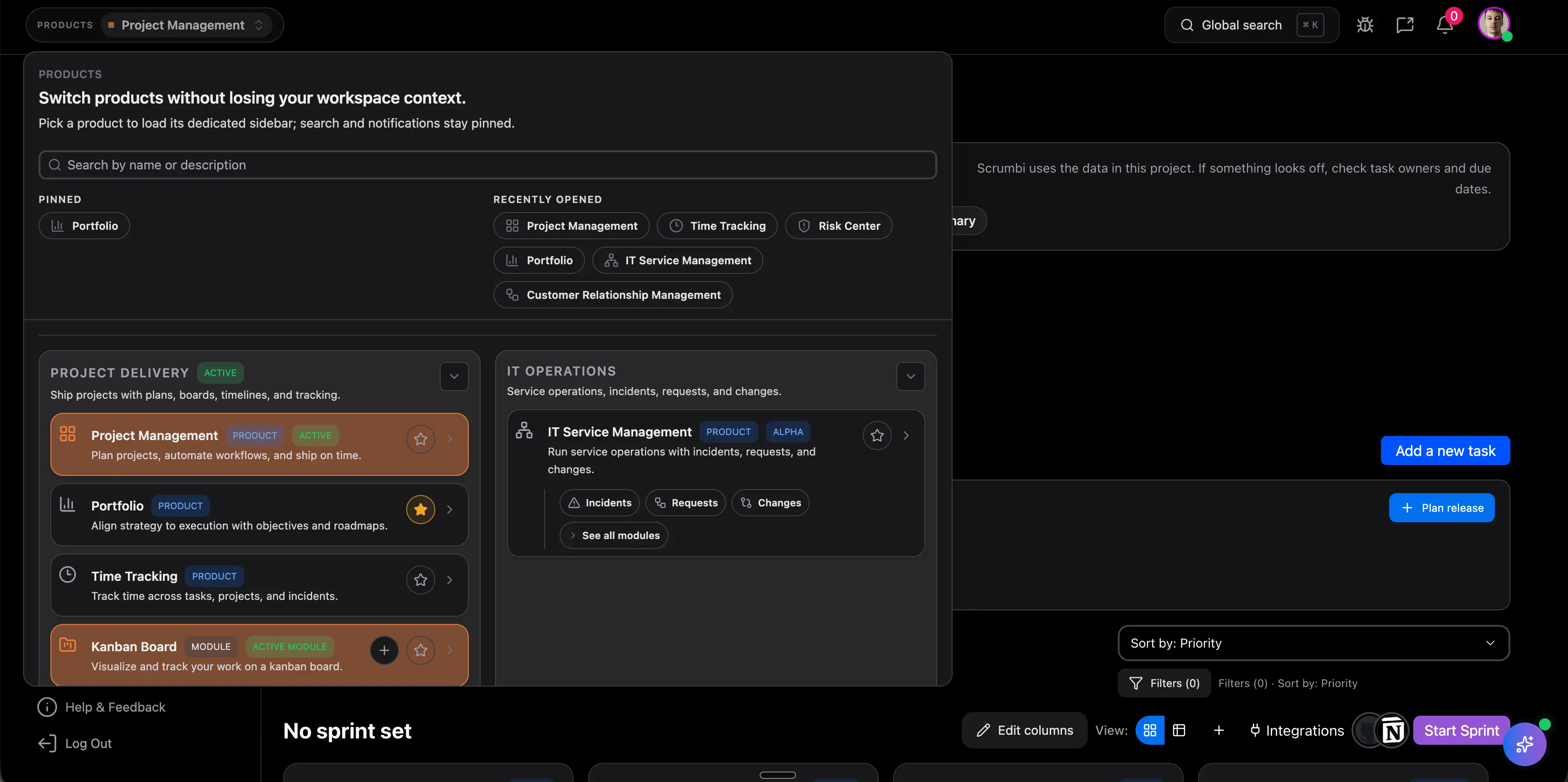
Agencies
Use caseProject management software for agencies that keeps time tracking, files, workload visibility, and reporting in one workflow.
Need more ideas? Browse use cases .
Scope of work template FAQ
What is a scope of work template? +
A scope of work template is a reusable outline for defining project objectives, deliverables, exclusions, milestones, acceptance criteria, responsibilities, dependencies, and change-control rules before work starts.
What is the difference between a scope of work and a project brief? +
A project brief explains why the project exists and aligns the team around goals, context, and stakeholders. A scope of work is more specific about what will be delivered, what is excluded, how acceptance works, and how changes are handled.
What should be out of scope in a SOW? +
Anything that stakeholders might reasonably assume is included but the team is not committing to should be out of scope. Common examples include extra revisions, data migration, training, custom integrations, legal review, or work that belongs in a later phase.
Can I use this scope of work template for agency projects? +
Yes. The template is designed for client delivery, implementation, and internal projects where deliverables, exclusions, approvals, and change requests need to be clear before kickoff.
When should scope move from a document into project management software? +
Move scope into software when deliverables, approvals, files, changes, and status updates need to stay connected to live work instead of being maintained in a separate document.