Project charter template
Download a free project charter template for project goals, scope, stakeholders, assumptions, risks, milestones, success criteria, and approval readiness.
Use this project charter template to turn a request into a decision-ready project summary before it moves into intake, approval, kickoff, and delivery.
What this project charter template helps you do
Use these checkpoints before approving the request or handing it to a delivery owner.
- ✓ Define project goals, sponsor, owner, scope, and success criteria before delivery starts
- ✓ Capture assumptions, constraints, risks, dependencies, and milestone expectations in one outline
- ✓ Clarify stakeholder roles, decision rights, and approval readiness before the first kickoff
- ✓ Use the downloadable Markdown file as a lightweight charter or as the starting point for live intake
When to use this template
A project charter is most useful when a request needs enough structure for approval, prioritization, or kickoff readiness.
- Before a project request is approved and routed into delivery.
- When stakeholders need one readable charter before kickoff, funding, or scope confirmation.
- When a project intake form captures the request but the team still needs a decision-ready summary.
- When sponsor approval depends on goals, assumptions, risks, and success criteria being visible.
What is inside the project charter template
The template covers goals, scope, stakeholders, success criteria, assumptions, risks, milestones, approval, and follow-up actions.
What to include in a project charter
A useful charter makes the business goal, owner, scope, decision rights, and success criteria visible before delivery starts.
Business goal
State the outcome the project should create and why the work matters now.
Scope boundaries
List what is included, what is excluded, and which assumptions need confirmation before delivery starts.
Stakeholders and decision rights
Name sponsors, approvers, contributors, and owners so handoff and escalation do not rely on private knowledge.
Success criteria
Define the metric, evidence source, and review timing that will show whether the project worked.
Risks and dependencies
Capture known blockers, approvals, external inputs, and mitigation owners before the request becomes active work.
Project charter example
Use this filled outline as a reference for project intake, client onboarding, or internal delivery work.
Goal
Launch a client onboarding workspace that reduces manual kickoff follow-up by 25 percent within eight weeks.
Scope
Include intake form cleanup, project brief setup, file handoff, kickoff agenda, and first status update. Exclude CRM replacement and contract changes.
Stakeholders
Sponsor: agency operations lead. Owner: implementation manager. Approver: client services director. Contributors: account lead, designer, delivery lead.
Success criteria
Every new client has a completed handoff, approved brief, named owner, and first milestone before kickoff.
Project charter review checklist
Run this checklist before the project is approved, prioritized, or moved into delivery.
- The charter names the sponsor, project owner, approvers, and contributors.
- The goal is specific enough to evaluate after delivery starts.
- Scope and out-of-scope notes are written in plain language.
- Risks, dependencies, and assumptions have owners or next steps.
- Approval criteria are clear before work moves from intake into delivery.
- The charter links to the intake record, project brief, files, and stakeholder matrix when those exist.
Common project charter mistakes
These patterns usually create unclear ownership, hidden risk, and late approval confusion.
- Writing a charter as a long business case instead of a decision-ready project summary.
- Skipping out-of-scope notes, which lets hidden expectations become delivery risk.
- Naming stakeholders without clarifying who can approve scope, budget, or launch readiness.
- Defining success only as completion rather than a measurable outcome or accepted deliverable.
- Letting the charter become a static document after approval instead of connecting it to live work.
How to use this project charter template
Start with the Markdown outline, confirm the decision model, and connect it to Scrumbuiss when intake, briefs, files, dashboards, and status updates need to stay aligned.
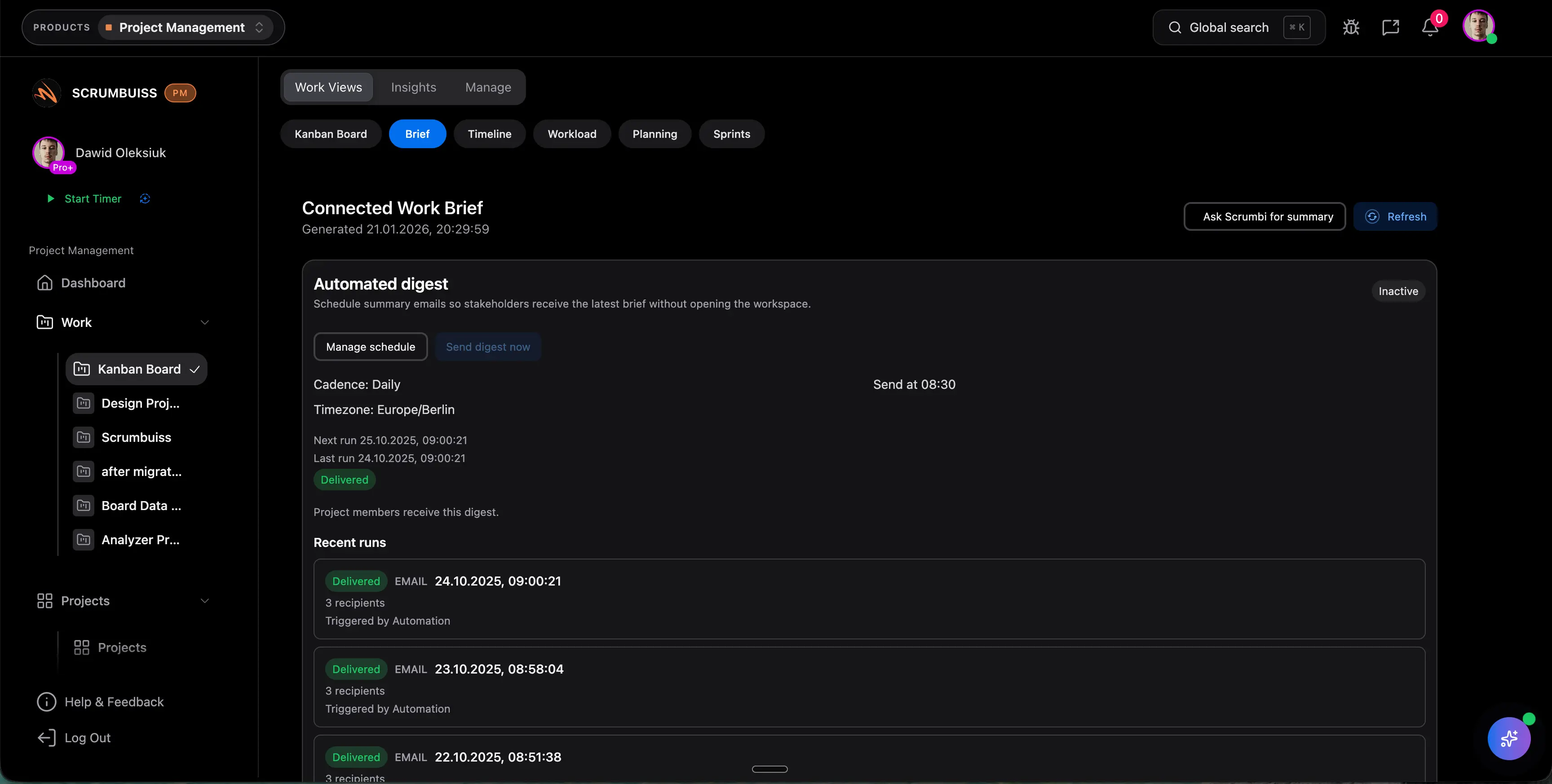
Draft the charter from the intake request
Summarize the goal, requester, sponsor, owner, and decision date so the team can evaluate the request without searching through chats or emails.
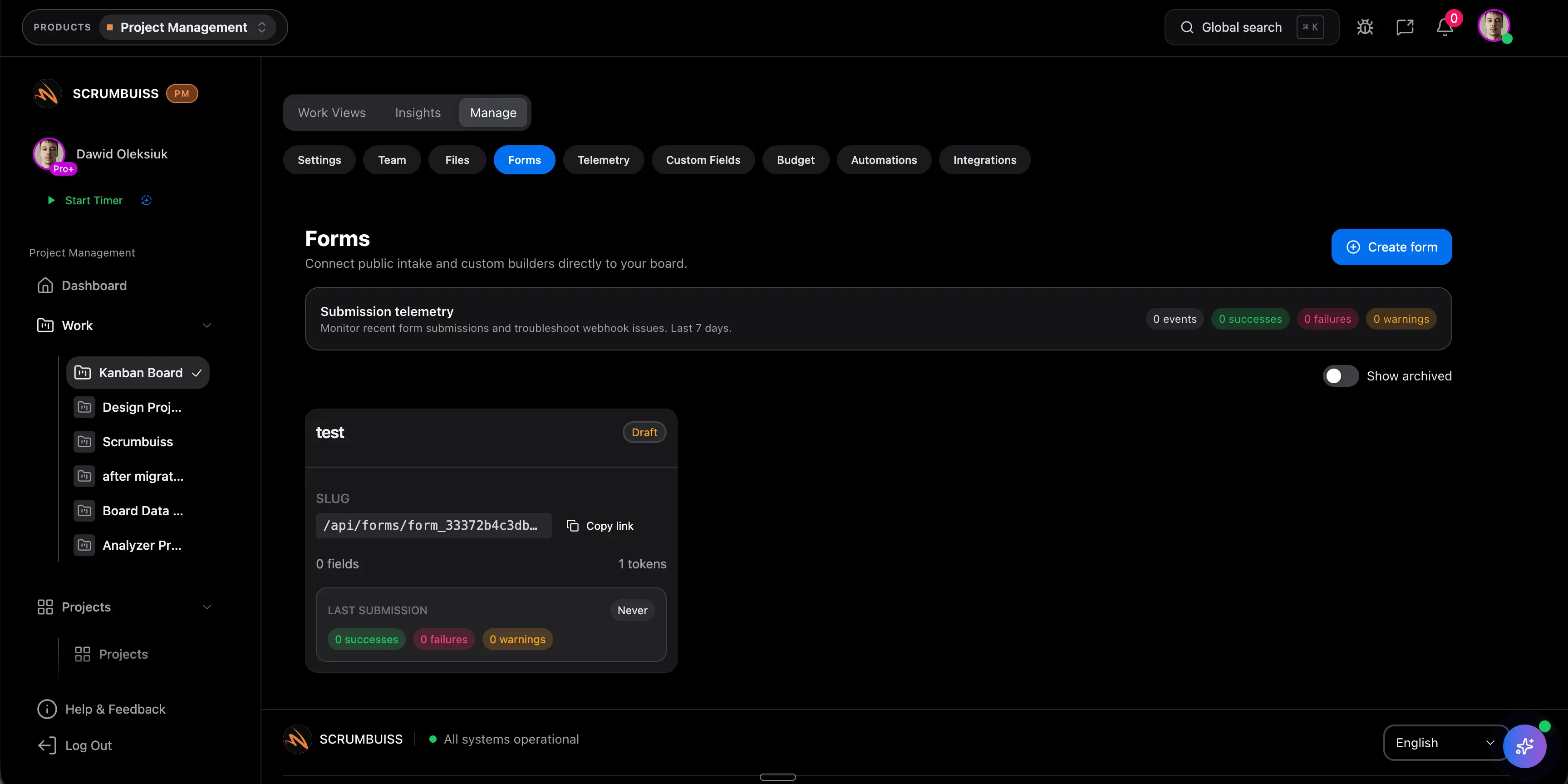
Confirm scope and stakeholders
Use the charter to name scope boundaries, approvers, decision rights, assumptions, and risks before kickoff.
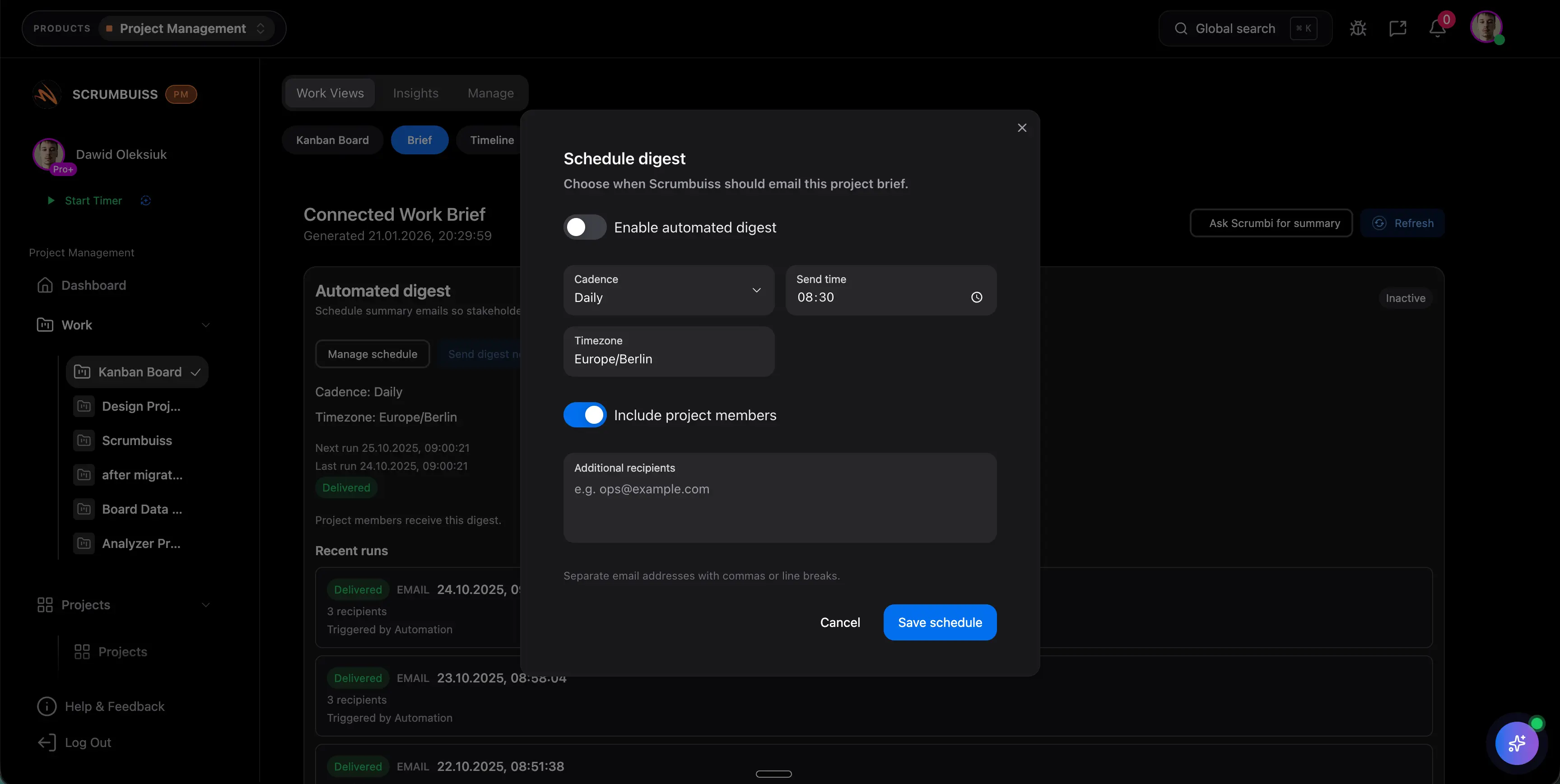
Move approved work into delivery
Connect the charter to a project brief, plan, dashboard, and stakeholder matrix so the approved context stays useful after kickoff.
Related charter workflows
Use these Scrumbuiss pages when the charter needs to stay attached to intake, briefs, approvals, stakeholder context, and delivery reporting.
Recommended workflows
These workflows benefit from a clear charter before work is approved or kicked off.
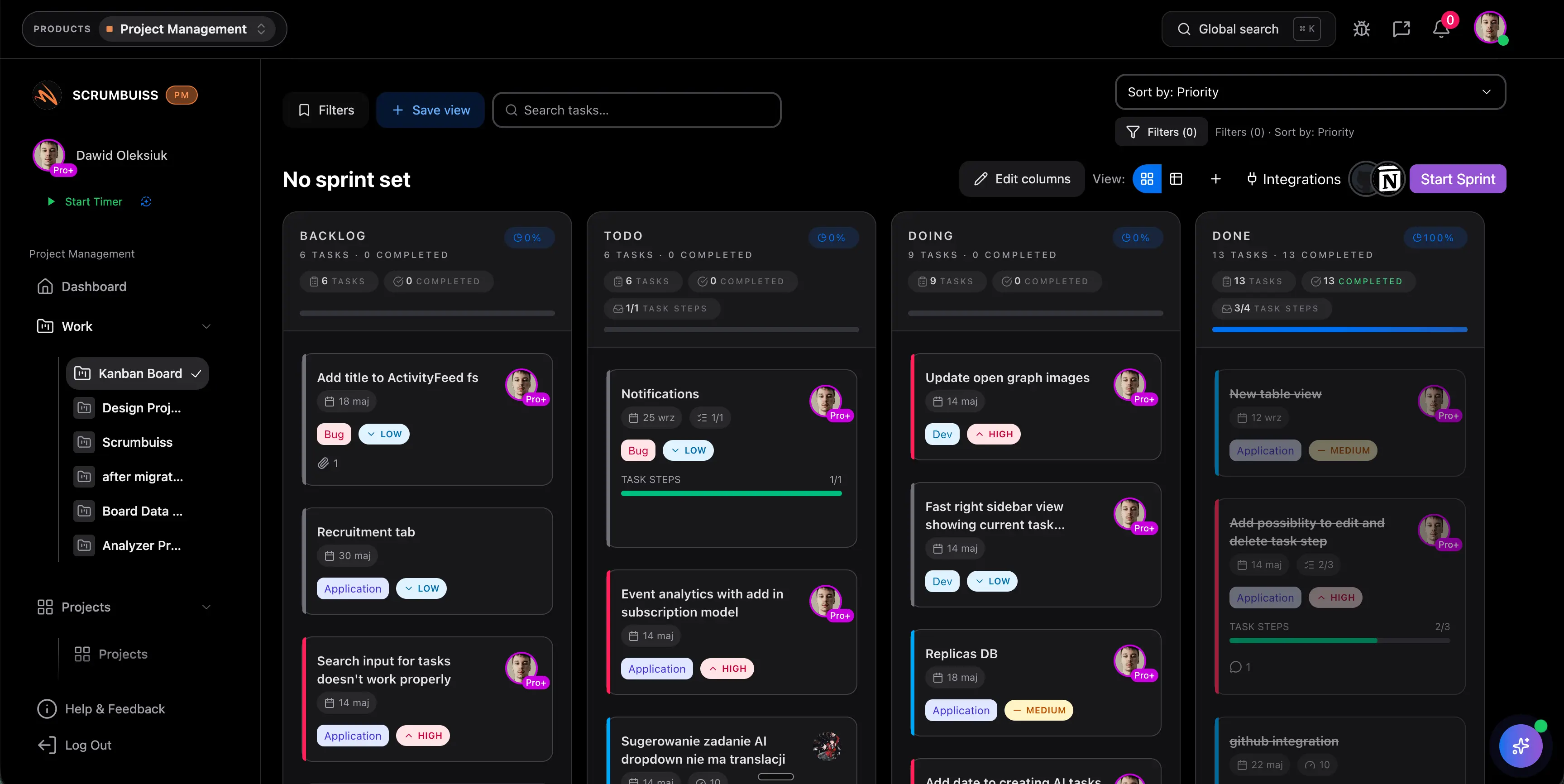
Software teams
Use caseProject management software for software teams that keeps sprint planning, dependencies, GitHub-adjacent delivery visibility, and stakeholder reporting in one workflow.
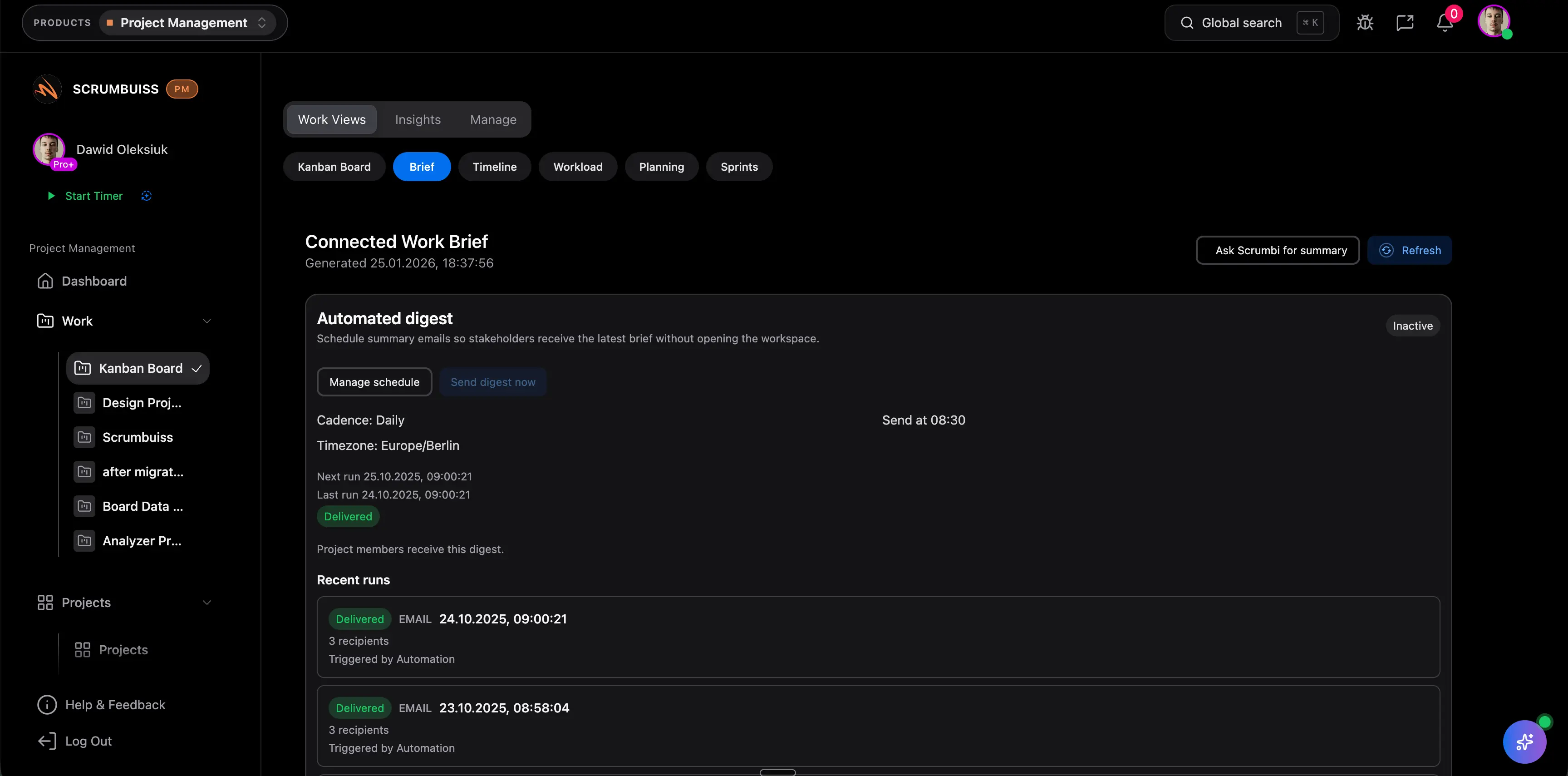
Client onboarding
Use caseClient onboarding software for agencies and implementation teams that keeps the closed-won handoff, kickoff brief, files, approvals, and first status cycle in one workflow.
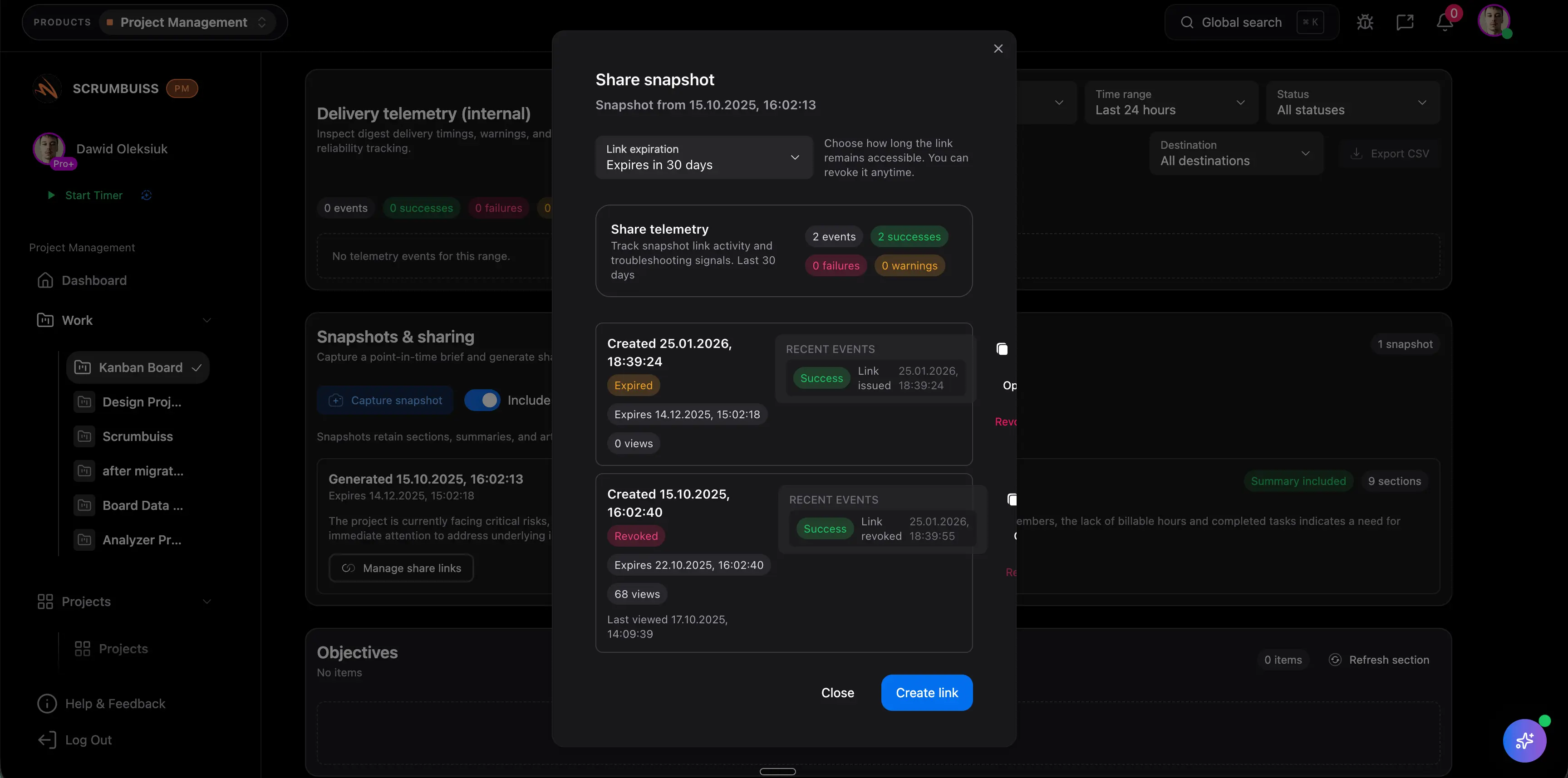
Client project management
Use caseClient project management software for agencies that keeps intake, briefs, files, approvals, time tracking, workload, and client-visible status in one workflow.
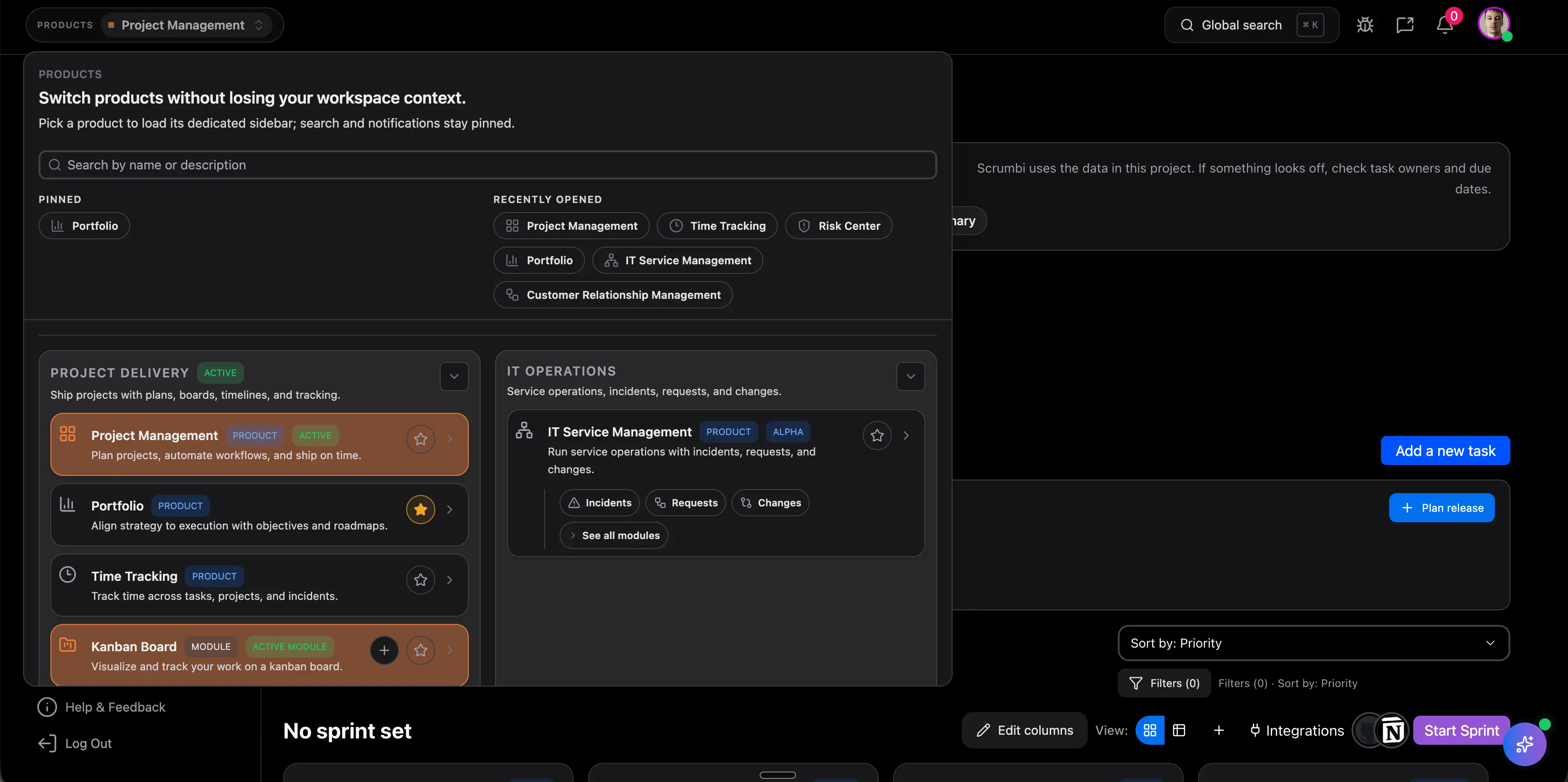
Agencies
Use caseProject management software for agencies that keeps time tracking, files, workload visibility, and reporting in one workflow.
Need more ideas? Browse use cases .
Project charter template FAQ
What is a project charter template? +
A project charter template is a reusable outline for defining why a project should exist, who owns it, what is in scope, what success looks like, which risks matter, and who must approve the work before delivery starts.
How is a project charter different from a project brief? +
A charter supports approval and readiness before the project moves forward. A project brief usually becomes the working context for kickoff and delivery. The charter decides whether the work should proceed; the brief keeps the approved context useful during execution.
Should every request need a project charter? +
No. Small tasks usually do not need a charter. Use one when the request has multiple stakeholders, approval gates, meaningful risk, unclear scope, or a handoff from intake into delivery.
What should be approved in a project charter? +
Approvers should confirm the goal, owner, scope boundaries, success criteria, major risks, decision rights, and whether the project is ready to move into planning or delivery.
When should a charter move into project management software? +
Move it into software when goals, approvals, risks, files, stakeholders, and status updates need to stay connected to live work instead of sitting in a separate document.