Client handoff template
Download a free client handoff template for sales-to-delivery handoff, client onboarding, kickoff readiness, stakeholders, scope, files, risks, and next actions.
Use this client handoff template to move from closed-won deal to kickoff with account context, stakeholders, promised scope, files, risks, open questions, and action owners in one place.
What this client handoff template helps you preserve
Use these checkpoints to keep sales-to-delivery handoff readable before kickoff, onboarding, or implementation work begins.
- ✓ Sales-to-delivery handoff outline for client onboarding and implementation kickoff
- ✓ Fields for account summary, stakeholders, promised scope, success criteria, files, risks, and open questions
- ✓ Action item table with owners, due dates, and kickoff follow-up
- ✓ Markdown format you can copy into docs before moving the workflow into Scrumbuiss
When to use this template
A client handoff template is most useful when the next team needs the sales context, not just a task assignment.
- Use it when a closed-won deal needs to move into onboarding, implementation, or client delivery without losing the sales context.
- Use it when customer success, account, sales, and delivery teams need one readable handoff before kickoff.
- Use it when kickoff meetings are spent reconstructing stakeholders, scope, files, risks, and promised outcomes.
- Use it before moving handoff work into Scrumbuiss CRM, Client Onboarding, Project Brief, Files, and delivery workflows.
What is inside the client handoff template
The Markdown outline keeps account context, stakeholders, scope, files, risks, open questions, kickoff notes, and action items together.
What to include in a client handoff
A useful handoff connects the customer story to stakeholders, scope, files, risks, decisions, and the next owned delivery action.
Account summary
Summarize who the client is, why they bought, what problem matters most, and what changed during the deal.
Stakeholders and roles
Name the sponsor, day-to-day contact, approvers, delivery owner, and anyone who can block kickoff.
Promised scope and success criteria
Capture what was promised, what is out of scope, and how the client will judge the first phase.
Files and source links
Link proposals, contracts, briefs, intake responses, brand assets, access notes, and any files the next team needs.
Risks and open questions
List missing approvals, unclear scope, access blockers, timeline pressure, and any commitment that needs confirmation.
Action items
Assign one owner and due date for every kickoff preparation task so the handoff does not stop at documentation.
Client handoff example structure
Use this structure for sales-to-delivery handoff, customer success handoff, implementation kickoff, or client onboarding readiness.
Account summary
The client bought a two-phase onboarding portal rollout to reduce manual file collection and launch reporting delays.
Stakeholders
Sponsor: VP Operations. Day-to-day contact: Implementation manager. Delivery owner: Scrumbuiss project lead.
Promised scope
Configure onboarding workspace, migrate checklist, connect files, prepare kickoff brief, and publish first status update.
Risks and open questions
Access owner is not confirmed, launch assets are incomplete, and approval timing may affect the first milestone.
Kickoff and next actions
Confirm files before kickoff, assign delivery owner, schedule first review, and link the handoff to the project brief.
Handoff review checklist
Run this checklist before kickoff so the next team can start without another discovery loop.
- Confirm the handoff identifies the client sponsor, day-to-day owner, approvers, and delivery owner.
- Check that promised scope, exclusions, and success criteria are explicit enough for kickoff.
- Link the proposal, brief, intake form, files, access notes, and other source documents.
- Separate active blockers from risks that only need monitoring.
- Assign owners and due dates for every open question before kickoff.
- Move the handoff into Scrumbuiss when CRM context, files, approvals, and first delivery work need to stay current.
Common client handoff mistakes
These patterns usually create kickoff confusion, duplicate briefing work, and stale customer context.
- Treating the handoff as a recap meeting instead of a reusable operating record.
- Leaving stakeholder roles vague until delivery needs approval.
- Documenting scope without linking the files, proposal, or intake answers that explain it.
- Skipping open questions because the deal is already closed-won.
- Letting the handoff live in a static document while onboarding tasks, files, and status updates move elsewhere.
How to use this handoff template
Start in the Markdown outline, confirm missing context, then move into Scrumbuiss when CRM, files, briefs, and delivery work need live ownership.
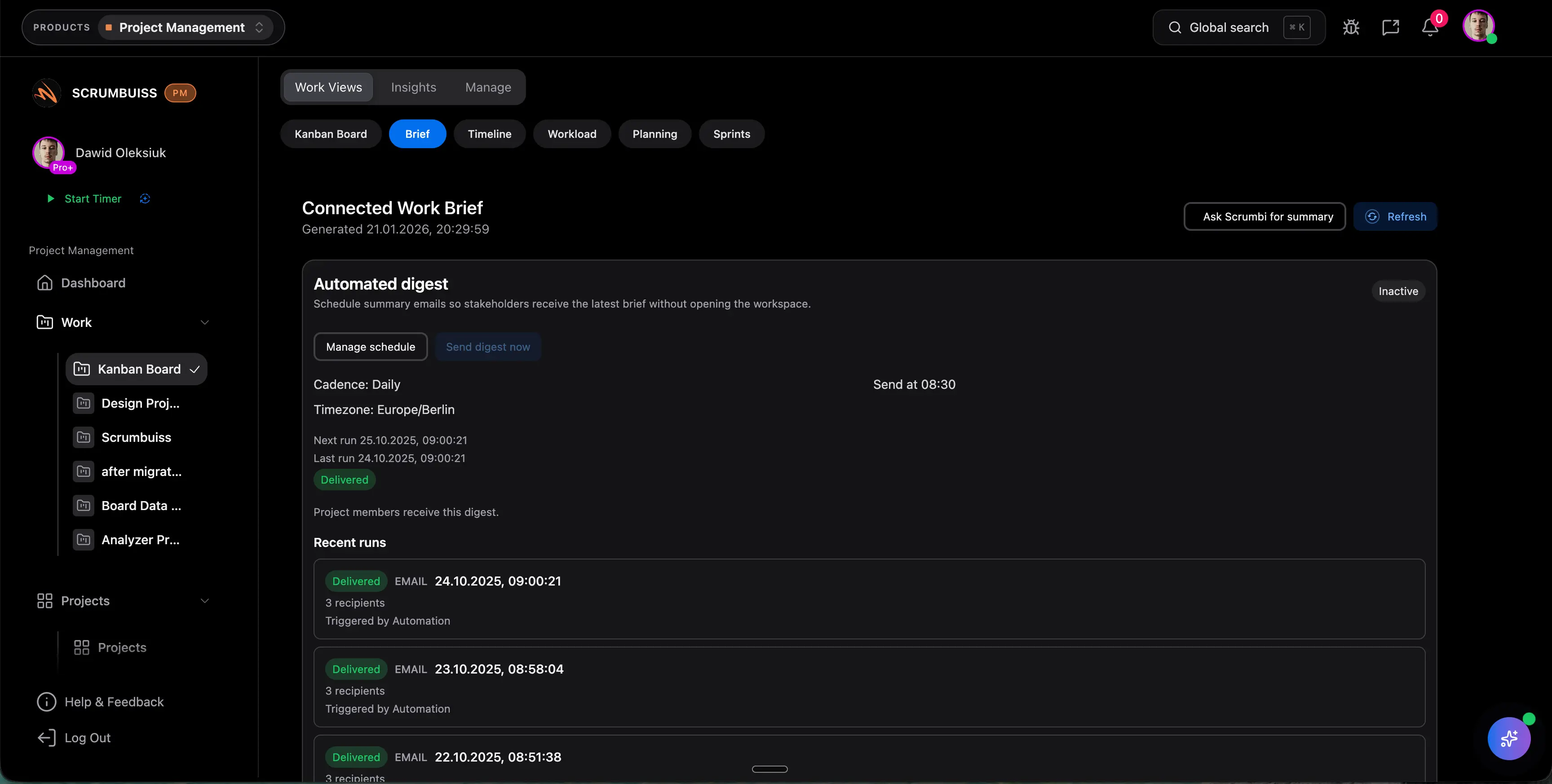
Capture the customer story before kickoff
Start with the account summary, stakeholders, promised scope, files, success criteria, and open questions the next owner needs.
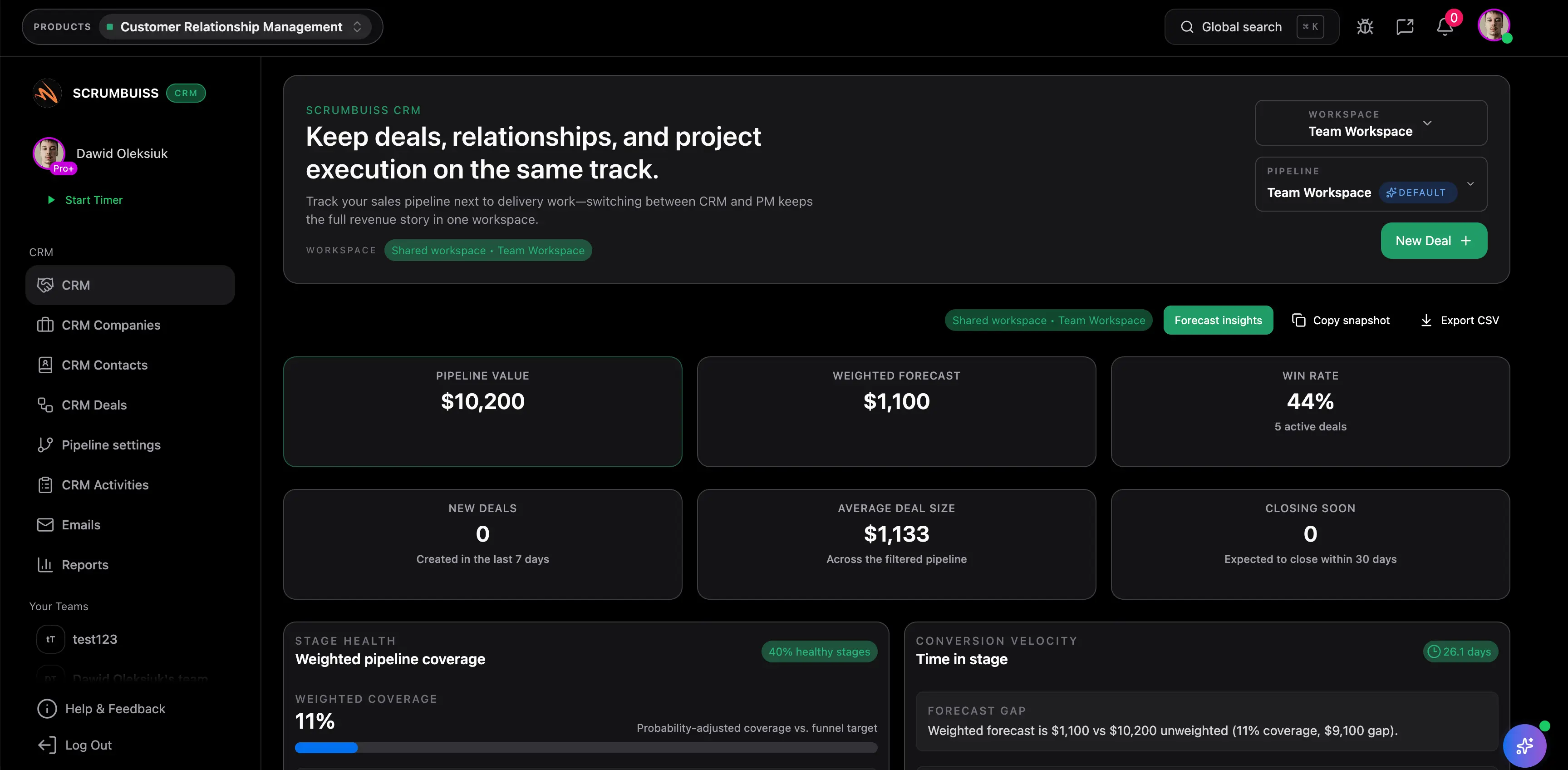
Turn handoff context into a kickoff brief
Use the handoff to create a brief, agenda, and action list that the delivery team can run without another recap meeting.
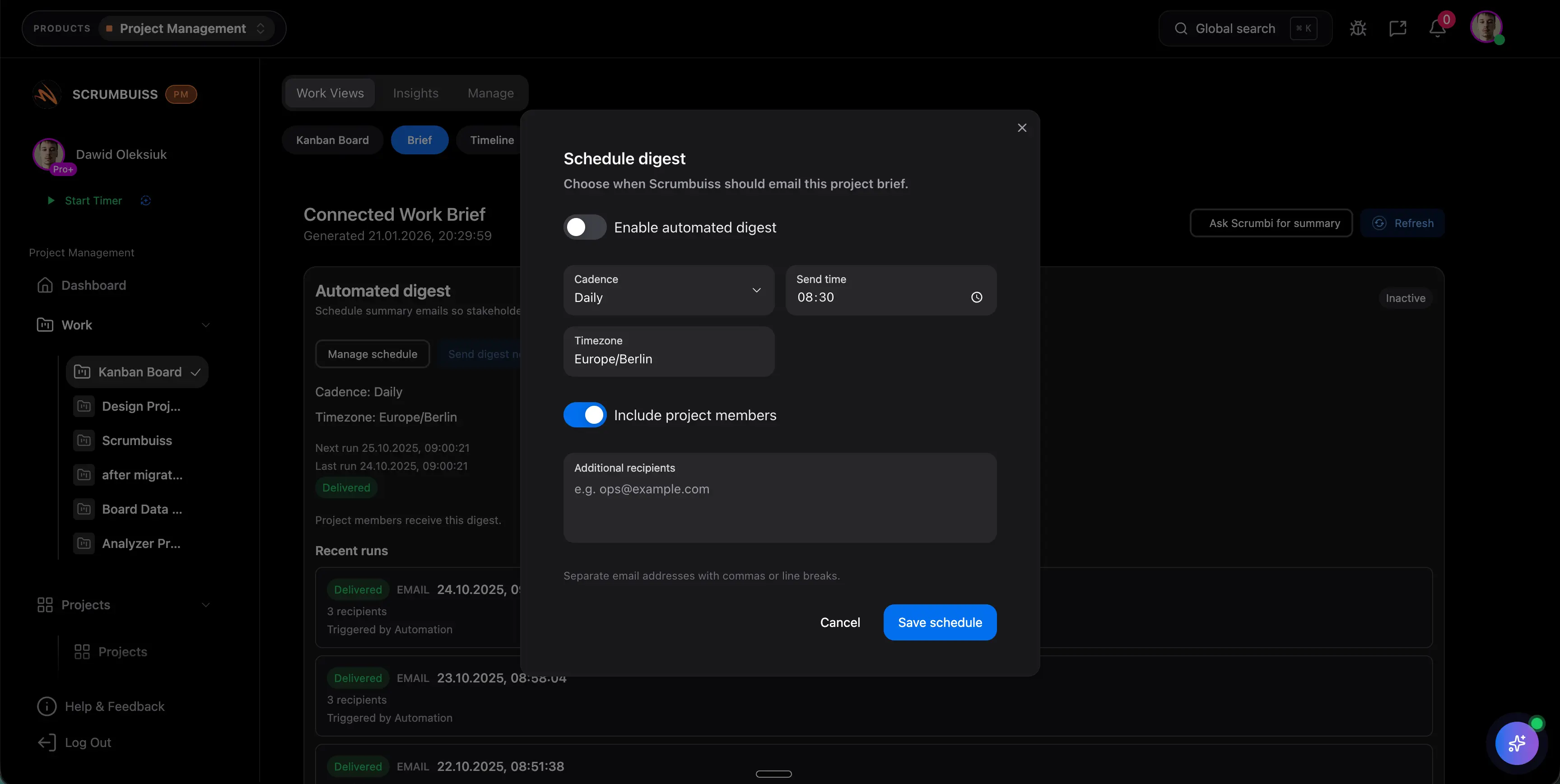
Move follow-up into the delivery workflow
Keep files, approvals, owners, risks, and first status updates connected when onboarding moves from document to live work.
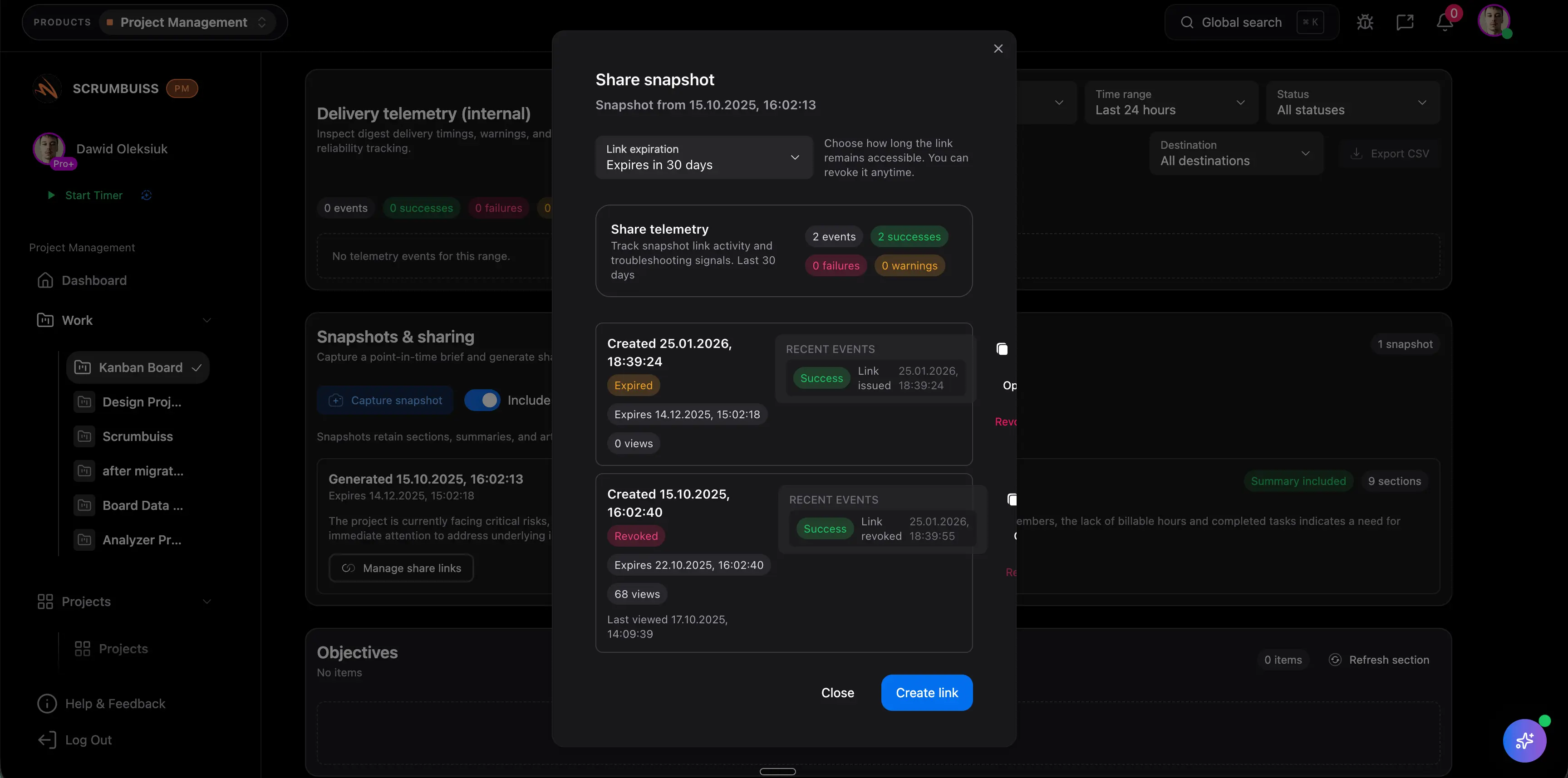
Related handoff workflows
Use these Scrumbuiss pages when client handoff needs CRM context, intake, briefs, files, client collaboration, and delivery follow-through.
Recommended workflows
These workflows benefit from a cleaner handoff before onboarding and client delivery become fragmented.
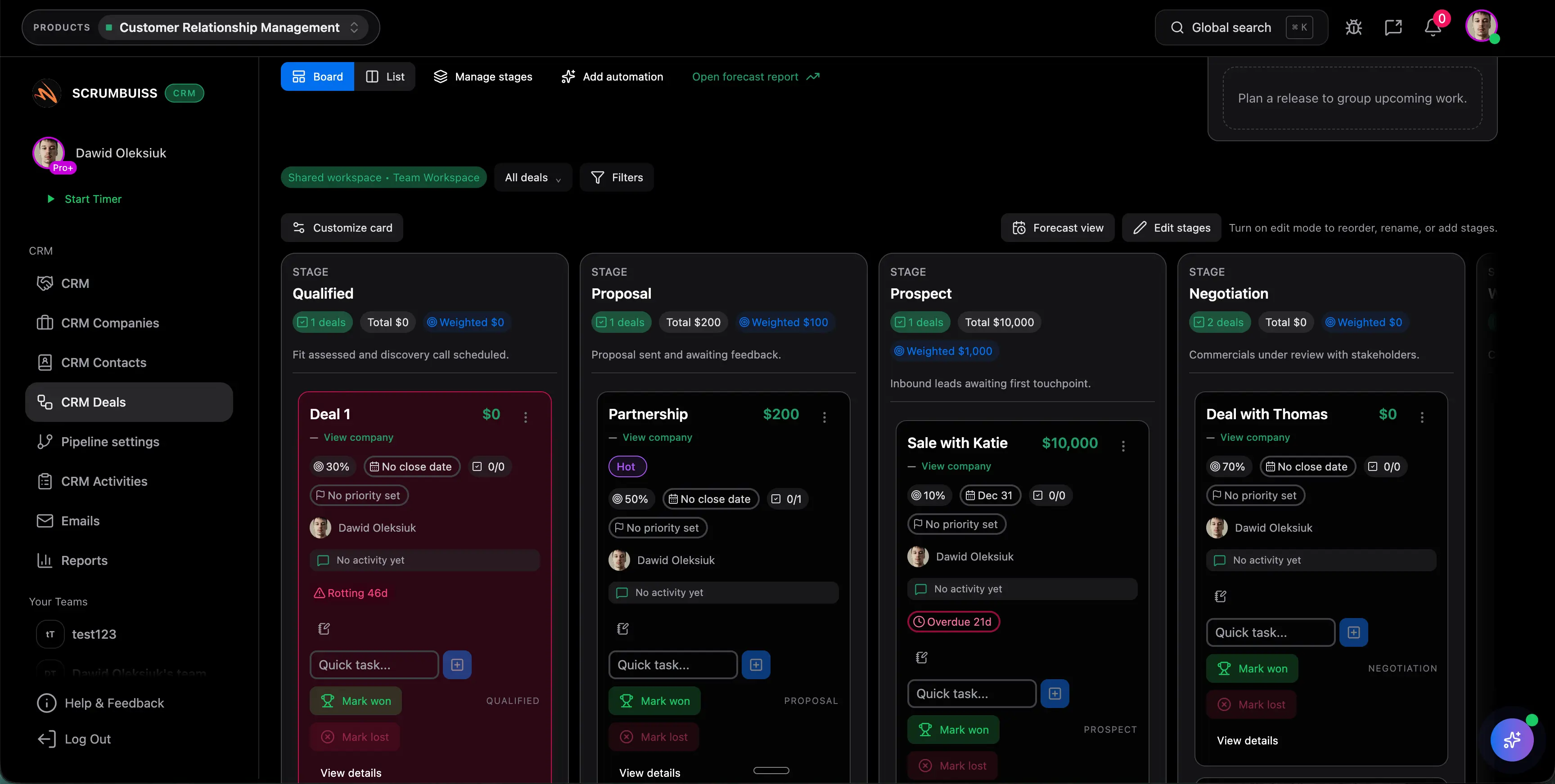
Sales pipelines
Use caseSales pipeline software for teams that need lead management, deal follow-up, CRM activity, and sales-to-delivery handoff in one workflow.
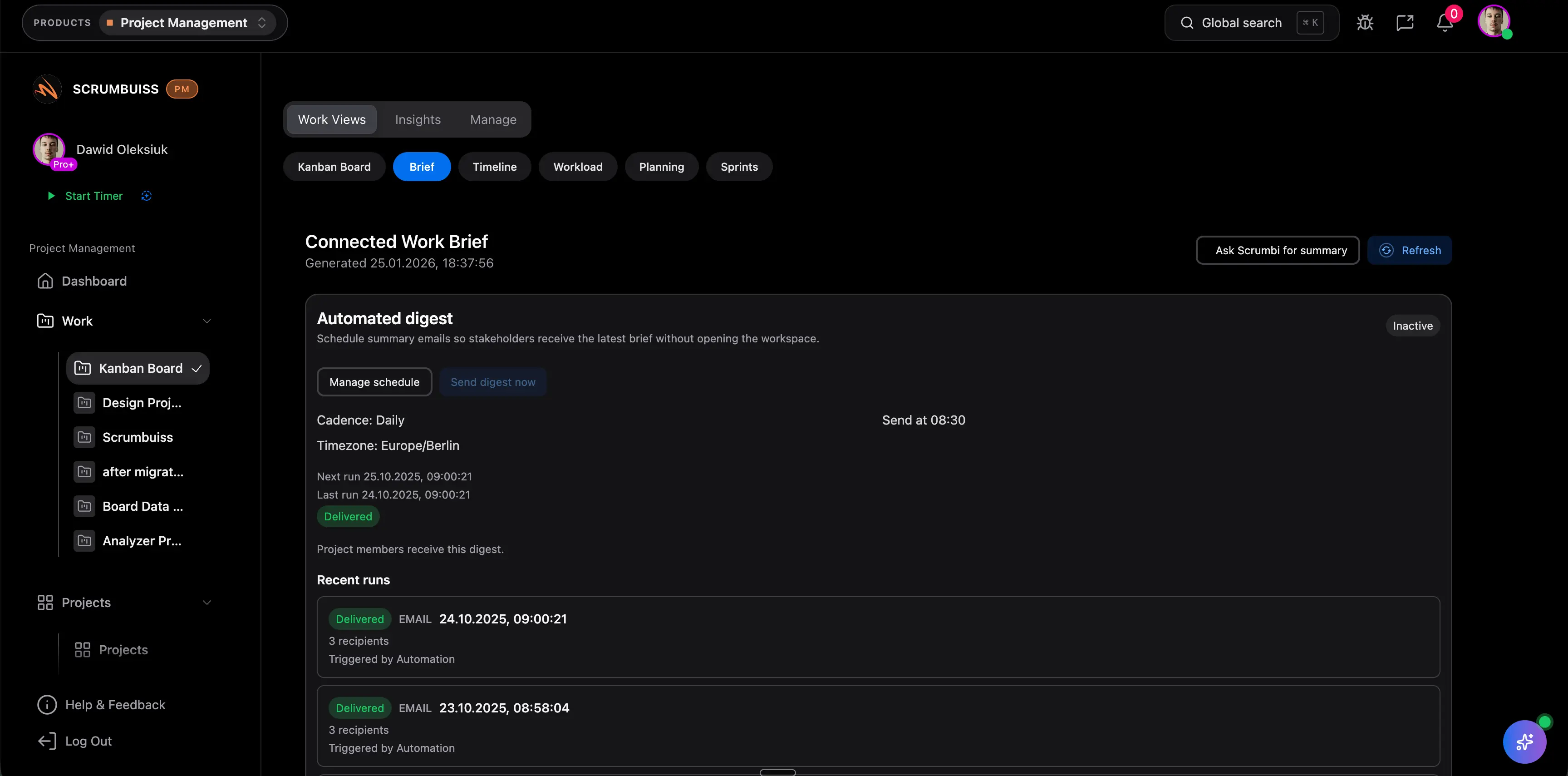
Client onboarding
Use caseClient onboarding software for agencies and implementation teams that keeps the closed-won handoff, kickoff brief, files, approvals, and first status cycle in one workflow.
Client project management
Use caseClient project management software for agencies that keeps intake, briefs, files, approvals, time tracking, workload, and client-visible status in one workflow.
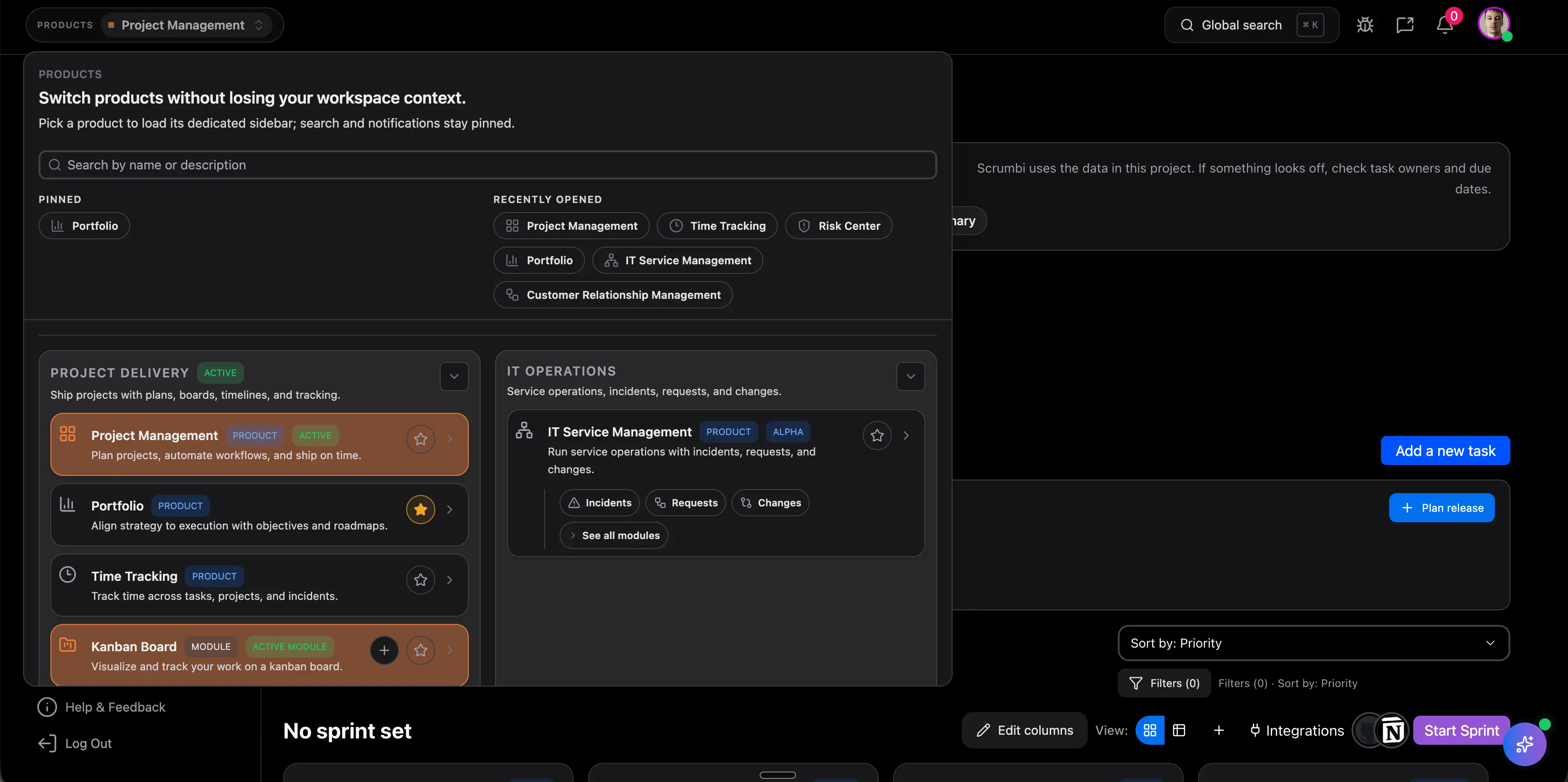
Agencies
Use caseProject management software for agencies that keeps time tracking, files, workload visibility, and reporting in one workflow.
Need more ideas? Browse use cases .
Client handoff template FAQ
What is a client handoff template? +
A client handoff template is a reusable outline for moving account context from sales, customer success, or account ownership into onboarding, implementation, or delivery. It should capture stakeholders, scope, files, risks, open questions, action items, owners, and due dates.
What should be included in a sales-to-delivery handoff? +
Include the account summary, key contacts, stakeholder roles, promised scope, exclusions, success criteria, files, risks, blockers, open questions, kickoff agenda, action items, owners, and first review date.
How is a client handoff different from a project brief? +
A client handoff preserves the account story and transition context between teams. A project brief turns that context into the working project outline for goals, scope, milestones, risks, and acceptance criteria.
Can this template be used as a client onboarding checklist? +
Yes. It works as a client onboarding checklist when the checklist needs to connect sales context, kickoff preparation, source files, open questions, and first delivery actions.
When should client handoff move into Scrumbuiss? +
Move beyond a static handoff document when CRM context, intake details, files, approvals, project briefs, and first delivery tasks need owners, reminders, and live status after kickoff.