Sales pipeline template
Download a free sales pipeline template for lead management, deal stages, follow-up dates, probability, next steps, and sales-to-delivery handoff readiness.
Use this sales pipeline template to organize leads, deal stages, next steps, probability, follow-up dates, and handoff readiness before the same workflow moves into Scrumbuiss CRM.
What this sales pipeline template helps you track
Use these checkpoints to keep the pipeline actionable instead of turning it into a passive list of accounts.
- ✓ CRM-ready pipeline structure for leads, opportunities, stages, owners, and next steps
- ✓ Fields for value, probability, expected close date, decision maker, and follow-up date
- ✓ Handoff readiness prompts so won deals can move into onboarding or delivery with context
- ✓ Spreadsheet-friendly CSV you can open in Excel, Google Sheets, or a CRM workflow
When to use this template
A sales pipeline template is most useful when lead management, follow-up, and handoff readiness need structure before a CRM rollout is complete.
- Use it when a sales team needs a practical sales pipeline template before moving lead management into a live CRM workflow.
- Use it when opportunities are tracked in spreadsheets, but next steps, follow-up dates, and ownership are getting stale.
- Use it when won deals should move into onboarding, implementation, or delivery without another recap meeting.
- Use it when you need a lightweight sales funnel template focused on pipeline action, not a generic CRM review or sales theory page.
What is inside the sales pipeline template
The CSV keeps stages, contacts, opportunity values, probability, follow-up dates, blockers, and handoff readiness in one reviewable sheet.
What to include in a sales pipeline
A useful sales pipeline connects each opportunity to one owner, one next step, one follow-up date, and enough context for delivery if the deal moves forward.
Pipeline stage
Name the current stage and define what must be true before the deal can move forward.
Company and contact
Record the account, primary contact, and decision maker so follow-up and handoff ownership are clear.
Opportunity value and probability
Estimate value and probability so the team can judge pipeline health without turning the template into a forecasting system.
Next step and follow-up date
Every active deal should have one next action, one owner, and one due date for follow-up.
Handoff readiness
Track whether scope, stakeholders, files, commitments, and the next delivery owner are clear enough for onboarding.
Blocker or missing information
Call out the missing detail that stops qualification, proposal review, or a clean sales-to-delivery handoff.
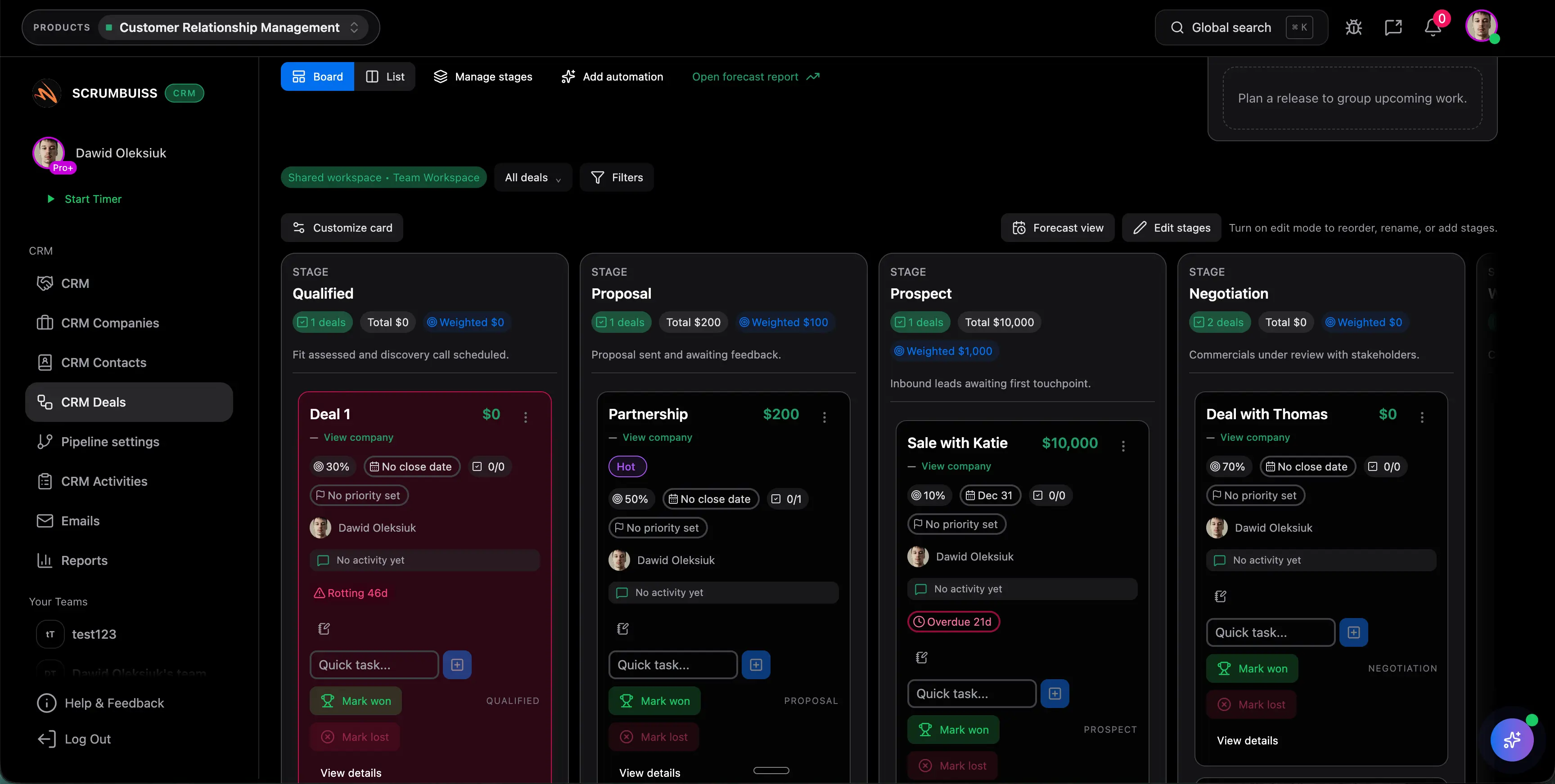
Sales pipeline example structure
Use this structure for lead management, sales funnel review, and CRM pipeline setup before the work moves into a live system.
New lead
Capture source, company, contact, problem statement, owner, and first qualification step.
Qualified opportunity
Confirm the need, decision maker, value range, timeline, next action, and missing information.
Proposal or negotiation
Track proposal link, expected close date, probability, decision owner, blocker, and follow-up date.
Closed-won handoff
Record promised scope, stakeholders, files, success criteria, next delivery owner, and kickoff readiness.
Closed-lost learning
Capture the reason, competitor or timing note, and any follow-up date worth keeping for future review.
Pipeline review checklist
Run this checklist before a pipeline review, forecast meeting, or sales-to-delivery handoff.
- Confirm every active opportunity has one owner and one next step.
- Check follow-up dates before reviewing value or probability.
- Keep stage names tied to real customer actions, not internal optimism.
- Review handoff readiness before marking a deal ready for onboarding.
- Link proposals, briefs, files, and intake details while the deal is still active.
- Move into CRM software when reminders, activities, and handoffs need to stay current across the team.
Common sales pipeline mistakes
These patterns make pipeline sheets stale, inflated, or disconnected from the work that follows a won deal.
- Tracking pipeline value without the next action that moves the deal forward.
- Using vague stages that do not define what changed for the customer.
- Marking a deal closed-won before stakeholders, scope, files, and kickoff owner are clear.
- Treating the spreadsheet as a CRM replacement after follow-up reminders and activity history become important.
- Copying broad sales funnel examples that do not match the delivery handoff after the sale.
How to use this pipeline template
Start in the CSV, agree on stages and follow-up rules, then move into Scrumbuiss when activities, reminders, and handoff context need live ownership.
Define pipeline stages and exit criteria
Start with the few stages that match how deals actually progress, then define what moves a deal from one stage to the next.
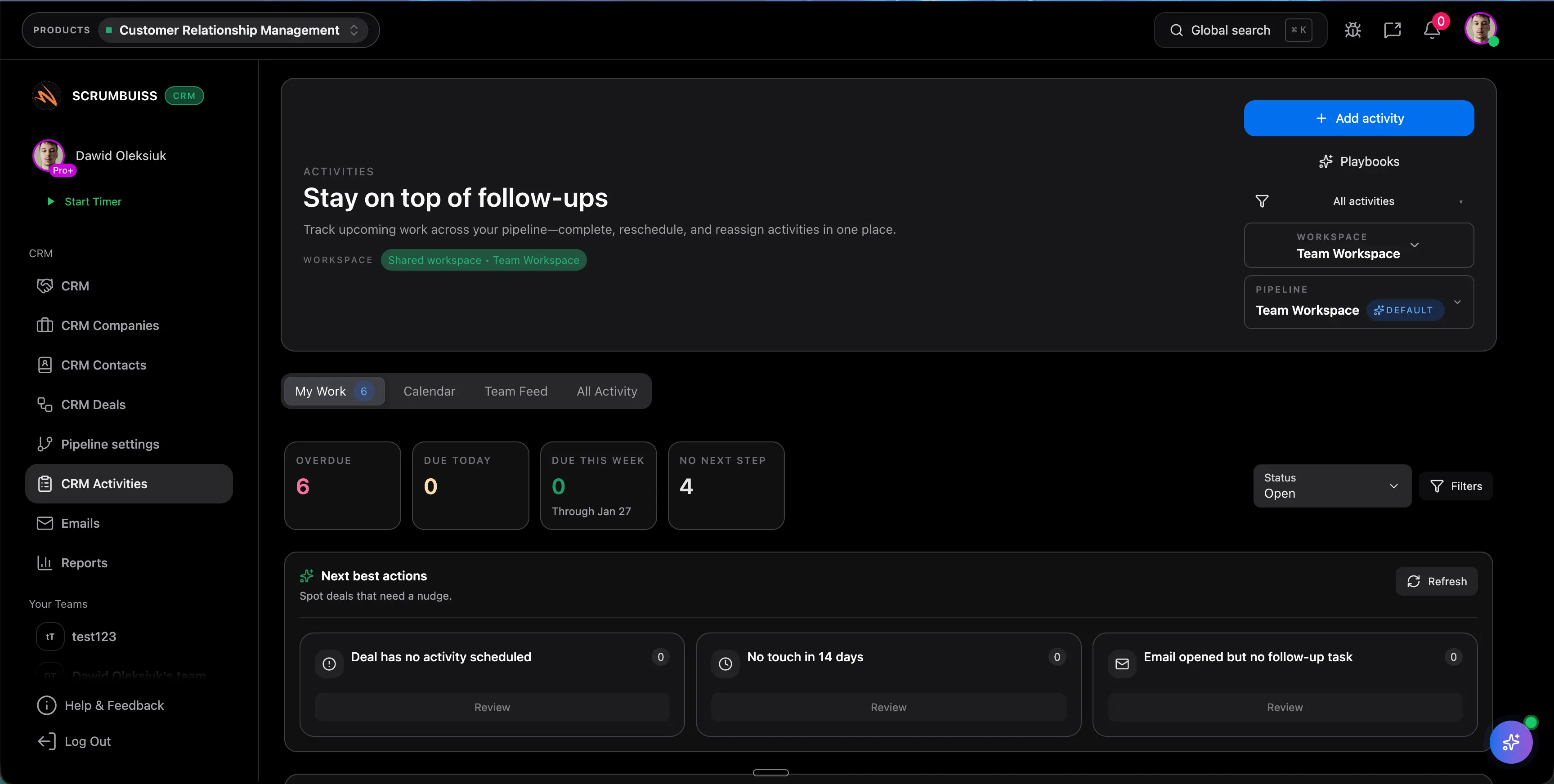
Review next steps before reviewing value
Use owner, next step, and follow-up date fields to keep the pipeline operational rather than only reporting potential revenue.
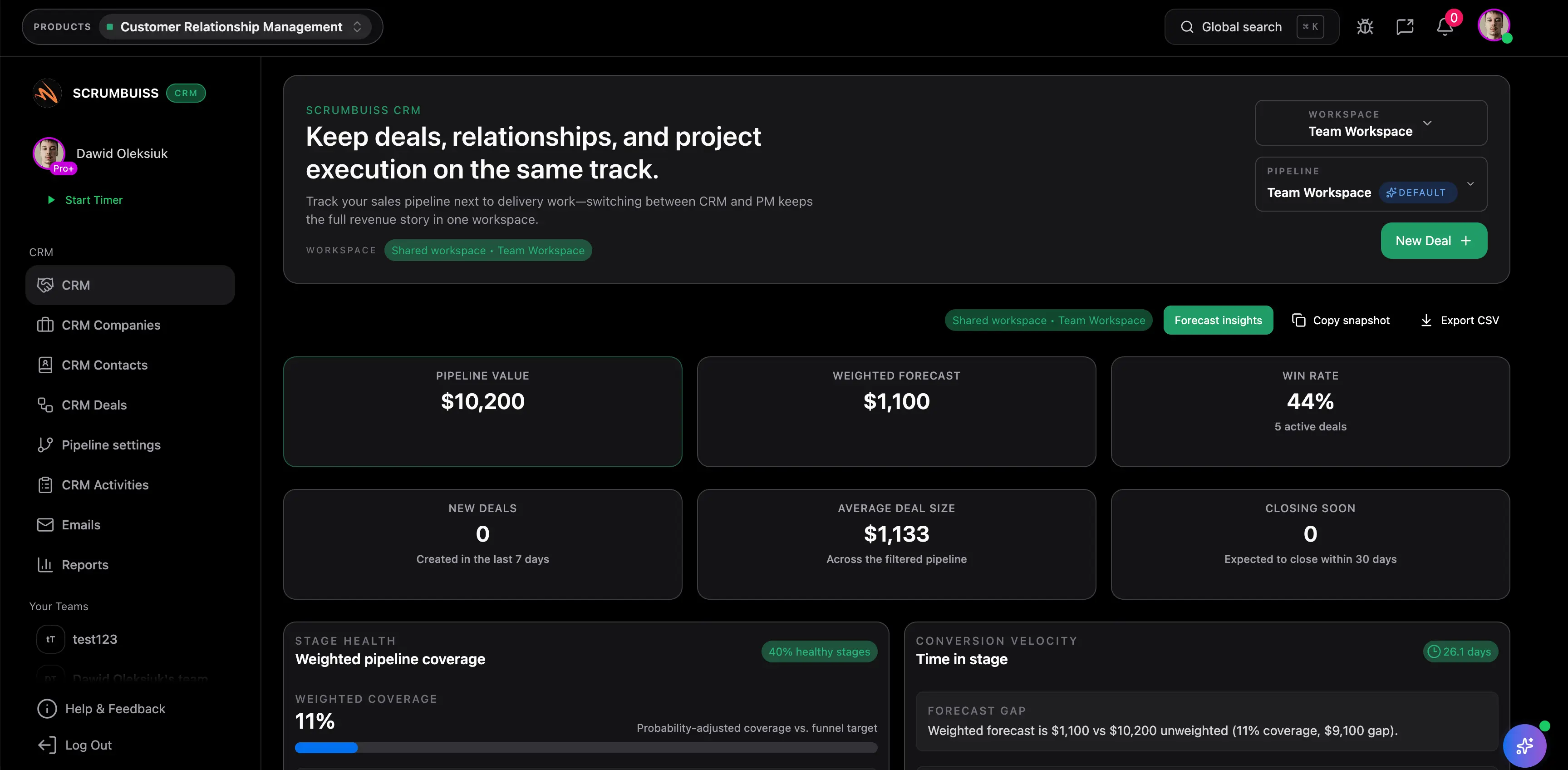
Connect won deals to delivery context
Move into Scrumbuiss CRM when the handoff needs activities, forms, project briefs, files, and delivery ownership to stay connected.
Related CRM workflows
Use these Scrumbuiss pages when pipeline tracking needs CRM records, forms, automations, briefs, and delivery handoff.
Recommended workflows
These workflows benefit from a clear pipeline before follow-up and handoff work become manual cleanup.
Sales pipelines
Use caseSales pipeline software for teams that need lead management, deal follow-up, CRM activity, and sales-to-delivery handoff in one workflow.
Client onboarding
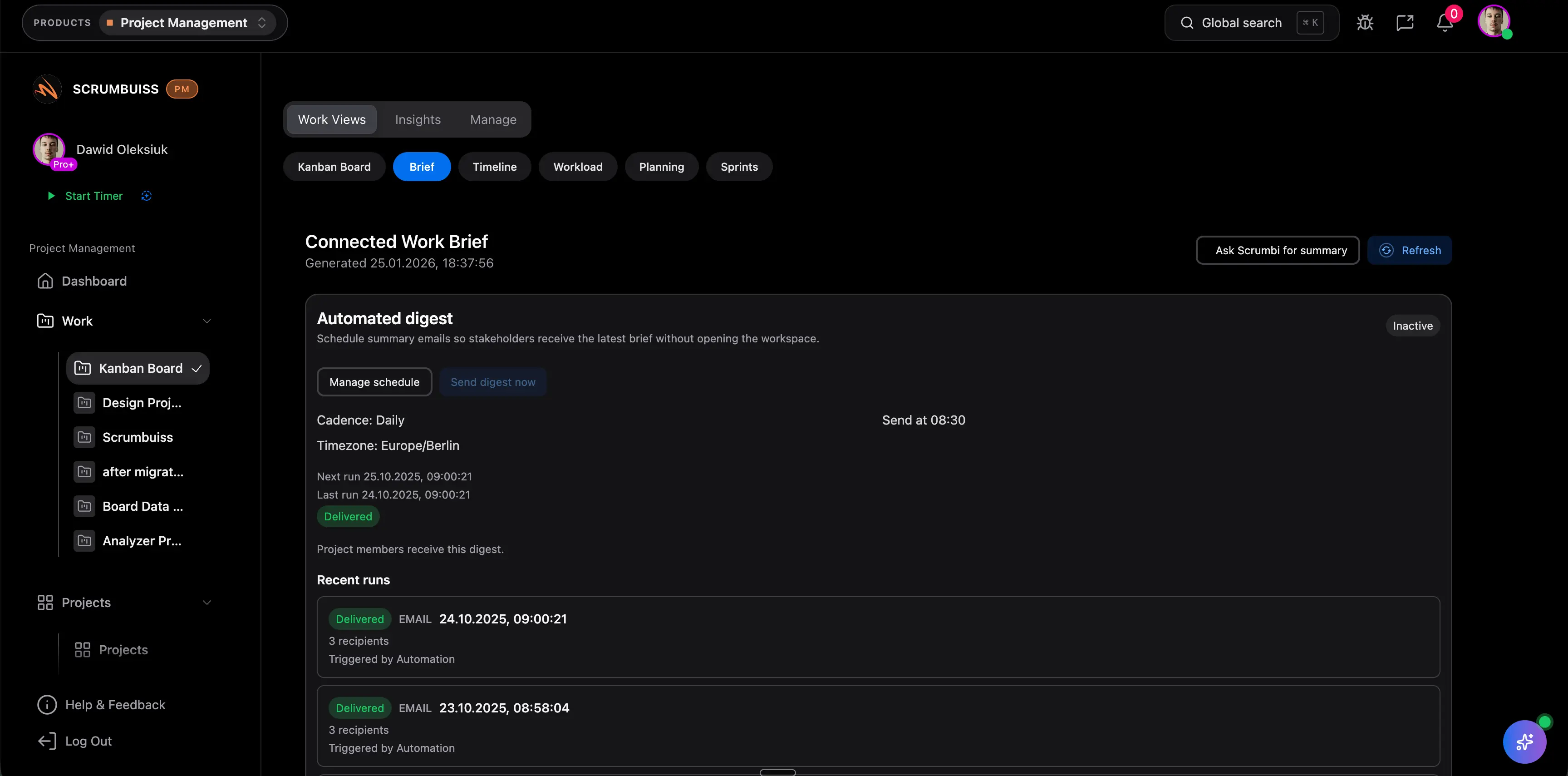
Use caseClient onboarding software for agencies and implementation teams that keeps the closed-won handoff, kickoff brief, files, approvals, and first status cycle in one workflow.
Need more ideas? Browse use cases .
Sales pipeline template FAQ
What is a sales pipeline template? +
A sales pipeline template is a reusable structure for tracking opportunities by stage, account, owner, value, probability, expected close date, next step, follow-up date, blocker, and handoff readiness.
What should a sales pipeline template include? +
Include the stage, company, contact, opportunity, owner, value, probability, expected close date, next step, follow-up date, decision maker, handoff readiness, blocker, and notes or source links.
How is a sales pipeline template different from CRM software? +
A template gives the team a shared starting format. CRM software becomes more useful when activities, reminders, account history, stage changes, and sales-to-delivery handoff need to stay current across several people.
Can this template be used as a lead management template? +
Yes. It works for lightweight lead management when the team needs to track source, owner, qualification notes, next step, follow-up date, and whether the lead is ready to move into an opportunity.
When should a sales pipeline move into Scrumbuiss CRM? +
Move beyond a spreadsheet when follow-up depends on reminders, activities, shared account context, forms, project briefs, or a handoff into onboarding and delivery that should not be rebuilt manually.