Portfolio product guide • reviewed March 18, 2026

Scrumbuiss Portfolio for Roadmaps, Objectives, and Cross-Project Reporting

Evaluate the exact Scrumbuiss Portfolio workflow for objective tracking, roadmap alignment, cross-project reporting, and portfolio-level prioritization that should stay connected to live delivery work instead of another reporting-only layer.

Use this page when project portfolio management software is already on your shortlist and you want to judge the exact Scrumbuiss product. If you are still comparing the broader category first, start with the project portfolio management software guide.

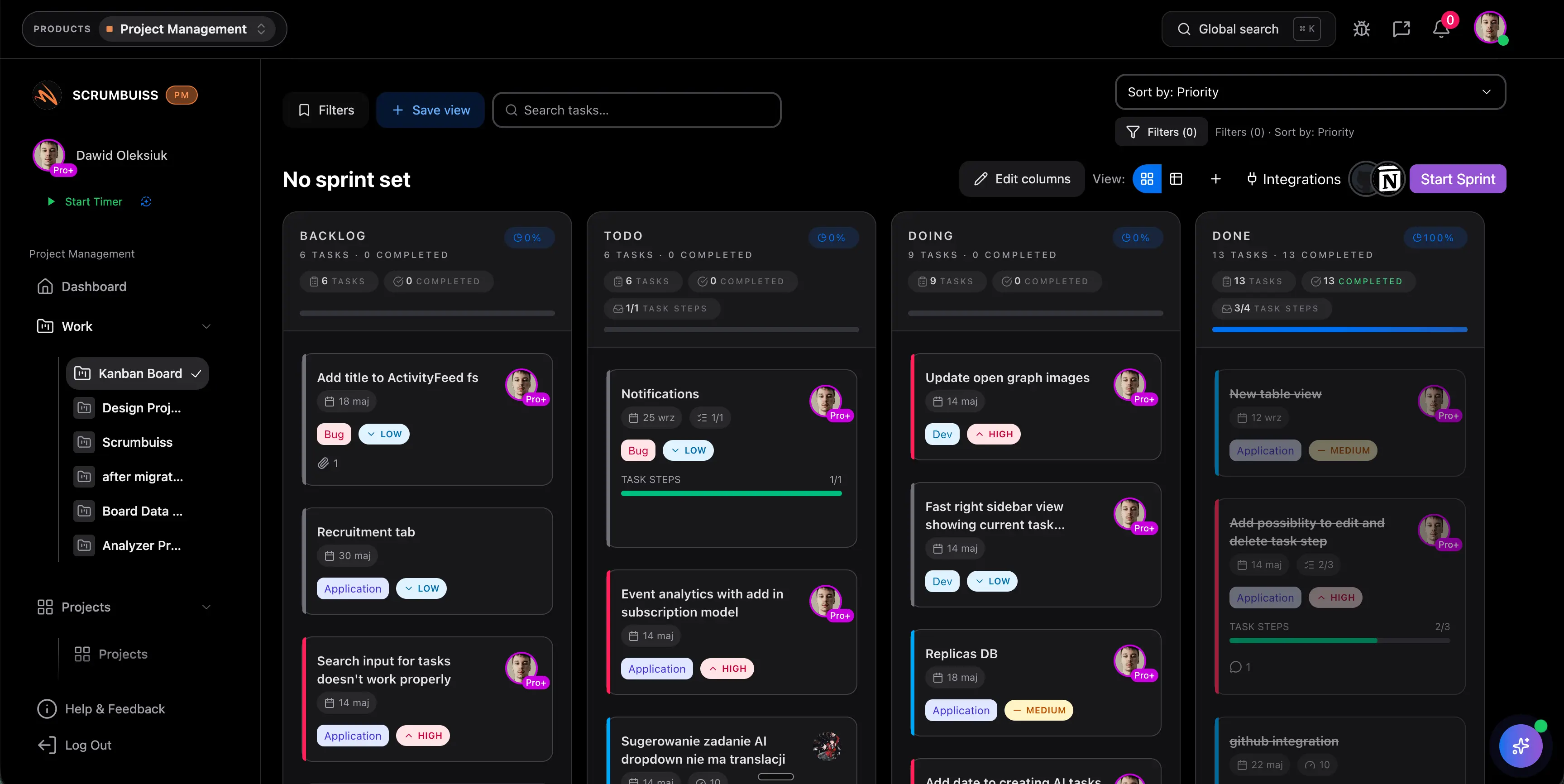
Scrumbuiss Portfolio overview for roadmaps, objectives, and cross-project reporting

How we reviewed Scrumbuiss Portfolio

Reviewed on March 18, 2026. This page evaluates one buyer question: when should a team choose the exact Scrumbuiss Portfolio product instead of stopping at the category guide or defaulting to a heavier PPM suite that separates portfolio reporting from live delivery work.

  • Scrumbuiss references come from the Portfolio buyer guide, Dashboard, Workload & Capacity, Risk Center, Project Delivery, the Software teams workflow, and the live pricing page in this site.
  • Competitor references come from the official Asana Portfolios, ProjectManager project portfolio management, and Planview ProjectAdvantage pages reviewed on March 18, 2026.
  • The goal is not to score every PMO checkbox. It is to help teams decide whether the exact Scrumbuiss product makes weekly prioritization, roadmap reporting, and portfolio review easier to run from the same operating layer as delivery.

When Scrumbuiss Portfolio is a fit

The useful decision is not whether leadership can see a portfolio somewhere. It is whether roadmap, reporting, and prioritization stay readable enough from live work that teams stop rebuilding the same story every week.

Strong fit for Scrumbuiss Portfolio

Best when leaders need cross-project visibility, roadmap alignment, and stakeholder reporting to stay closer to live delivery work instead of living in a separate reporting layer.

  • You need one readable view across multiple initiatives, objectives, owners, and current status.
  • Weekly reporting prep is too manual and portfolio visibility keeps drifting into spreadsheets or decks.
  • Capacity pressure, delivery risk, and roadmap sequencing should influence portfolio decisions earlier than they do today.
Worth piloting carefully

A live pilot is useful when project status already exists in several places, but leadership review still depends on manual assembly and too much status translation.

  • Test the product in one real portfolio review with active initiatives from more than one team.
  • Measure whether the exact workflow makes prioritization and stakeholder reporting easier to explain from live work.
  • Validate that project owners can keep the portfolio current without maintaining a separate reporting process for leadership.

Probably not the best fit

A heavier PMO-oriented suite may fit better when formal investment planning, deeper governance, or broader multi-portfolio simulation matter more than delivery-connected oversight.

  • Your main buying need is enterprise governance depth rather than practical cross-project visibility.
  • The organization already runs a stable PPM process and now wants a more specialized platform on top.
  • The team values formal portfolio simulation and approval control more than a simpler product tied to real execution signals.

Category guide versus exact product page versus broader delivery workflow

These pages solve different buying questions. Keeping them separate helps the product page rank for exact Scrumbuiss evaluation instead of duplicating the broader category guide.

Use the category guide first

Start with the buyer guide when you are still comparing project portfolio management software as a category and have not narrowed the decision to Scrumbuiss yet.

  • You want category-level tradeoffs and competitor framing before product specifics.
  • The shortlist still includes multiple vendors, not only Scrumbuiss.
  • You are deciding whether a lighter delivery-connected portfolio layer or a heavier PPM suite fits the business.

Use this page for exact product fit

Use this page when the real question is whether the exact Scrumbuiss Portfolio workflow is strong enough for weekly portfolio reviews, roadmap reporting, and prioritization inside your operating model.

  • You want product-level workflow, rollout checks, and reasons to pilot or reject the exact feature.
  • The category fit is already mostly clear and the next step is product validation.
  • You need to judge whether portfolio visibility stays attached to the work underneath it.

Use the broader delivery pages when portfolio is only one layer

Switch to the broader delivery pages when the buying decision depends on how portfolio oversight fits with delivery execution, status reporting, and team workflow design across Scrumbuiss.

  • Portfolio visibility is only one part of a larger project-delivery evaluation.
  • You need to see how software teams, delivery reporting, and roadmap oversight connect in practice.
  • The decision depends on execution workflow and stakeholder reporting as much as on portfolio rollups.

Start with shared objectives

Connect initiatives to outcomes without building a second portfolio spreadsheet

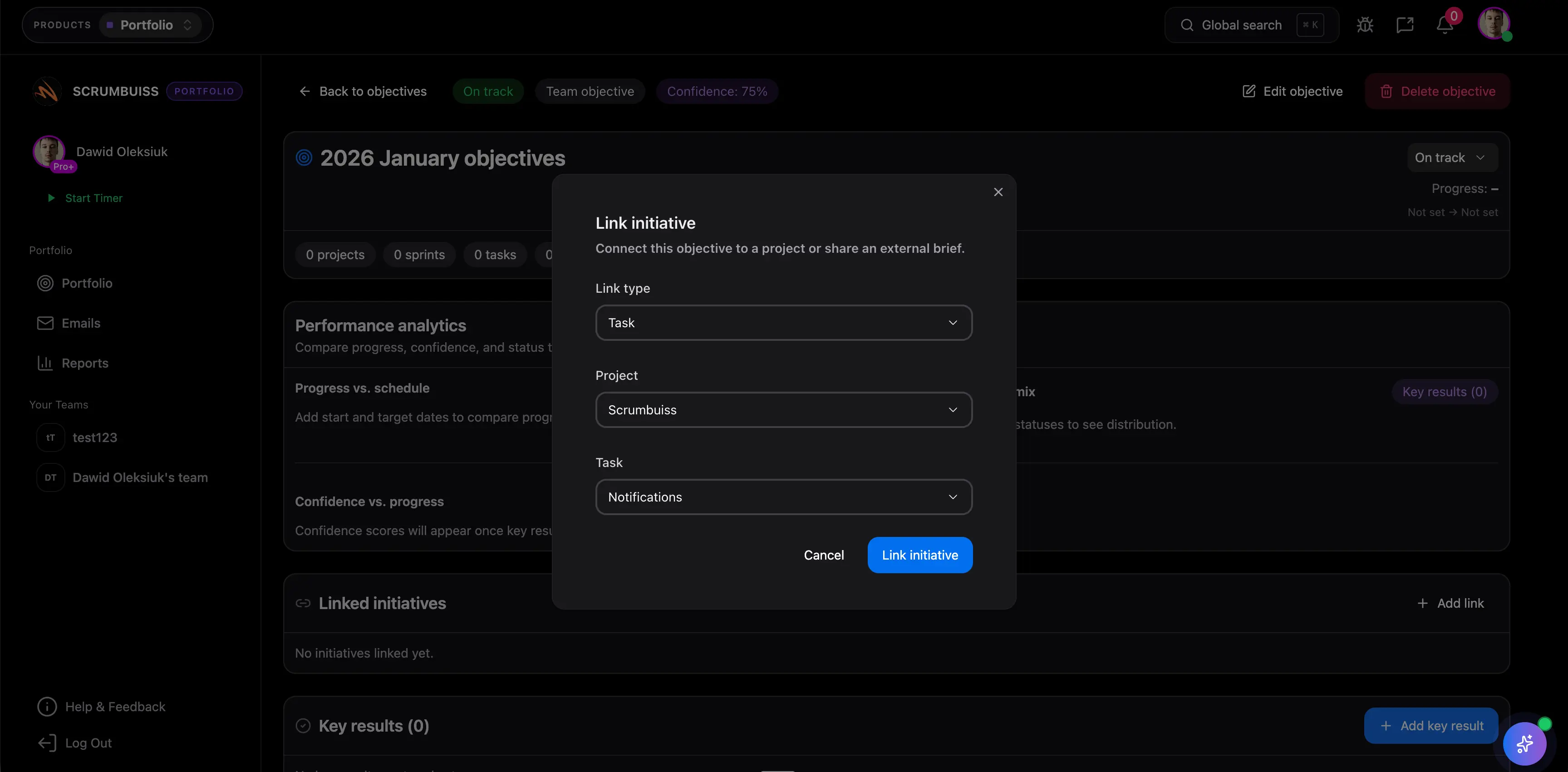
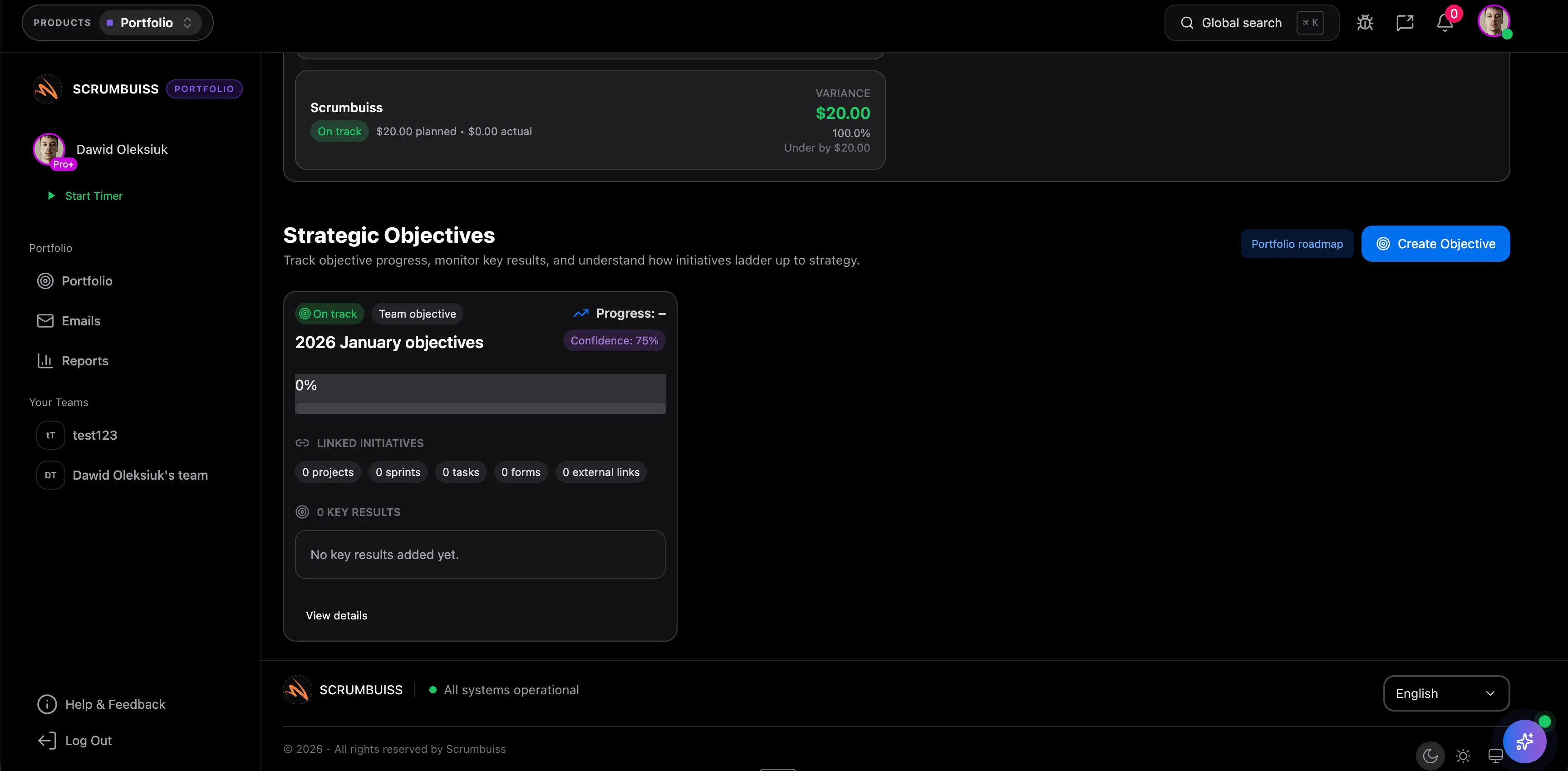
The product is most useful when portfolio visibility starts from the same system that already holds the work. That lets leaders group initiatives under objectives, see who owns what, and move from a roadmap view into project detail without asking another team to rebuild the context first.

  • Group projects under shared objectives, owners, and roadmap themes so the portfolio tells a coherent story.
  • Keep portfolio status close enough to execution that leadership reviews start from current delivery reality.
  • Move from a portfolio overview into project-level detail without switching to a separate reporting system just to understand what changed.
Scrumbuiss Portfolio view connecting initiatives to objectives and roadmap themes

Make reporting easier to run

Turn live project status into leadership-ready reporting instead of weekly deck reconstruction

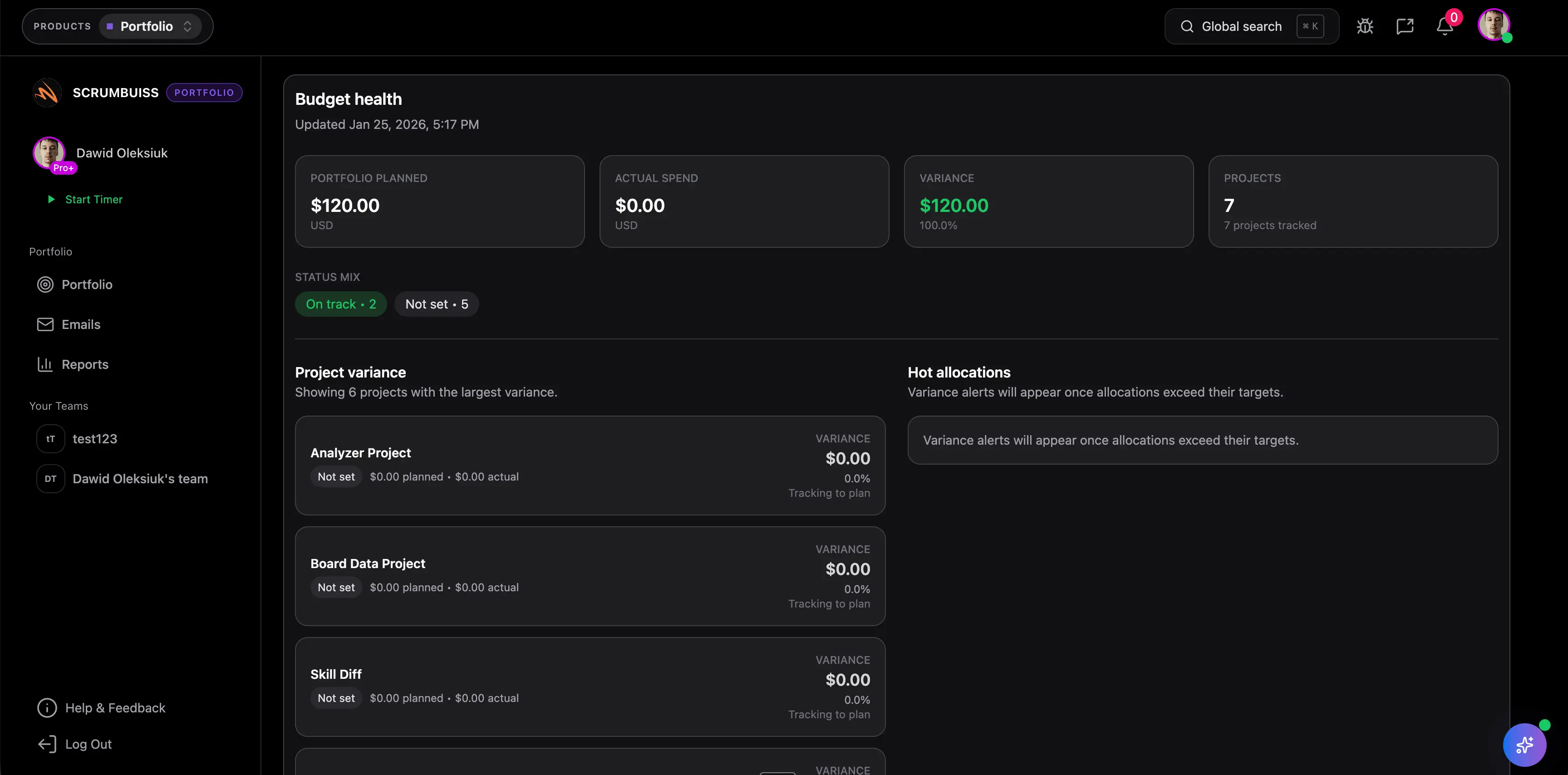
Portfolio software earns its place when it reduces the effort needed to explain what changed. The useful product test is whether Scrumbuiss can roll current project status, roadmap movement, and KPI context into one readable layer that leaders can use without asking project owners for another manual update pack.

  • Review multiple initiatives from one portfolio view instead of chasing updates team by team.
  • Use dashboards and KPI context to support stakeholder reporting without rebuilding the same story every week.
  • Keep roadmap and leadership updates grounded in live project activity instead of another manual reporting ritual.
Scrumbuiss Portfolio reporting view with roadmap and progress visibility across initiatives

Reprioritize before work slips

Use workload, timeline, and risk signals to change portfolio decisions earlier

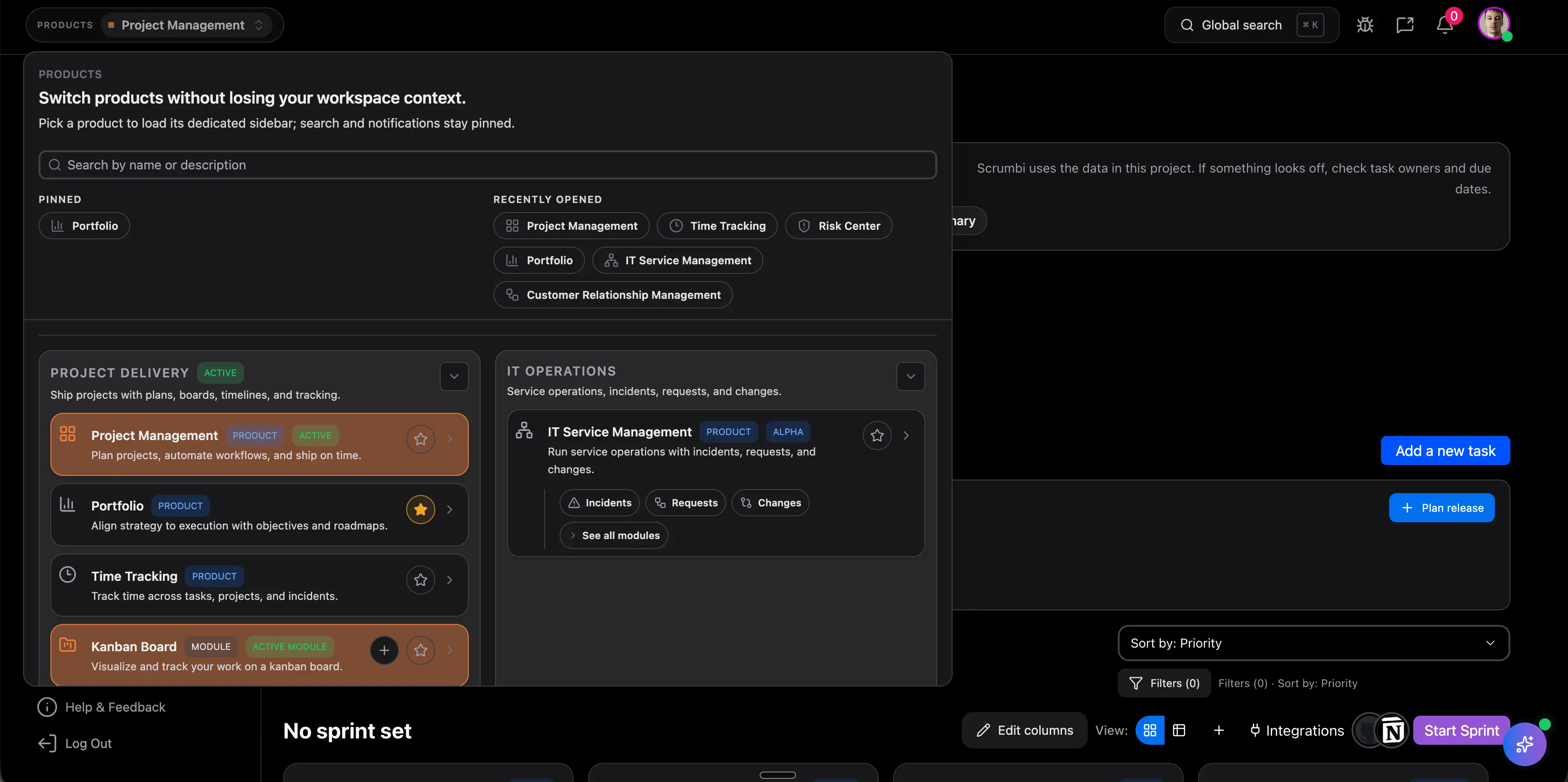
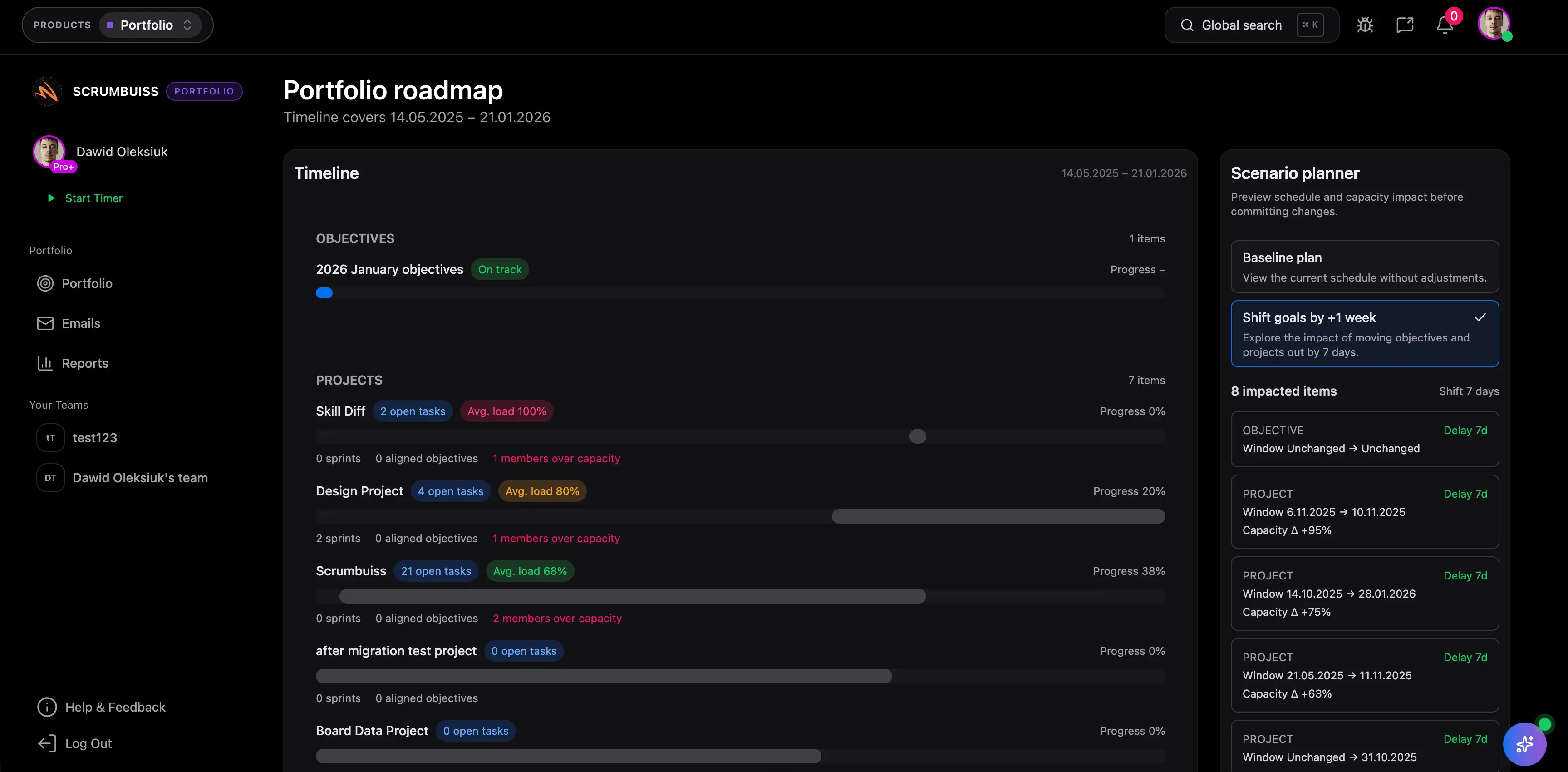
A portfolio layer becomes operational only when it changes a decision. If capacity tightens, risks accumulate, or timelines start drifting, leaders need those signals early enough to rebalance work before portfolio visibility turns into a backward-looking report.

  • Bring workload and capacity signals into portfolio conversations so committed plans reflect real team availability.
  • Surface timeline pressure and delivery risk before they turn into last-minute portfolio escalations.
  • Resequence initiatives using live execution signals rather than relying only on quarterly planning assumptions.
Scrumbuiss Portfolio view connected to workload, timeline, and risk-driven prioritization

Official competitor snapshot

These tools all offer portfolio visibility, but they package it around different operating models. The useful comparison is whether you need a delivery-connected portfolio product or a more PMO-heavy platform.

Asana Portfolios

Official page
Best for
Teams already standardized on Asana that want a bird's-eye view, status updates, dashboards, and cross-project reporting in the Asana stack.
What the vendor emphasizes
Asana's official portfolio page emphasizes a bird's-eye view, dashboards, status updates, goal alignment, and health visibility across connected projects.
Main tradeoff to validate
Validate how much roadmap, capacity, and portfolio-control depth you need once cross-project coordination becomes more operational than dashboard-centric. Portfolio access is also tied to higher Asana plans.
Where Scrumbuiss is stronger
Scrumbuiss is stronger when portfolio reporting should stay closer to delivery execution, workload, and risk signals instead of mainly acting as a higher-level layer inside Asana.

ProjectManager

Official page
Best for
Organizations that want a more traditional PPM-oriented mix of portfolio dashboards, roadmaps, reports, and resource planning in one system.
What the vendor emphasizes
ProjectManager's official PPM page emphasizes grouped projects, portfolio dashboards, roadmaps, resource planning, reports, and high-level oversight across project collections.
Main tradeoff to validate
The portfolio layer can be heavier than some teams need if the real problem is weekly leadership reporting and prioritization tied to work already running elsewhere.
Where Scrumbuiss is stronger
Scrumbuiss is stronger when buyers want a simpler portfolio product that keeps roadmap, reporting, and reprioritization attached to live delivery work.

Planview ProjectAdvantage

Official page
Best for
PMOs that need portfolio simulation, business-case evaluation, capacity visibility, dashboards, and broader governance across many initiatives.
What the vendor emphasizes
Planview's official ProjectAdvantage page emphasizes PMO visibility and control, portfolio simulation, business-case evaluation, dashboards, capacity planning, and governance-oriented portfolio management.
Main tradeoff to validate
A PMO-heavy suite can add more process than growing product, delivery, or agency teams want when the main need is readable portfolio oversight rather than deeper governance design.
Where Scrumbuiss is stronger
Scrumbuiss is stronger when buyers want portfolio visibility, roadmap alignment, and cross-project reporting without defaulting to a heavier PMO platform first.

Recheck current plan availability, packaging, and module limits on the official vendor pages before you buy. Product names are trademarks of their respective owners.

What to validate in one live leadership review cycle

Use a real portfolio review, not a blank demo. The useful question is whether the exact product makes the weekly reporting and prioritization rhythm easier to run.

  1. Step 1

    Choose 5 to 15 live initiatives from more than one team so the pilot reflects a real portfolio review instead of a single-project demo.

  2. Step 2

    Write down the exact questions the portfolio layer must answer: what is on track, what is blocked, where capacity is tight, and what should move next.

  3. Step 3

    Link each project to an owner, objective, and roadmap grouping before judging reporting quality.

  4. Step 4

    Rebuild one weekly or biweekly leadership update from the portfolio and compare the prep time against your current spreadsheet or slide-deck process.

  5. Step 5

    Run one reprioritization decision and confirm that workload, timeline, and risk signals are visible quickly enough to guide it.

  6. Step 6

    Check that project owners can keep portfolio views current from the same workspace they already use for delivery instead of maintaining a second reporting workflow.

  7. Step 7

    Set go or no-go criteria: less manual reporting work, clearer prioritization, faster stakeholder updates, and earlier visibility into overload or delivery risk.

FAQ

These are the product-level questions teams usually need answered before they standardize the Portfolio workflow inside Scrumbuiss.

What is Scrumbuiss Portfolio?

Scrumbuiss Portfolio is the product-level workflow in Scrumbuiss for grouping initiatives under objectives, tracking cross-project status, aligning roadmaps, and preparing stakeholder-readable reporting from live delivery work.

Who is Scrumbuiss Portfolio a good fit for?

It is a strong fit for leads, managers, and delivery organizations that need visibility across several active initiatives without rebuilding that view manually every week in spreadsheets or decks.

When should we use this page instead of the project portfolio management software guide?

Use the category guide first if you are still comparing the broader market. Use this page when the category fit already makes sense and you now want to validate whether the exact Scrumbuiss product is strong enough for your own portfolio review workflow.

Does Scrumbuiss Portfolio replace a full enterprise PPM suite?

Not always. Scrumbuiss Portfolio is strongest when the goal is practical cross-project visibility tied to delivery execution, workload, and risk. Organizations that need deeper investment planning, more formal governance, or broader PMO control may still prefer a heavier PPM suite.

Can small teams use Scrumbuiss Portfolio?

Yes. A small team can still benefit once one project view is no longer enough and leaders need to track multiple initiatives, explain priority decisions, and report progress without manual rollups.

Can we use Scrumbuiss Portfolio for OKRs or objective tracking?

Yes. The product is a practical fit when teams want objectives, roadmap context, and current project status visible in one place so portfolio reviews stay connected to the work that is supposed to move those outcomes.

How should we evaluate Scrumbuiss Portfolio in a live pilot?

Use one real leadership review cycle with active initiatives from more than one team. The useful test is whether the product reduces reporting prep, clarifies prioritization, and exposes workload or risk signals early enough to change the next decision.