Planning-poker guide • reviewed March 14, 2026

Planning Poker Software for Agile Sprint Estimation

Run planning poker sessions with private voting, faster consensus, and estimates that stay connected to backlog items, sprint commitments, and the broader delivery workflow.

Use this page to compare planning poker software before your team standardizes on a standalone estimation room, another Jira add-on, or another ceremony workflow that still leaves sprint decisions disconnected afterward.

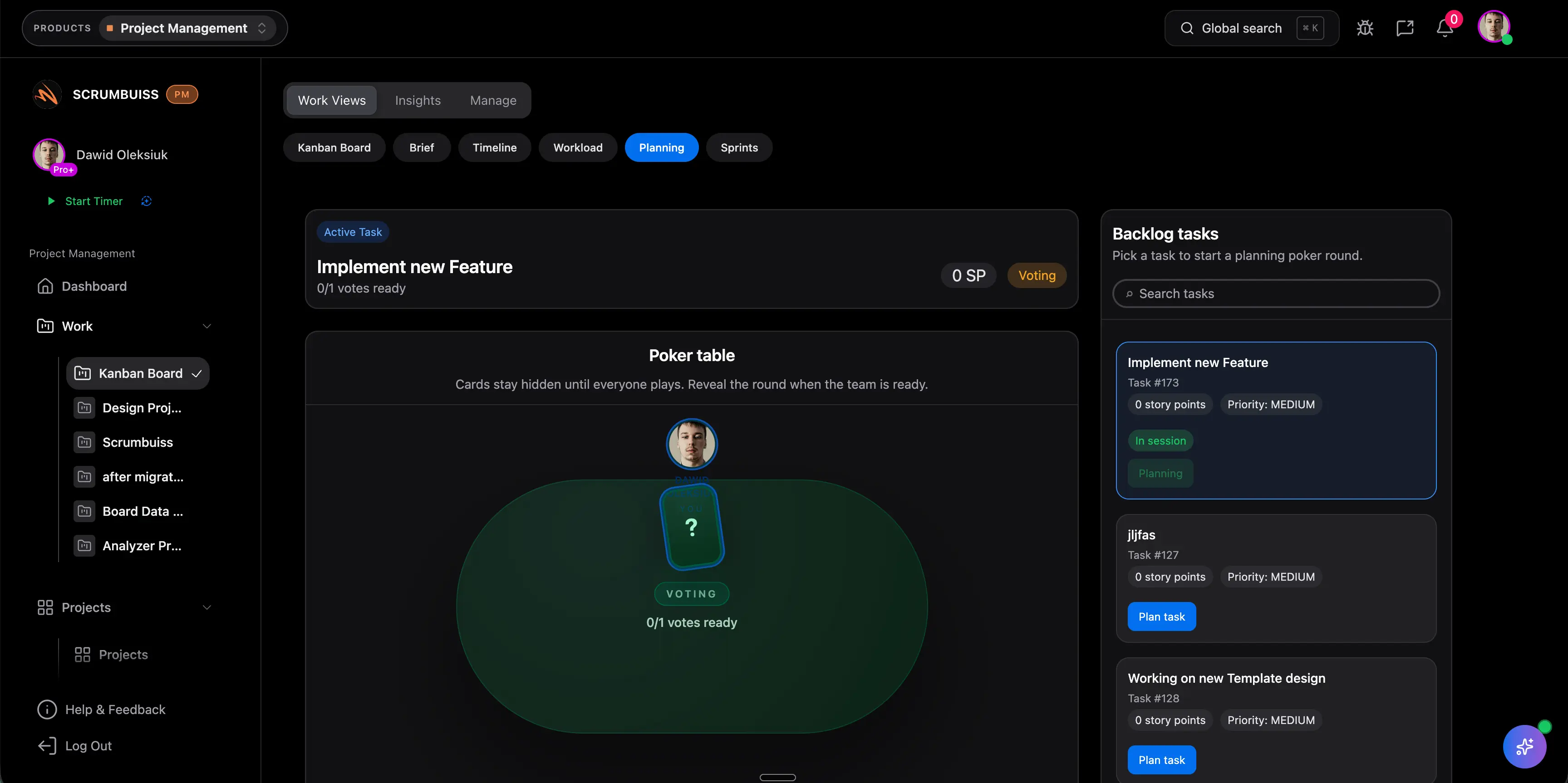
Scrumbuiss Planning Poker overview

How we reviewed planning poker software

Reviewed on March 14, 2026. This page compares one buying question: which planning poker tools help agile teams estimate honestly, resolve outliers quickly, and keep final estimates close enough to sprint planning and execution that the ceremony improves delivery instead of becoming another disconnected step.

  • Scrumbuiss references come from the live pricing page, the Project Delivery product page, the Sprints solution page, the Software teams workflow page, and the sprint planning template in this site.
  • Competitor references come from the official planning poker pages published by PlanningPoker.com, Miro, Atlassian Marketplace, and Parabol.
  • The goal is not to score card decks or emojis. It is to help teams decide whether they need a standalone scrum poker tool or planning poker inside a broader delivery operating workflow.

When Scrumbuiss is a fit

The right decision depends less on digital cards and more on where estimation should live after the team moves from discussion to sprint commitment.

Strong fit for Scrumbuiss

Best when estimation should happen inside the same workflow the team uses for sprint planning, backlog decisions, and delivery follow-through.

  • The team wants planning poker results to persist directly on the work instead of being copied over after the session.
  • Sprint planning, estimation, and backlog refinement already depend on the same people and the same delivery context.
  • Leads want estimation to improve commitment quality, not just make a remote meeting easier to run.

Worth piloting carefully

A live pilot is useful when the team already estimates somewhere, but the final numbers still get rewritten into another backlog, board, or sprint tool after the discussion ends.

  • Test one real backlog refinement or sprint-planning cycle with active work, not a sample deck.
  • Use the pilot to confirm that private voting reduces anchoring without slowing the ceremony down.
  • Check whether the saved estimates actually improve sprint commitments, workload decisions, and later review conversations.

Probably not the best fit

A more specialized estimation tool may fit better when the team only wants remote voting mechanics and is already fully committed to another delivery system.

  • Your main need is a lightweight poker room with minimal broader workflow change.
  • Backlog, sprint, and reporting decisions already work well in another system and you do not want estimation tied to a new operating layer.
  • The ceremony matters more than what happens to estimates after the reveal.

Estimate inside the sprint workflow

Run planning poker where sprint planning already happens

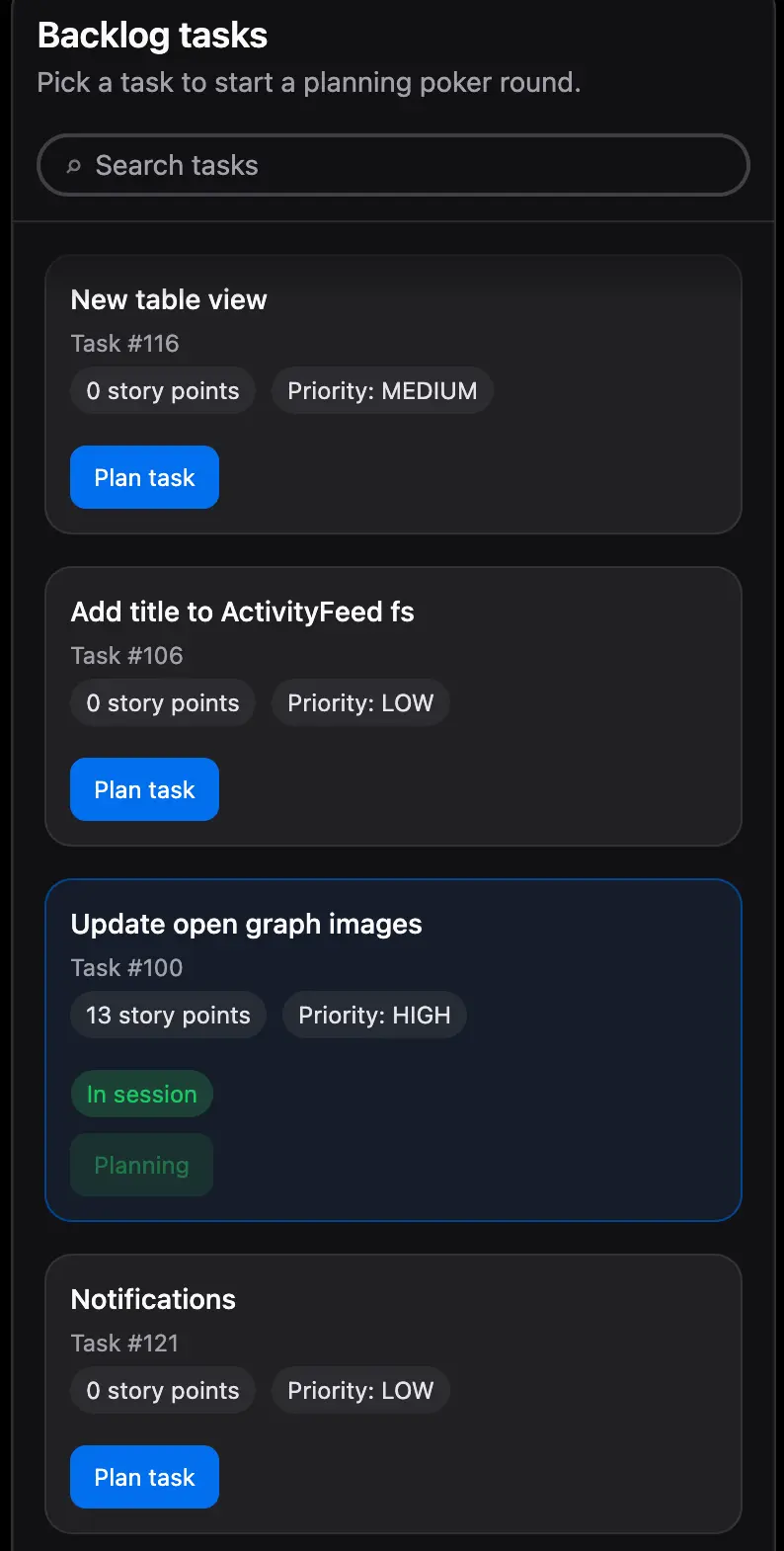
Planning poker becomes more useful when the team can estimate the actual backlog items it is about to commit, with scope, context, and sprint pressure visible in the same place. That reduces the friction of switching into a separate tool just to vote, then coming back to rebuild the plan.

  • Start estimation from the same backlog and sprint context the team is already reviewing.
  • Keep story details, owners, and nearby delivery context visible during the discussion instead of restating everything from memory.
  • Reduce ceremony overhead by letting the estimation step live inside the broader planning workflow.
Scrumbuiss Planning Poker inside the sprint workflow

Protect the discussion from anchoring

Use private voting to surface outliers before groupthink takes over

The strongest planning poker workflows protect independent judgment long enough for outliers to matter. Private voting gives the team a fairer starting point, then makes disagreement visible so the conversation can focus on missing assumptions, technical unknowns, and hidden delivery risk.

  • Keep votes private until reveal so the first confident voice does not anchor the room.
  • Use outlier gaps to uncover missing requirements, implementation risk, or dependencies that would otherwise stay buried.
  • Turn estimation disagreements into planning clarity instead of social pressure to converge early.
Scrumbuiss Planning Poker voting round used to surface estimate outliers

Carry the estimate forward

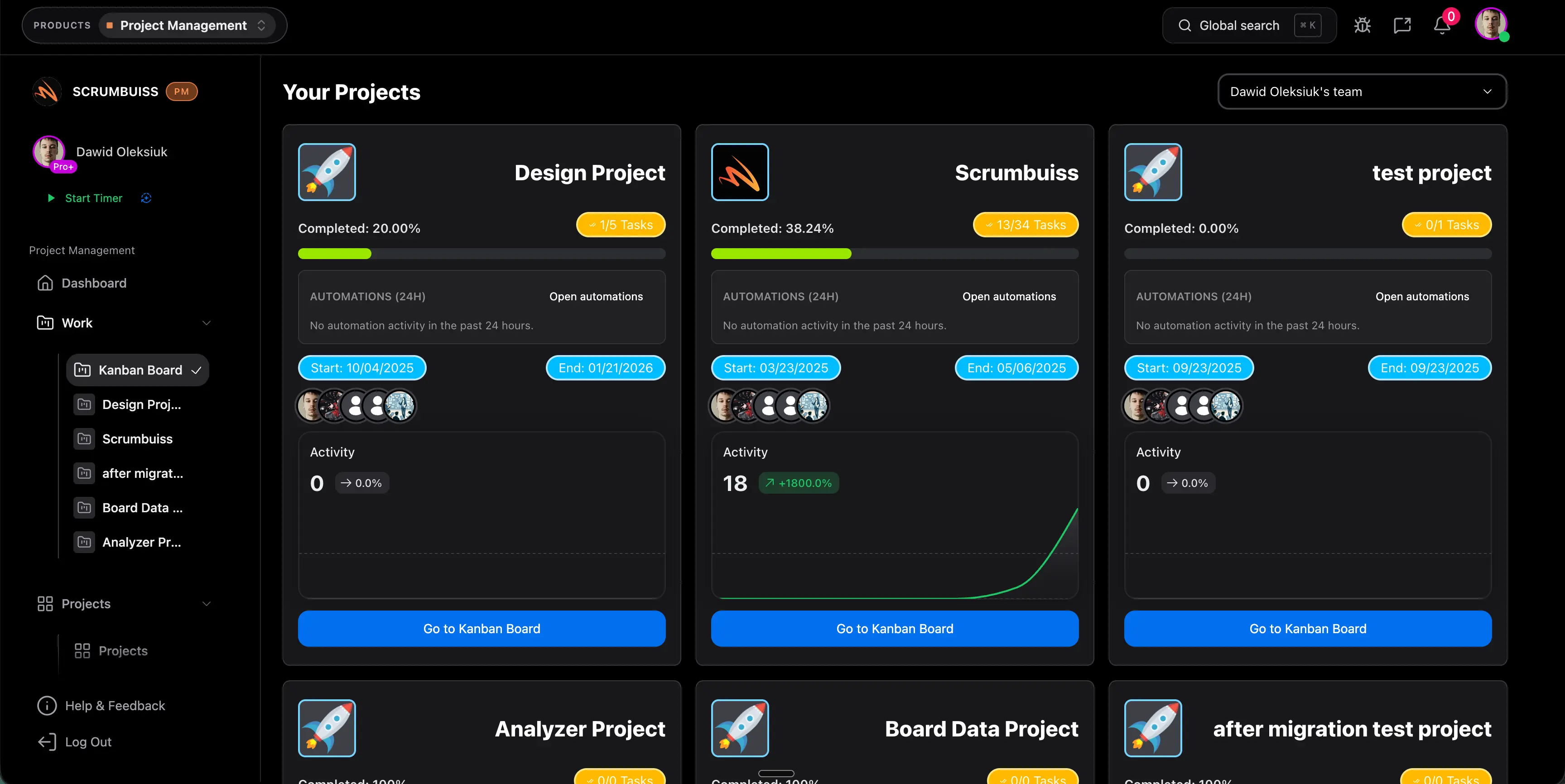
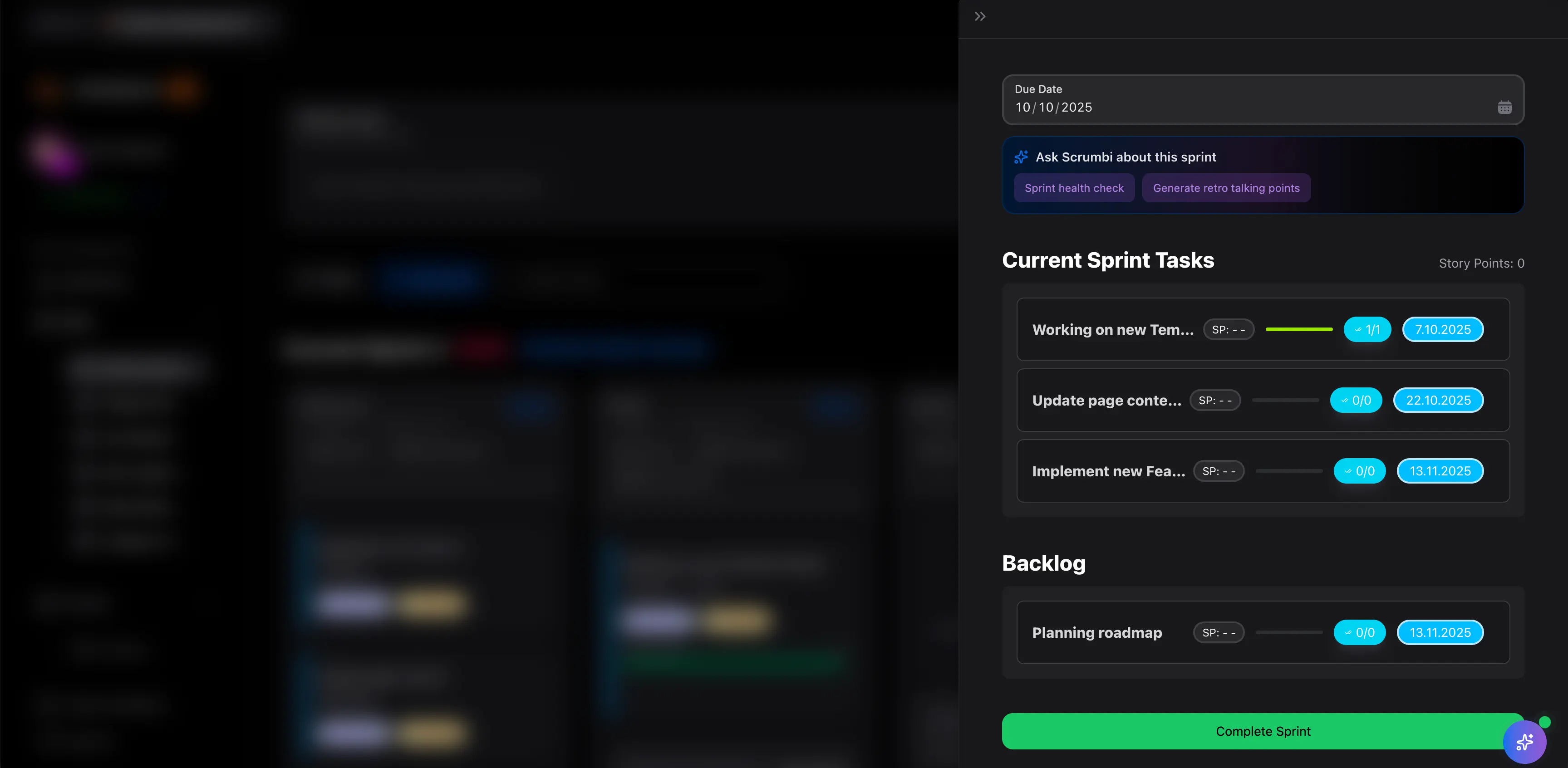
Save consensus directly into the backlog and the next sprint decision

A planning poker session only pays off when the final estimate changes a real delivery choice. That means the agreed number should stay attached to the work, feed the next sprint commitment, and remain available when the team reviews actual effort against the original expectation.

  • Persist the final estimate on the backlog item so the team does not lose the decision after the ceremony.
  • Bring those estimates into sprint commitment and workload review instead of treating them as separate admin data.
  • Use the saved estimates later to compare planning confidence with actual delivery outcomes.
Scrumbuiss Planning Poker estimates saved into backlog and sprint planning

Competitor snapshot

These tools all support planning poker differently. The practical question is whether estimation should remain a dedicated ceremony tool or sit inside the delivery workflow that has to use the estimate afterward.

Tool Best for Planning-poker angle Main tradeoff Why teams choose Scrumbuiss instead
PlanningPoker.com Teams that want a dedicated planning poker app focused on fast sessions, anonymous estimation, and straightforward Jira-connected backlog voting. Publicly emphasizes better estimates, healthier sprints, happier teams, anonymous relative estimation, and Jira import or export workflows. It is a focused estimation product, so teams should validate how much sprint planning, backlog follow-through, and delivery reporting still live elsewhere after the votes are done. Scrumbuiss is stronger when teams want the estimates to stay attached to sprint planning, backlog context, and later execution decisions inside one operating layer.
Miro Remote or cross-functional teams that already use Miro for workshops and want planning poker on the same collaborative board. Publicly positions planning poker around private votes before reveal, more inclusive sprint discussions, and syncing estimates to Jira with one click. The workshop experience is strong, but buyers should verify whether backlog ownership, sprint commitment, and estimate persistence still depend on a separate delivery system afterward. Scrumbuiss is stronger when estimation should be part of the live sprint workflow instead of a collaborative session layer that hands the decision off somewhere else.
Atlassian Marketplace Planning Poker Jira-centric teams that want real-time or async planning poker directly around Jira issues, subtasks, and epics. Publicly emphasizes a native Jira app for story points, T-shirt sizes, custom values, private votes until reveal, moderated sessions, and async estimates. It is a strong fit if Jira remains the center of planning. It is less differentiated when the evaluation is really about reducing delivery friction beyond the issue tracker. Scrumbuiss is stronger when the shortlist includes sprint planning, workload review, and stakeholder-readable delivery flow beyond a Jira-first operating model.
Parabol Sprint Poker Teams that want a dedicated remote estimation workflow with hidden votes, anti-anchoring discipline, and integrations into existing delivery tools. Publicly emphasizes hidden votes, fewer biased estimates, and pushing the final estimate into tools like Jira, GitHub, or GitLab after the discussion. The ceremony flow is well-defined, but teams should verify whether the broader sprint-planning and execution context still gets fragmented across multiple systems after the session closes. Scrumbuiss is stronger when the team wants planning poker, sprint commitment, and the next delivery decision to happen closer together in the same workflow.

Review current plan limits, Jira sync behavior, async support, and collaboration features on the vendor pages before you buy. Product names are trademarks of their respective owners.

What to validate in a live pilot

The best trial is one real sprint-planning cycle, not a card demo. Use the checklist below to judge whether planning poker improves the team’s planning quality inside the workflow it already depends on.

  1. Step 1

    Pilot one active squad with one real backlog refinement or sprint-planning session.

  2. Step 2

    Estimate live work that the team may actually commit, not generic sample stories.

  3. Step 3

    Define the scale up front: story points, T-shirt sizes, or a custom scale that matches your current process.

  4. Step 4

    Check whether private voting keeps the first loud estimate from anchoring the room.

  5. Step 5

    Watch how the team handles outliers: do disagreements expose missing assumptions or just create more admin overhead?

  6. Step 6

    Confirm that final estimates save directly to the backlog items and affect the next sprint commitment.

  7. Step 7

    Set go or no-go criteria: cleaner consensus, less re-entry, better sprint confidence, and easier follow-through from estimate to execution.

FAQ

These are the buying and rollout questions teams usually need answered before planning poker becomes part of the real sprint workflow.

What should teams look for in planning poker software?

Look for software that supports private voting, makes disagreement visible without slowing the session down, and keeps final estimates attached to the work itself. The best tools do more than reveal cards. They help teams turn better estimation into better sprint commitments.

When is planning poker software better than estimating directly in a backlog?

Planning poker software is most useful when teams need a structured way to avoid anchoring, surface outliers, and reach consensus quickly. It becomes even more valuable when the estimates can stay inside the same backlog and sprint workflow instead of being copied there afterward.

Should planning poker live inside Jira or in a broader delivery tool?

That depends on where your team’s real operating workflow lives. If Jira is the long-term center of planning and execution, a Jira-native tool may fit well. If sprint planning, workload, and stakeholder reporting are already pushing beyond an issue tracker, a broader delivery workflow can be the better evaluation path.

How do teams keep planning poker from becoming just another meeting?

Use live backlog items, keep votes private until reveal, limit the session to work that is close to commitment, and make sure the final estimate changes an actual planning decision. If the output does not affect the next sprint or backlog ordering, the session will feel ceremonial instead of useful.

Can planning poker improve estimate accuracy on its own?

Not on its own. Planning poker improves the quality of the estimation conversation, but accuracy still depends on backlog clarity, technical context, and whether teams compare original estimates with real outcomes afterward. The workflow matters as much as the card reveal.

How should a team pilot planning poker software?

Pilot it through one real sprint-planning cycle with active backlog items, actual participants, and a clear follow-through step. Measure whether the team reaches cleaner consensus, saves less time on estimate re-entry, and makes more confident sprint commitments afterward.