Requirements Traceability Matrix Guide
A requirements traceability matrix connects each requirement to the scope, owner, deliverable, test, acceptance criteria, change record, and approval evidence that prove it was handled. It helps teams avoid missing requirements during delivery, QA, and sign-off.
This guide targets the requirements traceability matrix keyword cluster. It supports the project requirements document guide by focusing on the tracking artifact used after requirements are defined.
Key Takeaways
- A traceability matrix shows where each requirement came from and how it will be verified.
- It should connect requirements to deliverables, tests, owners, changes, and approval evidence.
- RTMs are most useful for regulated, client-facing, technical, or high-risk projects.
- Keep the matrix current when requirements change, or it becomes false confidence.
What Is a Requirements Traceability Matrix?
A requirements traceability matrix, often shortened to RTM, is a table that tracks requirements through the project lifecycle. It answers:
- What is the requirement?
- Who requested or approved it?
- Which deliverable or feature satisfies it?
- How will it be tested or accepted?
- What is the current status?
- Did any approved change alter it?
- Where is the evidence?
The matrix is especially useful when a project has many stakeholders, compliance obligations, client approvals, or technical dependencies.
RTM Fields
| Field | Purpose |
|---|---|
| Requirement ID | Gives each requirement a stable reference |
| Requirement summary | States the need clearly |
| Source | Shows stakeholder, document, regulation, or request origin |
| Owner | Names who manages the requirement |
| Deliverable | Links the requirement to project output |
| Test or review | Defines how it will be verified |
| Acceptance criteria | Explains what accepted means |
| Status | Shows open, in progress, verified, changed, or removed |
| Change reference | Links approved requirement changes |
| Evidence | Points to test result, approval, file, or decision record |
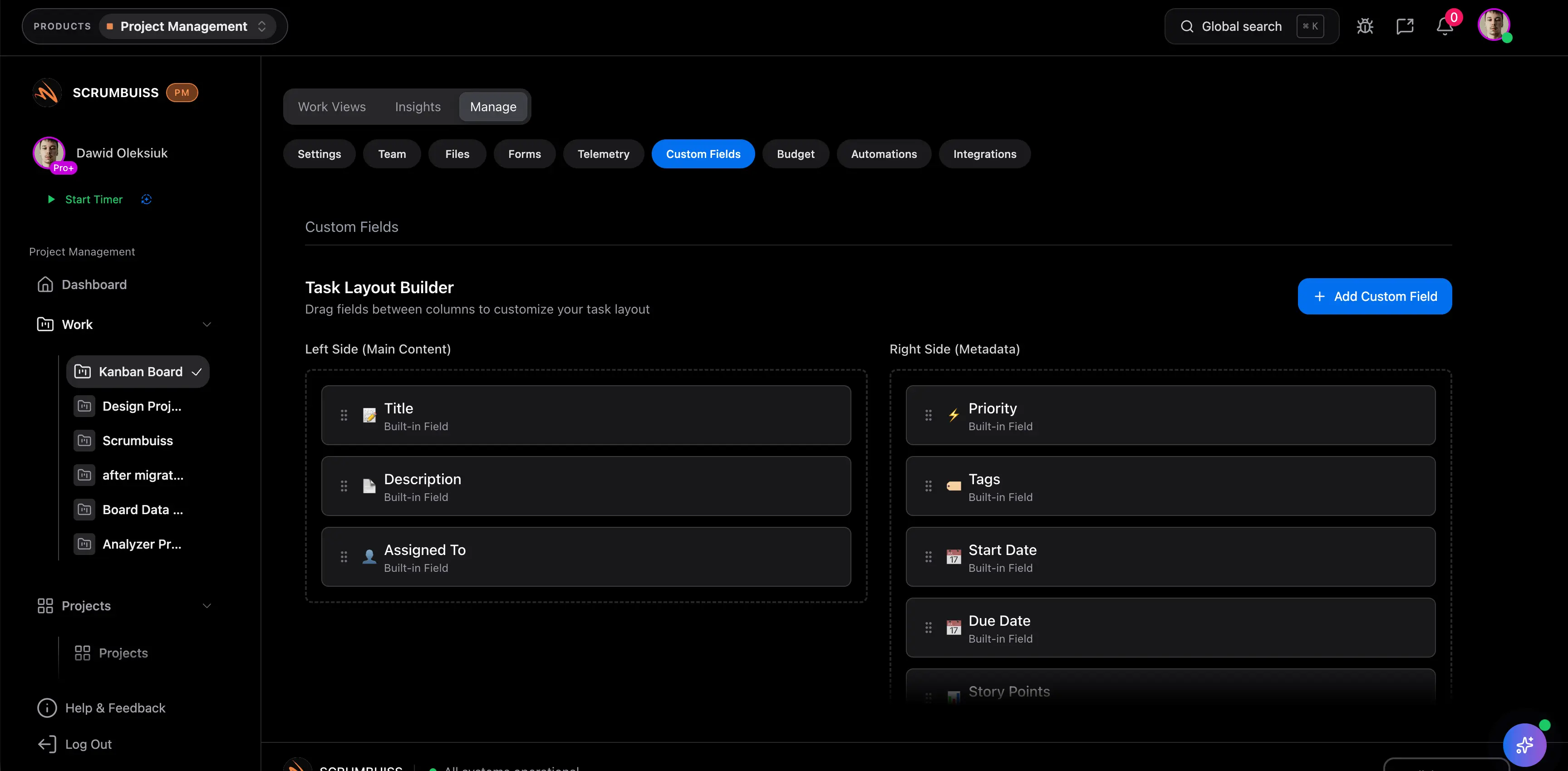
Scrumbuiss supports traceability through Custom Fields, Files, Project Delivery, Project Brief, and Activity Feed.
Requirements Traceability Matrix Example
| ID | Requirement | Deliverable | Verification | Status |
|---|---|---|---|---|
| REQ-014 | Client can approve final files before launch | Approval workflow | Client acceptance test | Verified |
| REQ-015 | Support can access launch documentation | Handoff package | Operations review | In progress |
| REQ-016 | Export includes project status and owner | Reporting export | QA checklist | Open |
The matrix should stay short enough to maintain. If every tiny preference becomes a requirement, the team will stop trusting it.
FAQ
Frequently
asked
questions
Related features
Explore the Scrumbuiss features mentioned in this article.
- Custom Fields
Model request, delivery, and reporting data with custom fields.
- Project Brief
Create a shareable project brief that stays connected to scope, files, and stakeholder updates.
- Activity Feed
Stay up to date with real-time updates on tasks, progress, and team activities.
Unlock Success &
Power Up Your Projects
Next to explore
Explore more pages to understand the product suite, common workflows, and evaluation guides.