Project brief template
Download a free project brief template with a filled example, one-page outline, and practical checklist for aligning scope, stakeholders, milestones, and handoffs.
Use this template to align kickoff decisions fast, then keep the brief attached to the work so scope, handoffs, and approvals stay visible.
What this project brief template helps you do
Use these checkpoints to make the brief useful before kickoff instead of turning it into another stale planning doc.
- ✓ One-page brief for kickoff alignment and cleaner handoffs
- ✓ Scope, non-goals, stakeholders, milestones, and acceptance criteria in one place
- ✓ Filled example outline you can adapt for agencies or cross-functional delivery teams
- ✓ Downloadable Markdown template plus a practical review checklist
When to use this template
A good project brief is most valuable at kickoff, during handoffs, and whenever the team needs one source of truth for scope and expectations.
- Use it before kickoff when multiple stakeholders need a shared view of the goal, scope, timeline, and ownership.
- Use it for client delivery handoffs so sales, delivery, and decision-makers start from the same requirements instead of rebuilding context.
- Use it when scope is still moving and you need a lightweight place to document non-goals, dependencies, and approval expectations.
- Use it for cross-functional work where engineering, product, operations, or agencies need one brief that stays readable after the first meeting.
What’s inside the template
These sections keep the brief short enough to read quickly while still covering the decisions teams usually miss.
What to include in a project brief
These are the fields that make a project brief actionable for stakeholders, delivery leads, and the team doing the work.
Project goal
State the business outcome in one or two sentences so the team understands why the work exists and what success should change.
Background and context
Summarize the problem, request, or opportunity so new stakeholders can understand the brief without searching through chats or tickets.
Scope
List the work, deliverables, or decisions included in this effort so everyone can see what the team is committing to.
Non-goals
Write down what is explicitly out of scope to reduce ambiguity and protect the team from quiet scope creep.
Stakeholders and owners
Name the project owner, approvers, contributors, and key contacts so decisions and escalations have a clear path.
Milestones and timeline assumptions
Capture the important dates, dependencies, and planning assumptions that affect delivery confidence.
Risks and dependencies
Call out the known blockers, approvals, vendor inputs, or resourcing risks that could delay the project if ignored.
Acceptance criteria
Define how stakeholders will know the work is complete so sign-off is based on visible outcomes rather than vague expectations.
Filled project brief example
Use this sample as a reference for how a one-page kickoff brief can summarize goals, scope, stakeholders, and delivery assumptions.
Goal and success metric
Launch a revised client onboarding portal by May 30 and reduce manual handoff questions by 30% within the first month.
Background
Sales, implementation, and support currently rely on scattered notes, which slows onboarding and creates repeated clarification loops.
Scope
Design the new portal flow, migrate the current onboarding checklist, connect client documents, and publish a shared kickoff workspace.
Non-goals
Do not rebuild the CRM workflow, redesign the billing experience, or localize the portal in this release.
Stakeholders
Owner: Delivery lead. Approver: Operations director. Contributors: Product designer, frontend engineer, onboarding manager, support lead.
Milestones
Kickoff on April 8, prototype review on April 19, build complete on May 10, stakeholder sign-off on May 24, launch on May 30.
Risks and dependencies
Portal copy depends on legal review, and launch timing depends on the file migration finishing one week before go-live.
Acceptance criteria
Stakeholders approve the final flow, required onboarding assets are linked in one place, and the delivery team can run the first onboarding without ad hoc docs.
Open questions and links
Confirm whether training happens live or async, and link the kickoff deck, prototype, migration checklist, and support handoff notes.
Checklist before kickoff
Run this review before you share the brief broadly or lock the first timeline and scope decisions.
- Confirm the project goal is outcome-focused and still matches the latest stakeholder request.
- Check that scope and non-goals are both written down, not implied in meeting notes.
- Verify every milestone, dependency, and approval step has an owner or clear next action.
- Make sure acceptance criteria are concrete enough for sign-off without another discovery meeting.
- Share the brief link before kickoff so stakeholders can correct gaps asynchronously.
Common project brief mistakes
These patterns usually make project briefs hard to trust, hard to scan, or easy for teams to ignore after kickoff.
- Turning the brief into a long specification instead of a one-page alignment document.
- Listing scope but forgetting non-goals, which makes later change requests look like misunderstandings.
- Leaving stakeholders or approvers unnamed, so decisions stall when tradeoffs appear.
- Writing the brief once at kickoff and never updating it when scope, dates, or assumptions change.
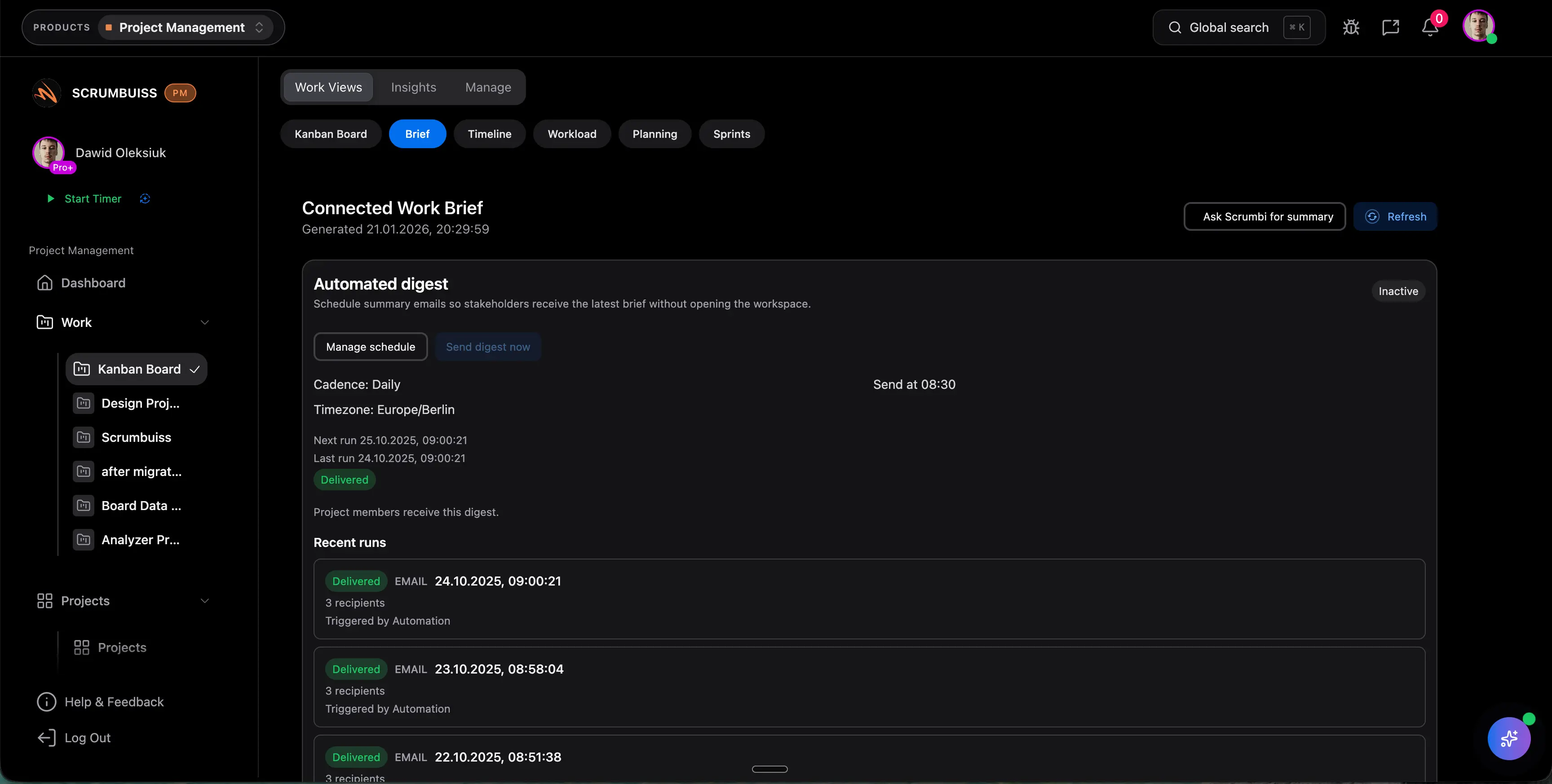
How to use it in Scrumbuiss
Treat the brief as a lightweight operating document: set direction, attach decisions, and keep the latest version next to delivery work.
Draft the brief before kickoff
Start with the goal, scope, non-goals, and key stakeholders so the kickoff meeting starts from a real draft instead of a blank page.
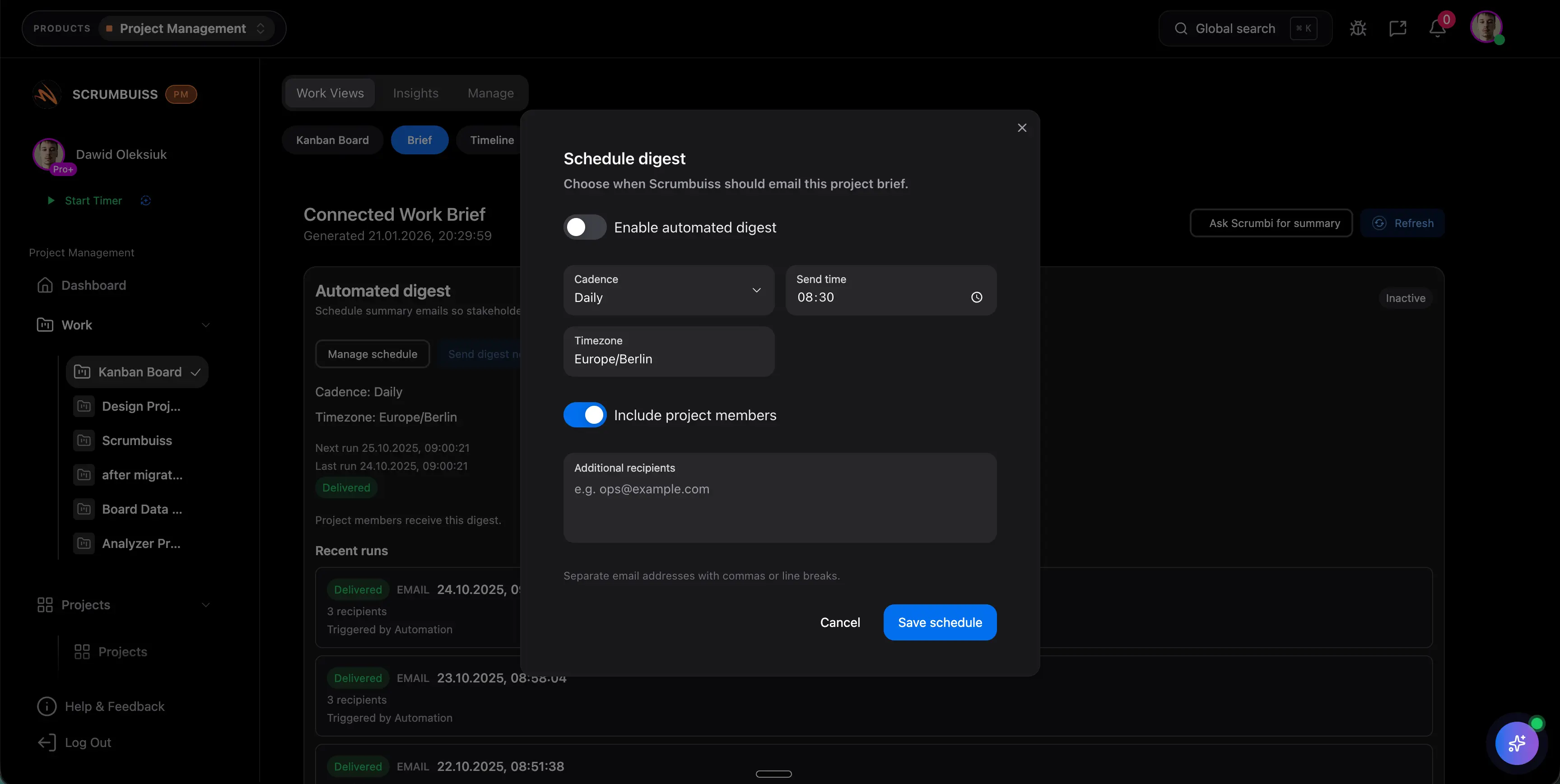
Review it with stakeholders
Use one brief link to gather feedback, confirm owners, and tighten milestones, dependencies, and sign-off expectations before work begins.
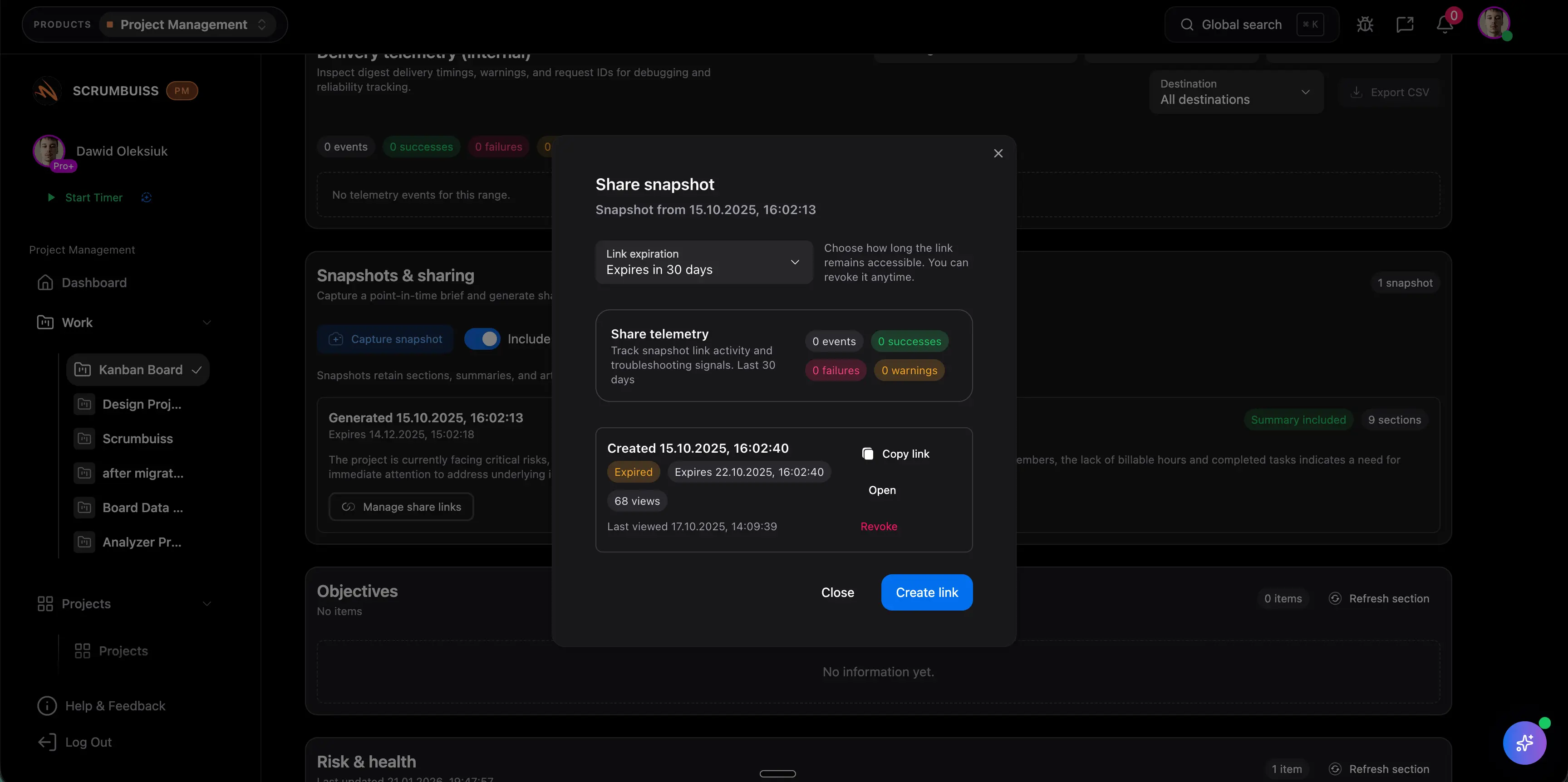
Update it as delivery changes
Keep decisions, scope changes, and new risks in the same brief so delivery, reporting, and handoffs stay aligned as the project evolves.
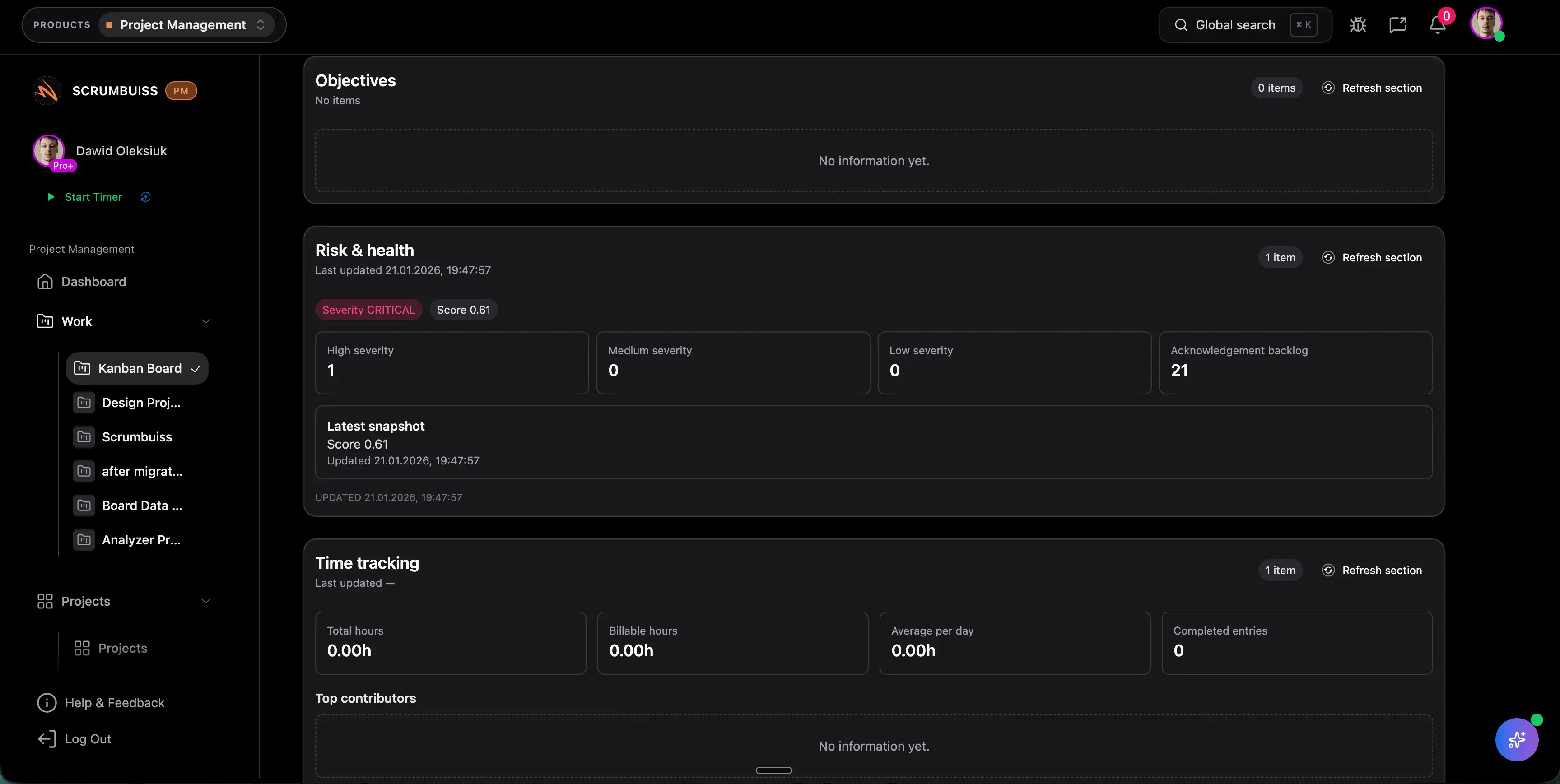
Related features
Use these features to turn a static brief into a working source of truth for kickoff, execution, and reporting.
Recommended workflows
These use cases show where project briefs help most in practice, especially during client handoffs and cross-team delivery.
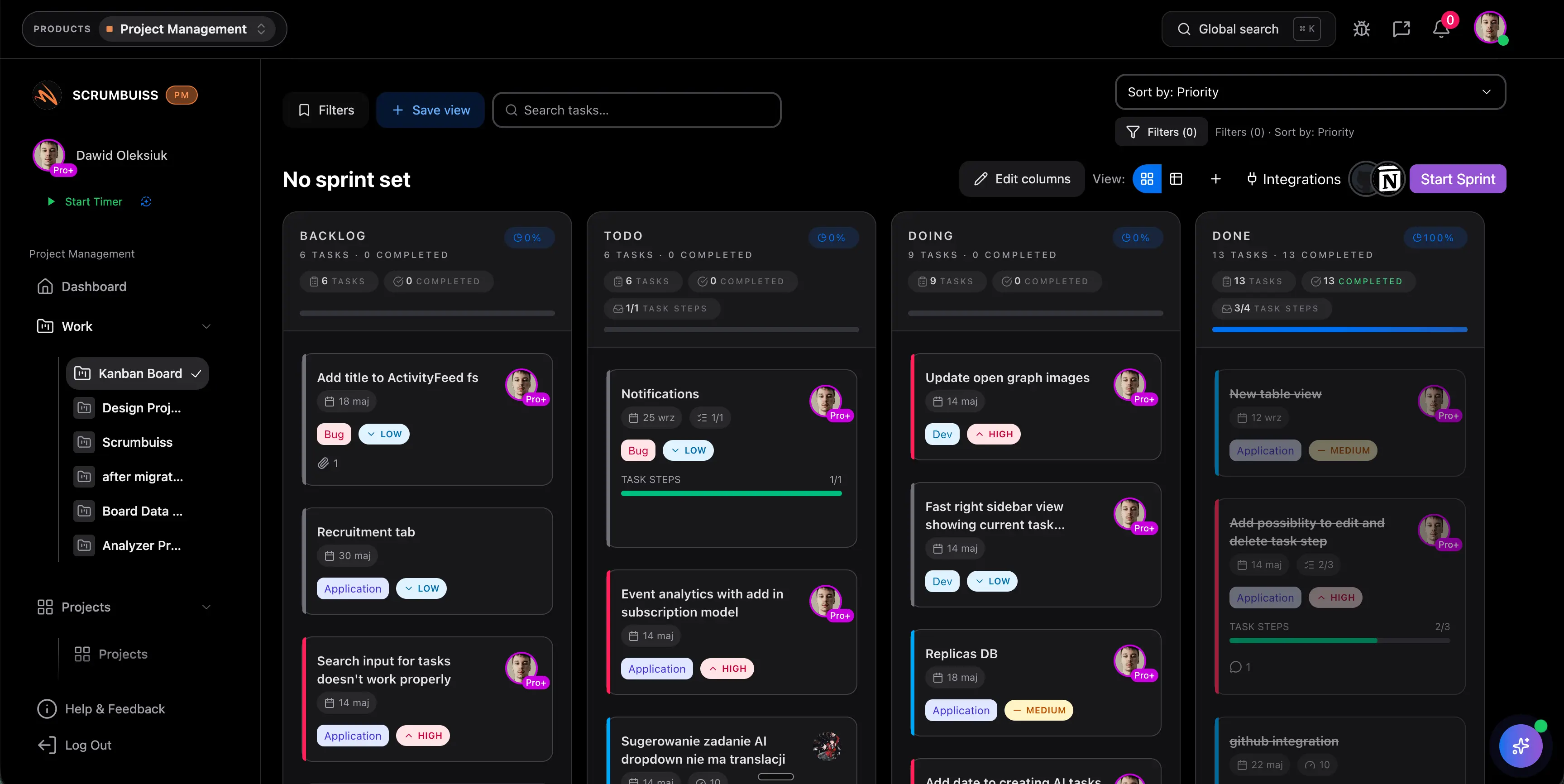
Software teams
Use caseProject management software for software teams that keeps sprint planning, dependencies, GitHub-adjacent delivery visibility, and stakeholder reporting in one workflow.
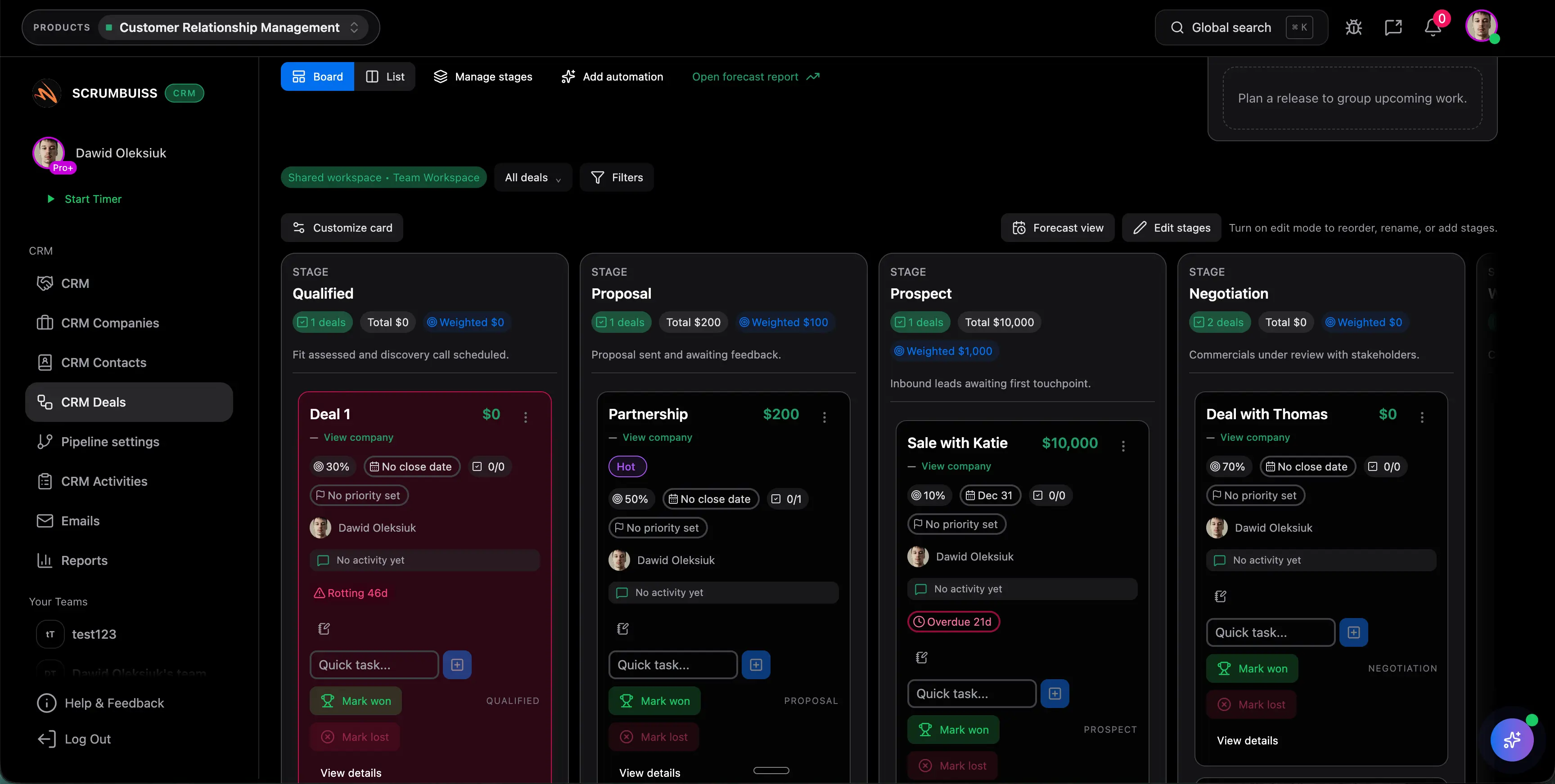
Sales pipelines
Use caseManage deals and activities, then hand off work to delivery without losing context.
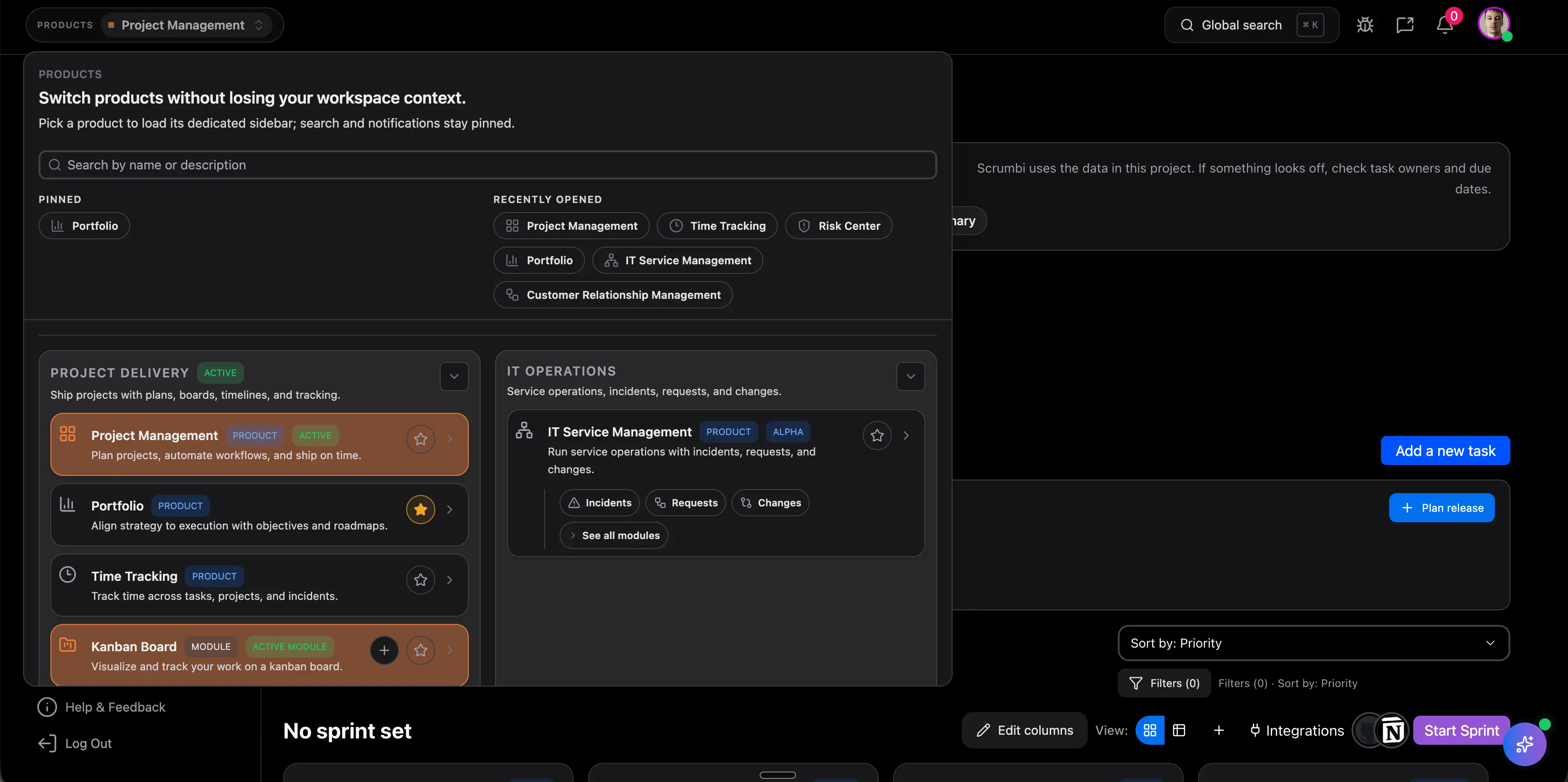
Agencies
Use caseProject management software for agencies that keeps time tracking, files, workload visibility, and reporting in one workflow.
Need more ideas? Browse use cases .
Project brief template FAQ
What is a project brief template? +
A project brief template is a reusable one-page structure for documenting the goal, scope, stakeholders, timeline assumptions, risks, and acceptance criteria for a project. Teams use it to align quickly before kickoff and reduce rework later.
What’s the difference between a project brief and a project charter? +
A project brief is usually shorter and more operational. It is designed for fast alignment on scope, owners, milestones, and next steps. A project charter is often more formal and may be used for approval or governance in larger organizations.
Who should own the project brief? +
Usually the project manager, delivery lead, account lead, or product owner owns the brief. The key is assigning one person to keep the document current when dates, scope, or decisions change.
How long should a project brief be? +
Keep it concise. A strong project brief is often one page or a short linked document that captures the goal, scope, stakeholders, milestones, risks, and acceptance criteria without turning into a full specification.
Should we update the brief after kickoff? +
Yes. Update it whenever scope, assumptions, risks, or milestones change. The brief is most useful when it reflects the current plan instead of the original kickoff conversation.
Can agencies use the same project brief template with clients? +
Yes. Agencies often use the same structure for internal alignment and client-facing kickoff summaries. The main difference is usually how much internal delivery detail or risk context you expose externally.