Portfolio Management vs Project Management
Portfolio management and project management are related, but they answer different questions. Project management focuses on delivering a specific project well. Portfolio management focuses on whether the organization is investing in the right set of projects and balancing those projects against strategy, capacity, risk, and value.
This comparison targets the "portfolio management vs project management" keyword cluster found in SEMrush keyword research. It supports the Scrumbuiss Portfolio product page and broader project management guides by explaining the distinction before a buyer evaluates software.
Key Takeaways
- Project management is about delivering one project successfully.
- Portfolio management is about selecting, balancing, and governing many projects.
- Project managers care about scope, schedule, budget, risks, and delivery quality.
- Portfolio owners care about strategic alignment, capacity, investment tradeoffs, risk exposure, and outcomes across projects.
- Teams usually need portfolio management when project-level success no longer guarantees organizational focus.
The Core Difference
| Area | Project management | Portfolio management |
|---|---|---|
| Scope | One project or program of work | A set of projects, programs, and initiatives |
| Main question | Are we delivering this project well? | Are we doing the right work across the business? |
| Owner | Project manager, delivery lead, team lead | Portfolio manager, PMO, leadership team |
| Time horizon | Project lifecycle | Quarterly, annual, or strategic planning horizon |
| Main risk | Missed scope, date, budget, or quality | Too much work, wrong work, weak alignment, hidden risk |
| Output | Delivered project outcome | Balanced portfolio and investment decisions |
Project management can be excellent while the portfolio is still unhealthy. A team may deliver projects on time but still spend capacity on low-value work.
What Project Management Owns
Project management usually covers:
- scope and objectives
- project plan and schedule
- task ownership and workflow
- budget or cost tracking
- stakeholder communication
- risks, issues, and dependencies
- status reporting
- closeout and lessons learned
The project manager turns an approved idea into an outcome. For the operating lifecycle, read the project management process guide.
What Portfolio Management Owns
Portfolio management usually covers:
- project selection and prioritization
- strategic alignment
- capacity allocation across teams
- budget distribution
- portfolio risk and dependencies
- roadmap visibility
- executive reporting
- decisions to start, pause, defer, or stop work
The portfolio owner looks across work. That view is important when teams have more valuable ideas than capacity.
When Project Management Is Enough
Project management may be enough when:
- the team runs a small number of projects
- most work supports the same goal
- capacity conflicts are rare
- leadership can understand status from individual project updates
- there is little debate about which work matters most
In that environment, strong project plans, schedules, dashboards, and status reports may cover the need.
When Portfolio Management Becomes Necessary
Portfolio management becomes necessary when:
- too many approved projects compete for the same people
- leaders cannot see which work supports which objectives
- low-value work keeps consuming capacity
- teams need to compare proposed projects before approval
- project dependencies cross departments
- risk is concentrated across several active initiatives
- status reporting is fragmented across teams
A project prioritization matrix can help with selection, but portfolio management keeps the selected work visible after the decision.
Metrics To Compare
| Metric | Project-level use | Portfolio-level use |
|---|---|---|
| Schedule health | Is this project on track? | Which commitments are at risk across all work? |
| Budget or cost | Is this project within plan? | Where is investment moving across priorities? |
| Capacity | Can this team deliver its plan? | Which teams are overloaded across initiatives? |
| Risk | What could affect this project? | Where is risk concentrated across the portfolio? |
| Strategic fit | Does this project support its goal? | Does the portfolio support current business objectives? |
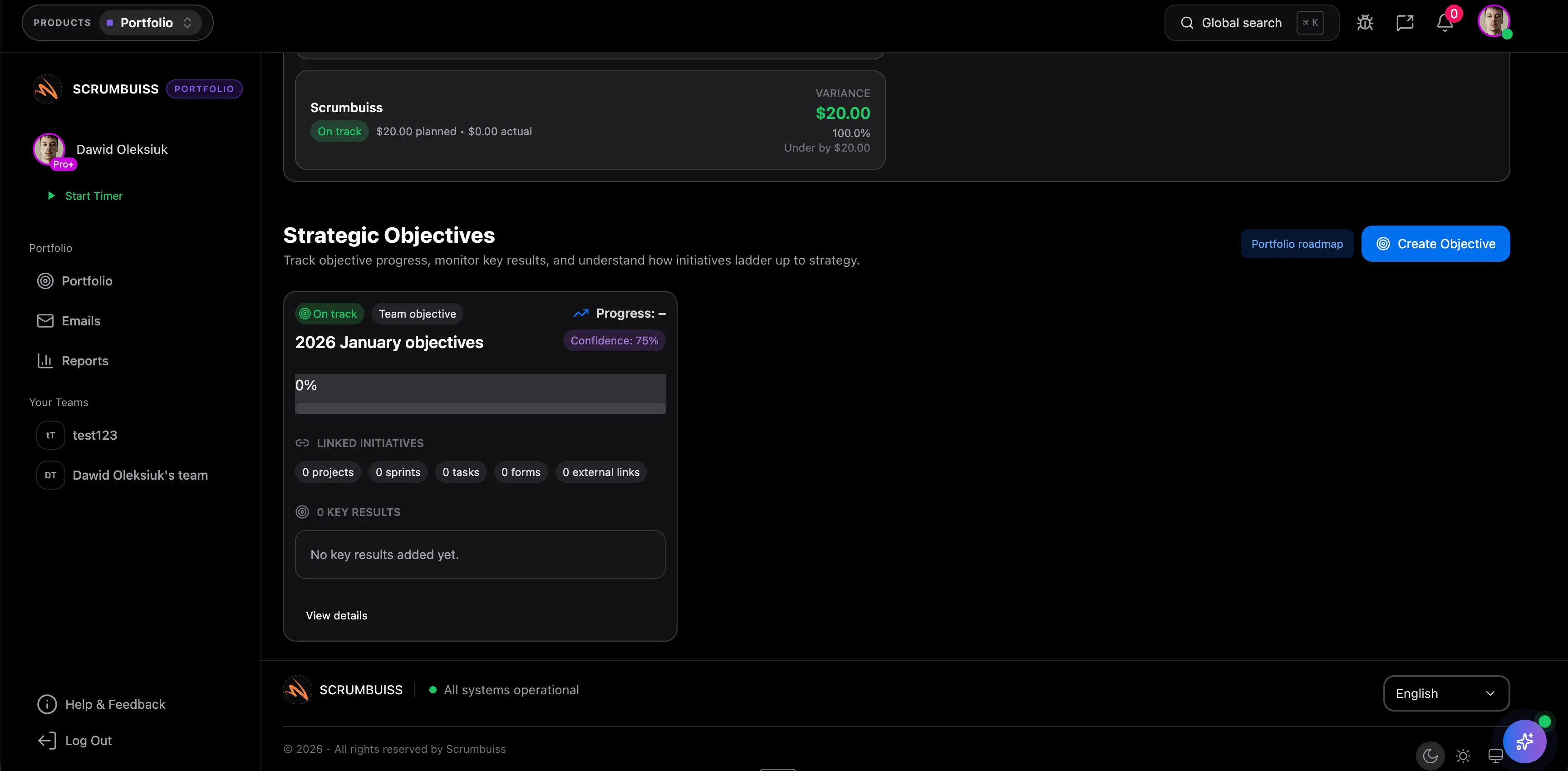
Scrumbuiss Portfolio helps teams connect objective alignment, roadmap visibility, and cross-project reporting so portfolio decisions are based on live delivery context.
FAQ
Frequently
asked
questions
Unlock Success &
Power Up Your Projects
Next to explore
Explore more pages to understand the product suite, common workflows, and evaluation guides.