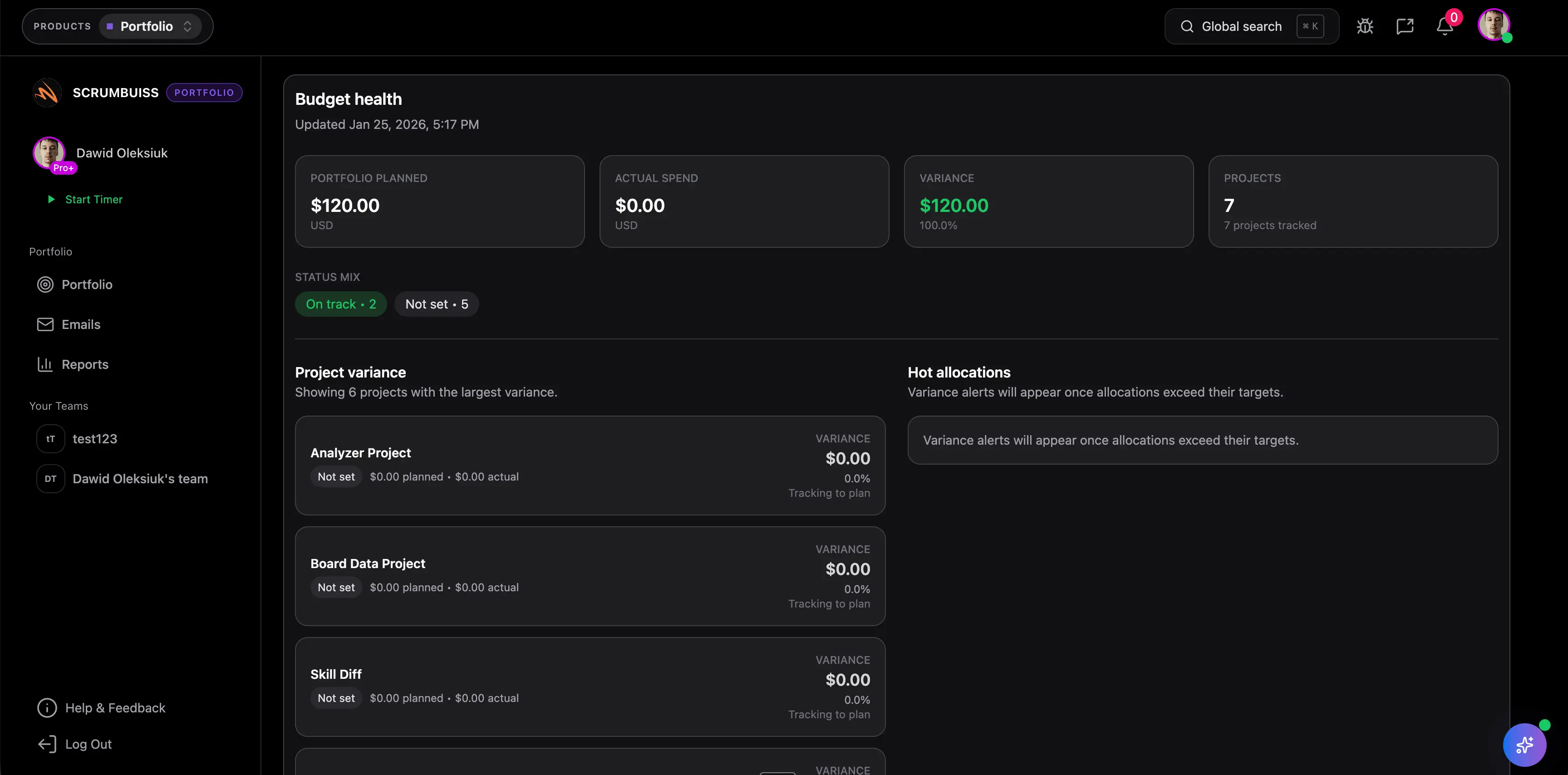
Project Portfolio Management Process Guide
A project portfolio management process helps leaders choose, balance, monitor, and adjust the set of projects the organization is trying to deliver. It is the operating rhythm behind portfolio decisions: what enters the portfolio, what gets approved, what gets paused, and what needs leadership attention.
This guide targets the "project portfolio management process" keyword found in SEMrush keyword research. It is distinct from the Scrumbuiss Portfolio product page, which shows the product workflow. This page explains the management process a team should design first.
Key Takeaways
- Project portfolio management starts before projects are approved.
- The process should connect intake, prioritization, capacity, approval, execution visibility, and reporting.
- Portfolio reviews should make tradeoffs explicit, not just collect status.
- A healthy portfolio process prevents too many projects from competing for the same people.
What Is the Project Portfolio Management Process?
The project portfolio management process is the recurring set of steps used to manage all proposed and active projects together. It answers:
- Which projects should enter review?
- Which requests support strategy?
- Which projects should be approved, deferred, paused, or stopped?
- Do we have enough capacity to deliver what we approved?
- Which portfolio risks or dependencies need leadership attention?
- How should progress be reported across teams?
The process matters because project-by-project decisions can create portfolio-level overload.
Portfolio Process Steps
| Step | Decision | Output |
|---|---|---|
| 1. Intake | Is the idea ready for review? | Qualified request or clarification needed |
| 2. Categorize | What kind of work is it? | Strategic initiative, client work, compliance, maintenance, improvement |
| 3. Prioritize | How does it compare with other candidates? | Score, rank, or decision recommendation |
| 4. Review capacity | Can the organization absorb it? | Capacity view and constraint list |
| 5. Approve or defer | Should the portfolio commit? | Decision, owner, reason, timing |
| 6. Plan roadmap | When should approved work happen? | Roadmap, milestones, dependency notes |
| 7. Monitor | Is the portfolio still healthy? | Status, risk, dependency, and capacity signals |
| 8. Rebalance | What should change? | Pause, accelerate, descope, defer, or stop decisions |
The process should be cyclical. Portfolio health changes as strategy, demand, and delivery reality change.
Inputs a Portfolio Review Needs
| Input | Why it matters |
|---|---|
| Strategic objectives | Shows what the portfolio should support |
| Proposed projects | Gives leaders the candidate work to compare |
| Active project status | Shows current commitments before new work is approved |
| Capacity data | Prevents overcommitment |
| Budget or cost view | Connects investment to priorities |
| Risk and dependency data | Shows where one project can affect another |
| Roadmap view | Turns decisions into timing and sequencing |
If these inputs live in different spreadsheets, portfolio meetings become reconciliation sessions instead of decision meetings.
Portfolio Governance Roles
| Role | Responsibility |
|---|---|
| Portfolio owner | Maintains portfolio visibility and review rhythm |
| Executive sponsor | Resolves strategic tradeoffs and major conflicts |
| Project manager | Provides delivery status, risks, and dependency updates |
| Finance or operations partner | Adds budget, capacity, or operational constraints |
| Functional lead | Confirms team capacity and sequencing impact |
The process should make decision rights explicit. Without named owners, portfolio review turns into discussion without commitment.
Common Process Mistakes
Approving work before checking capacity
A project may be strategically valuable and still impossible to deliver now. Capacity review should happen before approval, not after deadlines slip.
Treating portfolio review as status reporting
Status matters, but portfolio review should focus on decisions: start, stop, pause, accelerate, descope, or escalate.
Keeping prioritization separate from roadmap planning
Prioritization decides importance. Roadmap planning decides timing. The process needs both.
Never stopping work
A mature portfolio process can cancel or pause work when the business case weakens, capacity changes, or a higher-value priority appears.
FAQ
Frequently
asked
questions
Unlock Success &
Power Up Your Projects
Next to explore
Explore more pages to understand the product suite, common workflows, and evaluation guides.