Project Management Methodologies Guide
Project management methodologies are structured ways to plan, organize, execute, and control project work. The right methodology depends on how clear the requirements are, how much change is expected, how the team works, and what stakeholders need to see.
This guide targets the project management methodologies keyword cluster found in SEMrush. It focuses on methodology selection, while the existing project management techniques guide covers a broader set of techniques and practices.
Key Takeaways
- No single project management methodology fits every project.
- Waterfall works best when requirements are stable and sequence matters.
- Agile methods work best when learning, feedback, and adaptation matter.
- Hybrid approaches are common when teams need both governance and flexibility.
- The best methodology is the one the team can use consistently with clear roles and reporting.
What Is a Project Management Methodology?
A project management methodology is a repeatable approach for managing project work. It defines how a team plans, executes, reviews, adapts, and closes a project.
Methodologies help answer:
- How should work be planned?
- How often should progress be reviewed?
- Who makes decisions?
- How should changes be handled?
- What artifacts and meetings are required?
- How should stakeholders see status?
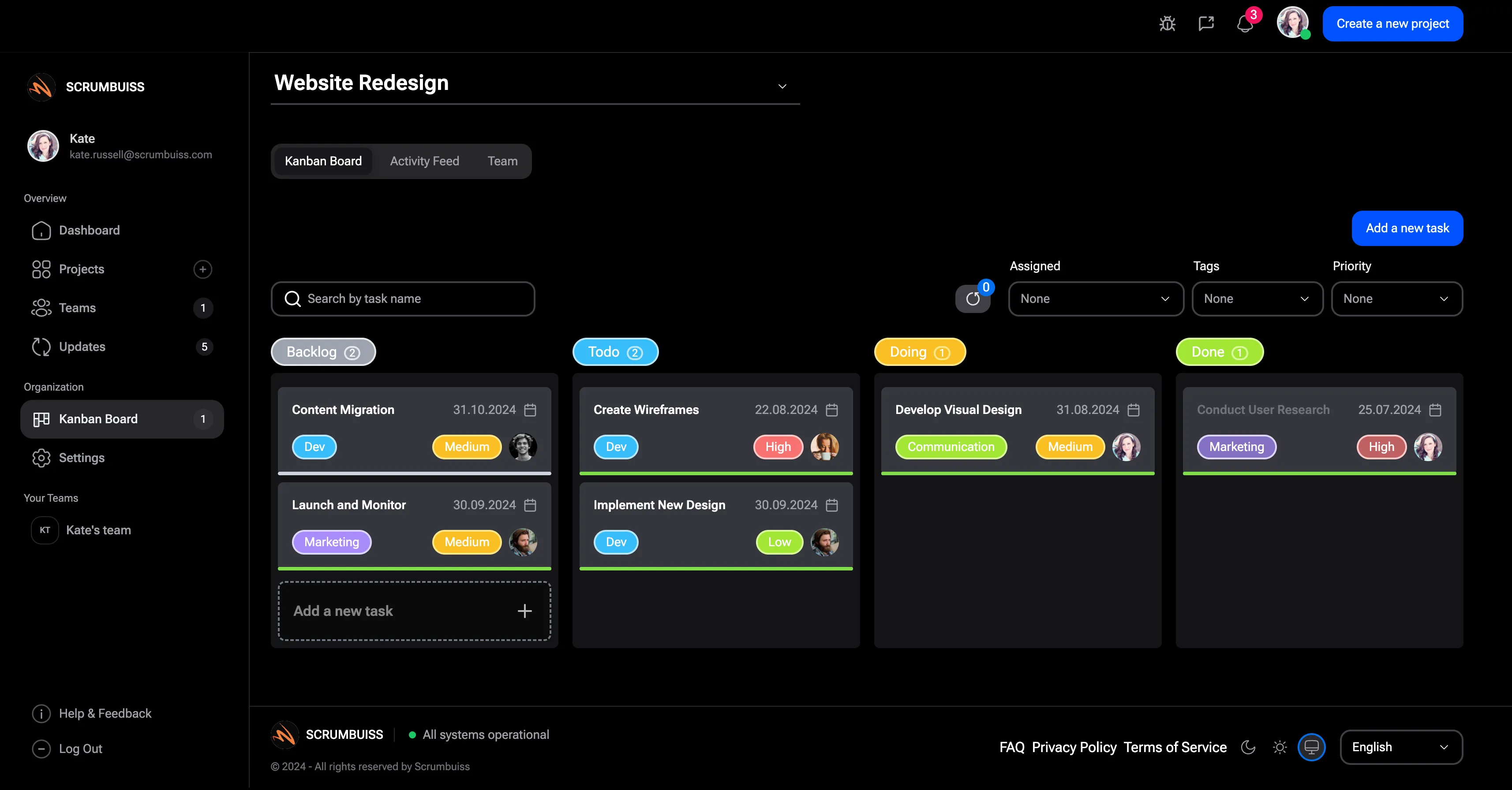
Scrumbuiss supports multiple operating styles through Kanban, Sprints, Gantt Timeline, Project Delivery, and Dashboard.
Common Project Management Methodologies
| Methodology | Best fit | Watch out for |
|---|---|---|
| Waterfall | Stable requirements, sequential phases, formal approvals | Slow response to late change |
| Agile | Complex work where feedback and adaptation matter | Can become chaotic without prioritization and ownership |
| Scrum | Product or software teams using sprint planning, reviews, and retrospectives | Needs clear roles and disciplined backlog management |
| Kanban | Continuous flow, support work, operations, and teams managing WIP | Can hide long-term planning needs |
| Lean | Workflows where waste reduction and value flow matter | May be too abstract without clear measurement |
| Critical Path Method | Schedule-driven projects with important dependencies | Requires realistic task estimates and dependency logic |
| Hybrid | Teams that need governance plus flexible delivery | Can become confusing if rules are not explicit |
Waterfall Methodology
Waterfall is a sequential methodology where work moves through defined phases such as requirements, design, build, test, and launch. It works well when the project needs formal approval gates, stable scope, and clear documentation.
Use the waterfall project management guide for a deeper walkthrough.
Agile Methodology
Agile is an adaptive approach that emphasizes iteration, customer feedback, and frequent reprioritization. It works well when the team expects learning and change during the project.
Agile is not a license to ignore planning. Teams still need priorities, roles, review cadence, and a shared definition of done.
Scrum and Kanban
Scrum and Kanban are two common agile approaches.
| Area | Scrum | Kanban |
|---|---|---|
| Cadence | Time-boxed sprints | Continuous flow |
| Planning | Sprint planning | Replenishment as capacity opens |
| Roles | Product owner, Scrum master, developers | Flexible roles |
| Best for | Product delivery with sprint goals | Operations, support, and continuous delivery |
Use the Kanban vs Scrum guide when the decision is specifically between these two operating models.
How To Choose a Methodology
| Question | Methodology signal |
|---|---|
| Are requirements stable? | Waterfall or hybrid may fit |
| Will the team learn through feedback? | Agile, Scrum, or Kanban may fit |
| Is work continuous rather than project-bounded? | Kanban may fit |
| Are dates controlled by dependencies? | Critical path and Gantt planning matter |
| Is governance required? | Waterfall, phase-gate, or hybrid may fit |
| Is the team overloaded? | Lean and WIP limits may help |
| Do stakeholders need formal approvals? | Hybrid or waterfall controls may be needed |
Many teams do not need a pure methodology. They need a clear operating model that defines planning, ownership, review, change control, and reporting.
Common Methodology Mistakes
Choosing a methodology by trend
Do not choose agile, Scrum, or waterfall because it is popular. Choose based on project uncertainty, stakeholder needs, and team maturity.
Mixing methods without rules
Hybrid delivery works only when the team knows which parts are fixed and which parts can adapt.
Ignoring reporting needs
Stakeholders may need status, milestones, and risk visibility even when the team works in an agile way.
Treating methodology as software configuration
Changing a board view does not create a methodology. The team also needs roles, rules, decisions, and review rhythm.
FAQ
Frequently
asked
questions
Related features
Explore the Scrumbuiss features mentioned in this article.
- Kanban Board
Run Kanban boards with cards, WIP limits, blockers, and task-flow visibility.
- Sprints
Manage your sprints and tasks with our intuitive sprint view. Stay organized and on track with deadlines, milestones, and team schedules in one place.
- Gantt Timeline
Plan dependencies, milestones, and schedule changes with a Gantt chart view that stays close to execution.
- Dashboard
Track project progress, blockers, workload, KPIs, status reporting, and analytics context in one live dashboard.
Unlock Success &
Power Up Your Projects
Next to explore
Explore more pages to understand the product suite, common workflows, and evaluation guides.