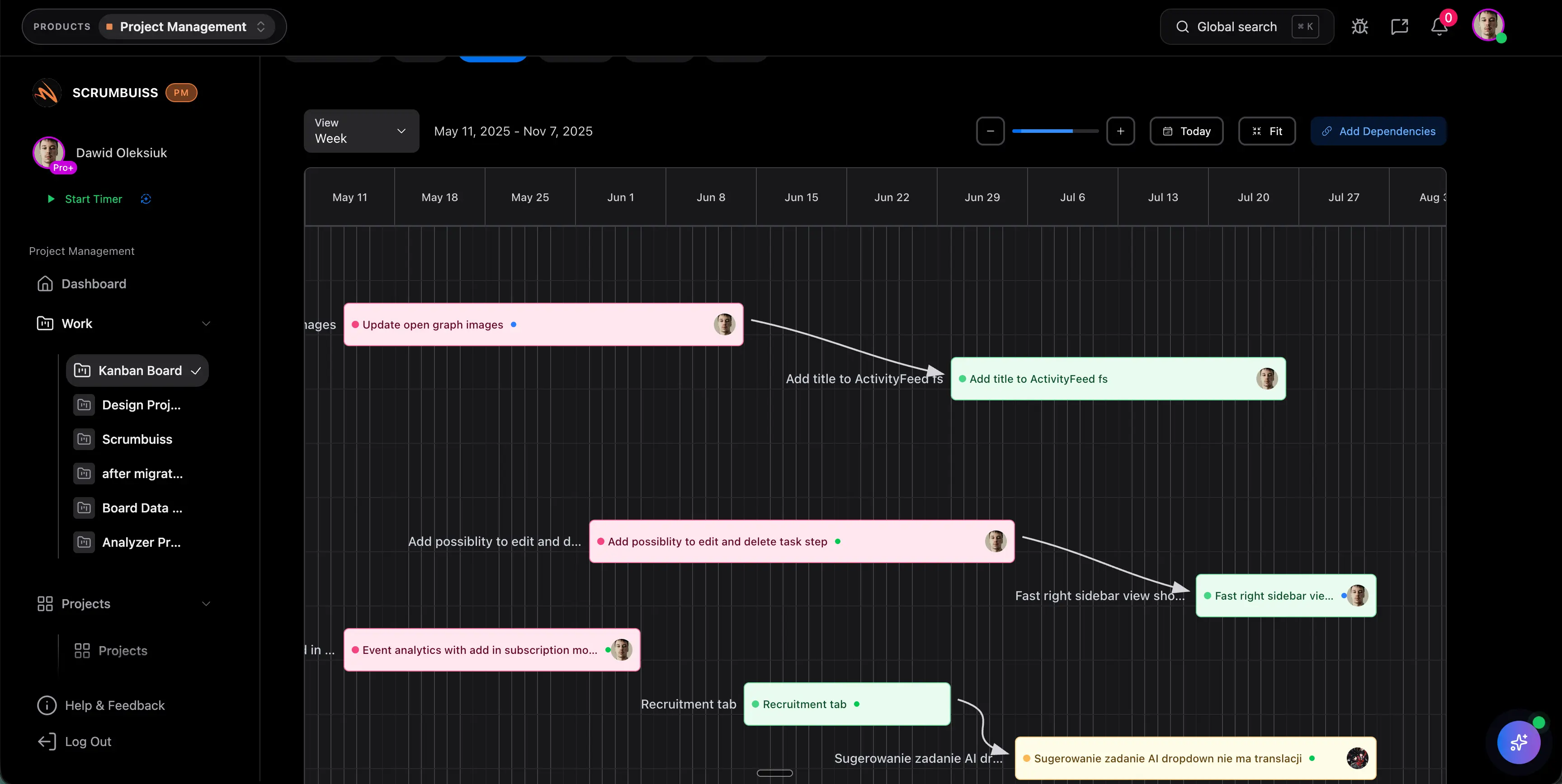
Project Roadmap Guide
A project roadmap is a high-level view of where a project is going, what major outcomes matter, and when important phases or milestones are expected. It helps stakeholders understand direction without forcing them into task-level detail.
This guide targets the project roadmap keyword cluster found in SEMrush. It supports the Scrumbuiss project roadmap template by explaining how to structure and use a roadmap well.
Key Takeaways
- A project roadmap explains direction, phases, milestones, owners, and major decisions.
- A roadmap is not the same as a detailed project schedule or task board.
- The best roadmap is readable by stakeholders and still useful for delivery planning.
- Roadmaps should be updated when scope, dates, priorities, or dependencies change.
What Is a Project Roadmap?
A project roadmap is a strategic delivery view that shows the major path from current state to target outcome. It usually includes phases, milestones, high-level deliverables, timing, and decision points.
Roadmaps help teams answer:
- What are we trying to deliver?
- Which phases matter most?
- What are the major milestones?
- What decisions or approvals are coming?
- Which risks could change the path?
- How does this project fit the broader portfolio?
Project Roadmap vs. Project Plan vs. Timeline
| Artifact | Main question | Typical audience |
|---|---|---|
| Project roadmap | Where are we going and what matters most? | Executives, sponsors, cross-functional leads |
| Project plan | What work needs to happen and how will it be managed? | Project manager, delivery team, stakeholders |
| Project timeline | When do phases, milestones, and key tasks happen? | Delivery team, project manager, stakeholders |
| Gantt chart | How do tasks, dependencies, and dates connect? | Project manager, delivery leads |
| Task board | What is active, blocked, in review, or done? | Delivery team |
Use the roadmap for direction. Use the project plan and schedule for execution detail.
What To Include in a Project Roadmap
| Roadmap element | Why it matters |
|---|---|
| Outcome | Keeps the roadmap connected to business value |
| Phases | Breaks the path into understandable stages |
| Milestones | Shows meaningful checkpoints |
| Major deliverables | Clarifies what will be produced |
| Owners | Makes accountability visible |
| Dependencies | Shows what must happen before a phase can move |
| Risks | Flags what could change the plan |
| Decisions needed | Keeps approval work visible |
Project Roadmap Examples
| Example | What it should emphasize |
|---|---|
| Product launch roadmap | Discovery, build, QA, enablement, launch, post-launch review |
| Client implementation roadmap | Kickoff, requirements, configuration, review, training, handoff |
| IT migration roadmap | Audit, dependency mapping, migration waves, testing, rollback plan |
| Agency campaign roadmap | Brief, creative concept, production, approval, launch, reporting |
| Portfolio roadmap | Prioritized projects, capacity windows, strategic themes, leadership decisions |
The best roadmap format depends on what the reader needs to decide. A leadership roadmap should be simpler than an internal delivery roadmap.
How To Create a Project Roadmap
- Define the outcome and why the project matters.
- Identify the major phases.
- Add milestones and expected timing.
- Attach accountable owners to each phase.
- Map key dependencies and approval gates.
- Show known risks and assumptions.
- Link to the detailed project plan, timeline, and dashboard.
- Review the roadmap during major status or governance checkpoints.
When the roadmap becomes too detailed, move execution work into a task board or schedule. When it becomes too vague, add milestones, owners, and decision points.
Common Roadmap Mistakes
Turning the roadmap into a task list
Stakeholders need direction and milestone context, not every task. Keep task-level execution in the project workspace.
Hiding decisions
Many roadmaps show phases but omit the decisions that control whether the next phase can start. Add approval points explicitly.
Ignoring capacity
A roadmap is not credible if the same team is assigned to several major efforts at once. Review capacity before publishing dates.
Forgetting to update the roadmap
If the roadmap is used only at kickoff, it becomes a historical artifact. Update it when scope, priority, or dates change.
FAQ
Frequently
asked
questions
Unlock Success &
Power Up Your Projects
Next to explore
Explore more pages to understand the product suite, common workflows, and evaluation guides.