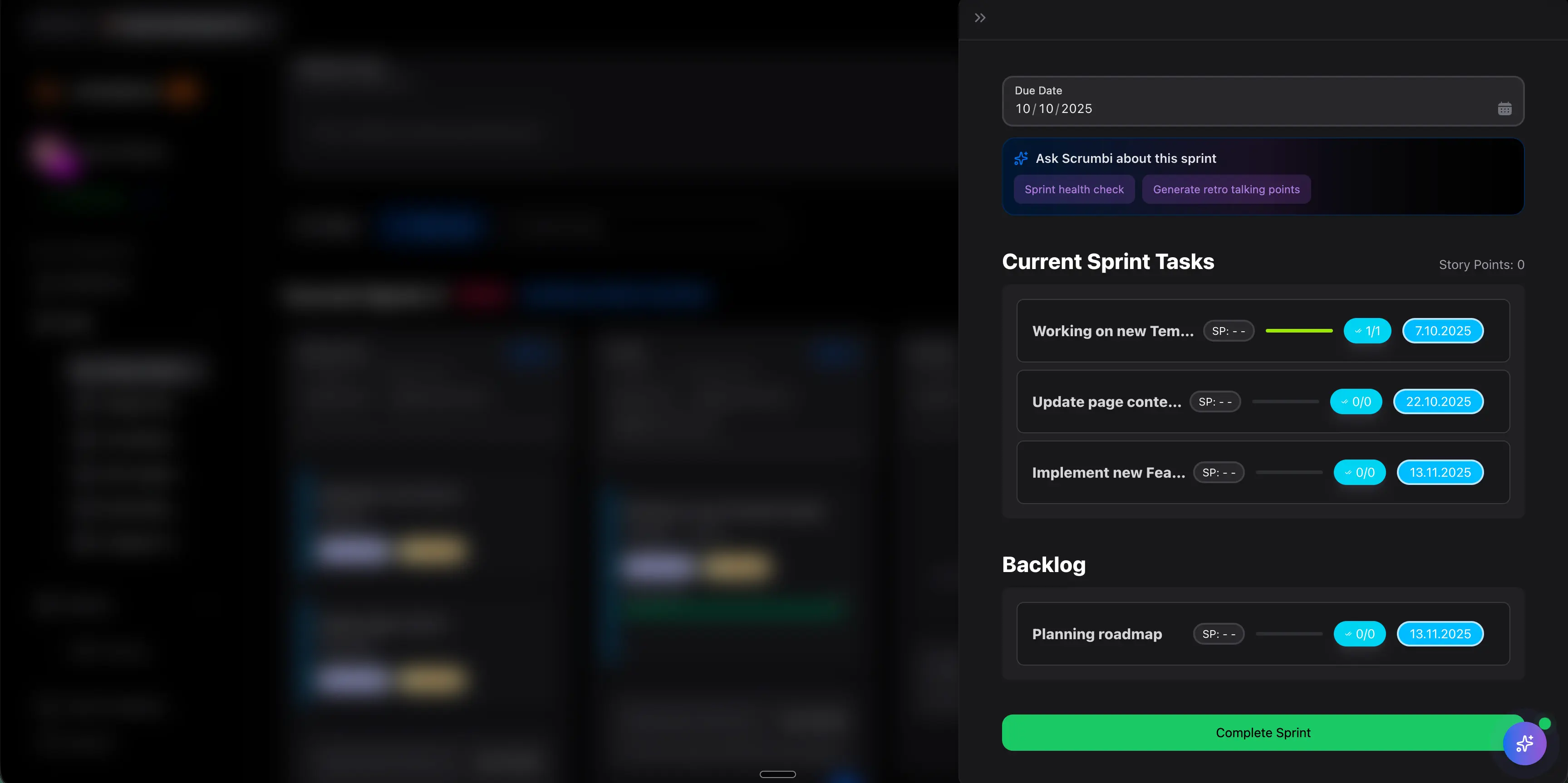
Sprint Planning Guide
Sprint planning is the Scrum event where the team decides what goal to pursue in the next sprint and which backlog items they will work on. Good sprint planning creates a realistic sprint commitment instead of a wish list.
This guide targets the sprint planning keyword cluster found in SEMrush. It supports the Scrumbuiss sprint planning template and Sprints pages.
Key Takeaways
- Sprint planning should produce a sprint goal, selected backlog items, capacity check, and clear next work.
- The product owner brings priority. The team brings delivery judgment.
- Estimation is useful only when it improves shared understanding and commitment quality.
- Sprint planning fails when work is unclear, capacity is ignored, or the sprint goal is vague.
What Is Sprint Planning?
Sprint planning is a planning event at the start of a sprint. The team reviews priorities, capacity, readiness, dependencies, and estimates before selecting work for the sprint.
Sprint planning should answer:
- Why is this sprint valuable?
- What work will the team attempt?
- How will the work be completed?
- What risks or dependencies could affect the sprint?
- Does the sprint backlog fit real capacity?
Sprint Planning Inputs and Outputs
| Inputs | Outputs |
|---|---|
| Product goal or roadmap priority | Sprint goal |
| Refined backlog | Sprint backlog |
| Team capacity | Realistic commitment |
| Estimates or sizing | Shared effort understanding |
| Dependencies and risks | Blocker plan |
| Definition of done | Acceptance expectations |
Sprint Planning Agenda
- Review the product or project priority.
- Confirm team capacity and time away.
- Review candidate backlog items.
- Clarify acceptance criteria and dependencies.
- Estimate or confirm size where needed.
- Select work that fits the sprint.
- Define the sprint goal.
- Confirm first tasks, owners, and known risks.
Use planning poker when the team needs a structured way to discuss effort and uncertainty.
Common Sprint Planning Mistakes
Starting with unclear backlog items
Sprint planning should not become requirements discovery for every item.
Ignoring capacity
Velocity or past output does not matter if half the team is unavailable this sprint.
No sprint goal
A list of tickets is not a sprint goal. The goal should explain the outcome the sprint is trying to produce.
Accepting hidden dependencies
Dependencies should be visible before the team commits.
FAQ
Frequently
asked
questions
Related features
Explore the Scrumbuiss features mentioned in this article.
- Sprints
Manage your sprints and tasks with our intuitive sprint view. Stay organized and on track with deadlines, milestones, and team schedules in one place.
Unlock Success &
Power Up Your Projects
Next to explore
Explore more pages to understand the product suite, common workflows, and evaluation guides.