Project Management Framework Guide
A project management framework is the operating structure a team uses to move projects from request to delivery and closeout. It defines the roles, stages, controls, artifacts, decision points, and reporting rhythm that make project work repeatable.
This guide targets the project management framework keyword cluster found in SEMrush. It is different from the project management methodologies guide because a framework can include a methodology, but it also includes governance, roles, templates, and operating rules.
Key Takeaways
- A project management framework defines how projects are selected, planned, delivered, governed, reported, and closed.
- A methodology is one part of a framework, not the whole framework.
- Strong frameworks make ownership, approvals, risk, reporting, and change control explicit.
- The best framework is lightweight enough to use and structured enough to prevent recurring delivery problems.
What Is a Project Management Framework?
A project management framework is a repeatable structure for managing project work. It usually covers:
- intake and prioritization
- project roles and responsibilities
- planning artifacts
- methodology or delivery model
- governance and approvals
- risk and issue management
- communication and reporting
- change control
- closeout and lessons learned
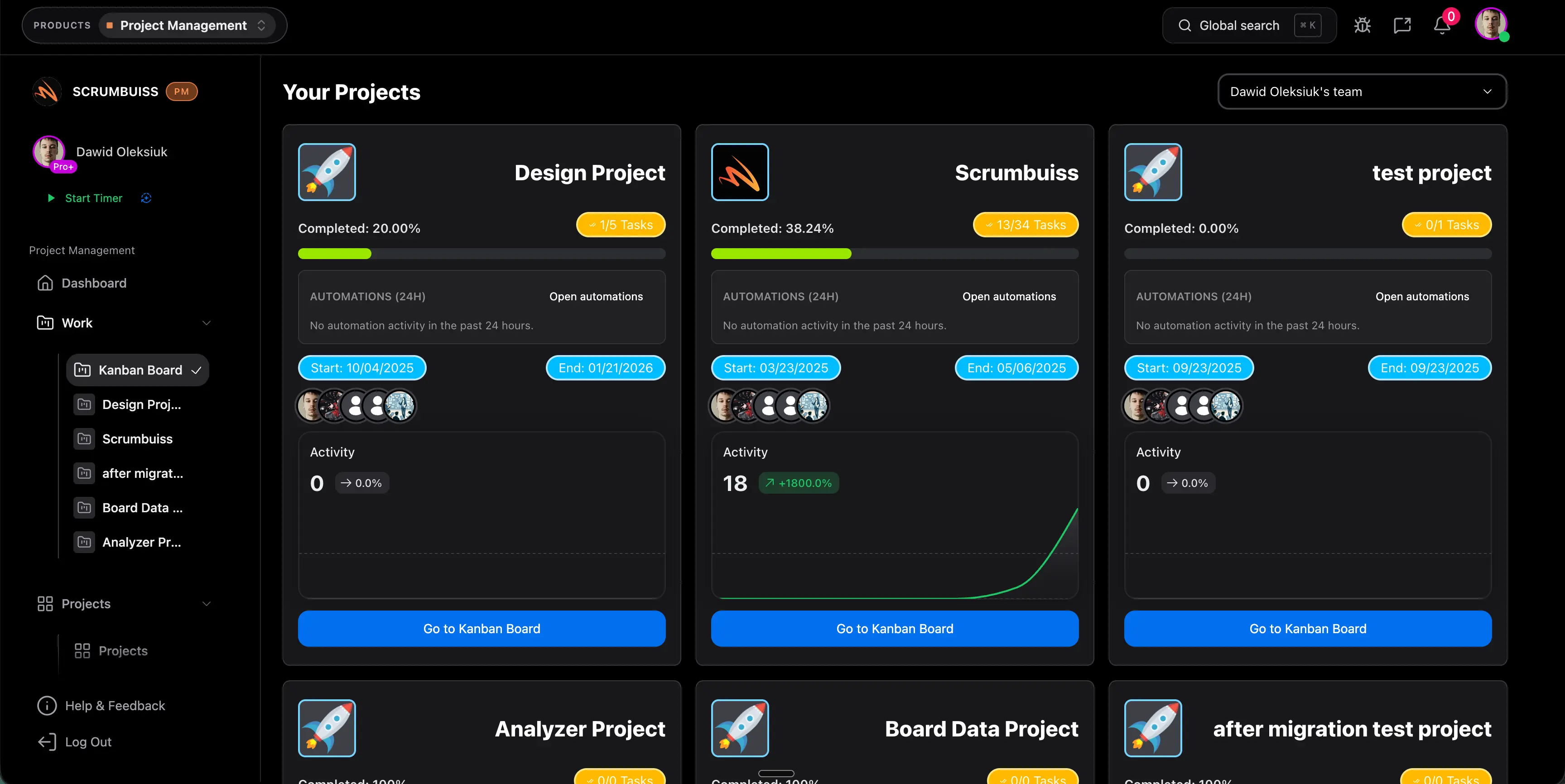
Scrumbuiss supports framework design through Project Delivery, Project Intake, Dashboard, Risk Center, and Portfolio.
Framework vs. Methodology vs. Process
| Term | Meaning |
|---|---|
| Framework | Overall operating structure for managing projects |
| Methodology | Approach to delivery, such as waterfall, agile, Scrum, Kanban, or hybrid |
| Process | Step-by-step flow for a specific activity, such as intake, change control, or closeout |
| Template | Reusable artifact that supports the framework |
Use the project management process guide when the question is the step-by-step project flow.
Key Elements of a Project Management Framework
| Element | What to define |
|---|---|
| Intake | How new requests are captured and qualified |
| Prioritization | How projects are approved, rejected, or deferred |
| Roles | Sponsor, project manager, product owner, lead, contributors, approvers |
| Planning | Required documents, schedules, scope, risks, and success criteria |
| Delivery model | Waterfall, agile, Kanban, Scrum, hybrid, or custom workflow |
| Governance | Stage gates, reviews, decision rights, and escalation paths |
| Reporting | Dashboard, status report, metrics, and audience |
| Risk and change | How risks, issues, dependencies, and changes are managed |
| Closeout | Acceptance, handoff, lessons learned, and archive rules |
Project Management Framework Example
| Stage | Framework rule |
|---|---|
| Intake | Every new request uses a project intake form with scope, deadline, owner, and value |
| Approval | Project sponsor approves scope and priority before planning starts |
| Planning | Project manager creates charter, scope statement, schedule, and risk register |
| Delivery | Team uses Kanban or sprint planning depending on work type |
| Reporting | Weekly status report and dashboard show status, risks, decisions, and milestones |
| Change | New scope requires impact review before approval |
| Closeout | Acceptance, handoff, lessons learned, and final files are confirmed |
Common Framework Mistakes
Building a framework no one uses
If the framework adds too much overhead, teams will work around it. Keep rules practical.
Skipping decision rights
Frameworks fail when teams know the steps but not who can approve tradeoffs.
Confusing templates with governance
Templates help, but they do not replace ownership, review cadence, and escalation paths.
Applying one model to every project
Small, low-risk projects do not need the same controls as major cross-functional programs.
FAQ
Frequently
asked
questions
Related features
Explore the Scrumbuiss features mentioned in this article.
- Dashboard
Track project progress, blockers, workload, KPIs, status reporting, and analytics context in one live dashboard.
Unlock Success &
Power Up Your Projects
Next to explore
Explore more pages to understand the product suite, common workflows, and evaluation guides.