Scrumbuiss vs Monday.com for teams outgrowing board-first work management
Compare Scrumbuiss and Monday.com from the perspective of delivery teams that like flexible boards but now need more structure around sprint planning, workload, reporting, and adjacent workflows.
Looking for a Monday.com alternative? This page is a practical evaluation guide. For exact plan-level details, verify on vendor websites. All product names are trademarks of their respective owners.
How this comparison was reviewed
Reviewed on March 12, 2026. This guide compares a common inflection point: Monday.com boards already run the work, but delivery teams now need stronger sprint rhythm, workload visibility, stakeholder reporting, and fewer adjacent tools.
- Scrumbuiss references come from the live pricing page plus the Project Delivery, Sprints, Workload & Capacity, CRM, ITSM, Time Tracking, Files, and Dashboard pages in this site.
- Monday.com references come from the official pricing, Work Management, Dashboards, Automations, and Gantt pages reviewed on March 12, 2026.
- The goal is not to score every feature. It is to help buyers test whether they still want a flexible board-first workspace or a more structured delivery operating model.
Quick fit
A high-level way to decide which tool is more likely to match your workflow.
Choose Scrumbuiss if
- ✓ Delivery teams that want sprints, dependencies, workload review, and reporting in one operating layer instead of across several boards and side systems.
- ✓ Organizations that want delivery work, CRM, IT operations, time tracking, and files connected without stitching multiple products together.
- ✓ Leads who want a guided workflow with lower reporting and administration overhead as the team grows.
Choose Monday.com if
- ✓ Teams that prioritize highly customizable boards, templates, automations, and dashboards across many departments.
- ✓ Organizations that want a flexible work management platform and are comfortable designing conventions around a board-first system.
- ✓ Buyers whose biggest need is cross-department work coordination rather than a more opinionated delivery operating model.
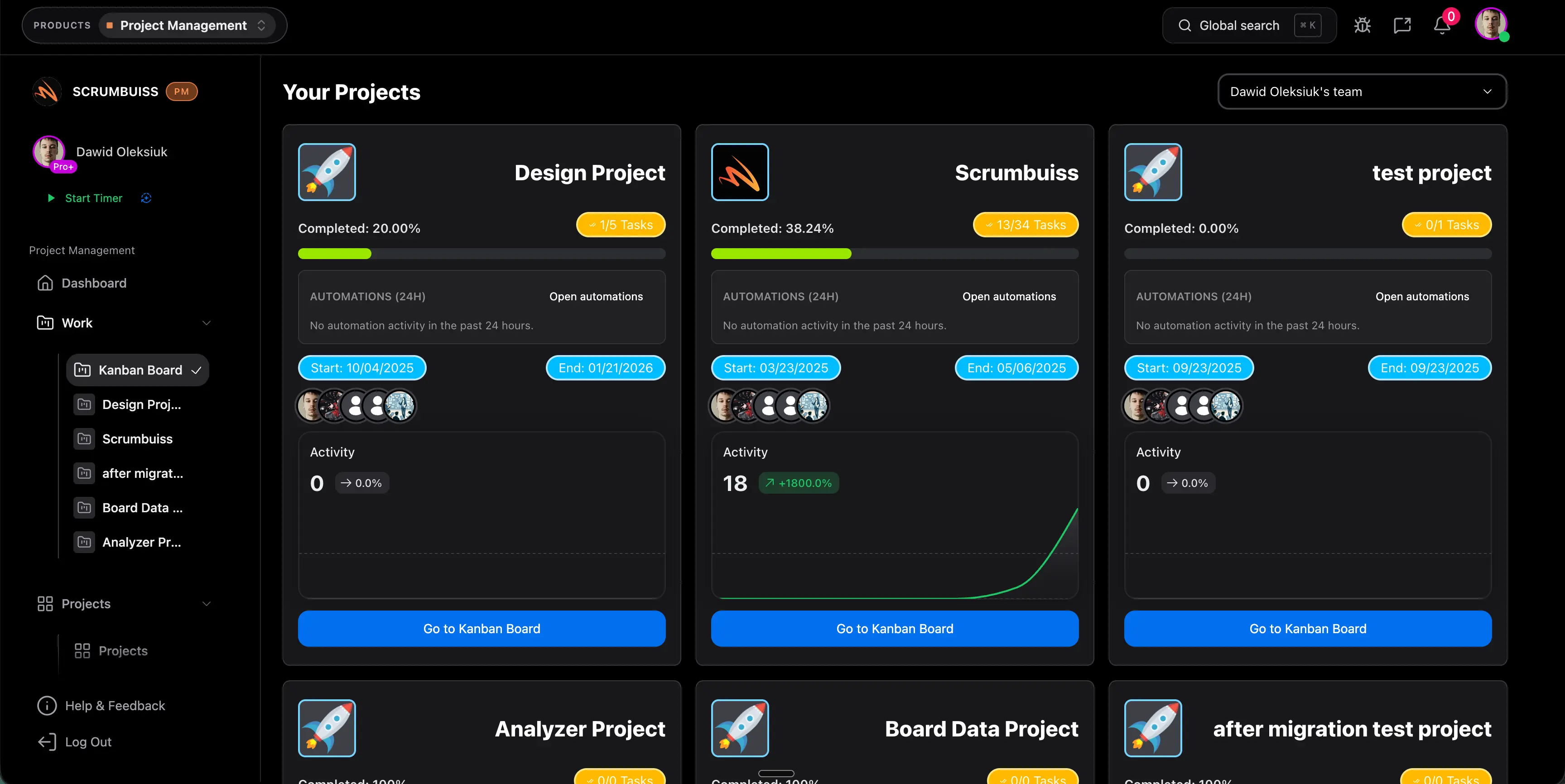
Decision matrix
Pick the buyer profile that matches the workflow pressure your team feels every week.
Monday boards already run the work, but planning happens somewhere else
Use this lens when teams like Monday.com's board flexibility, yet sprint planning, dependency review, or capacity conversations still move into spreadsheets, docs, or side dashboards.
Strong fit if
- Delivery leads rebuild planning context before every sprint or milestone review.
- The board shows task status, but workload and dependency risk are not easy to review in the same operating rhythm.
- Stakeholders want one view of delivery health instead of several board and dashboard combinations.
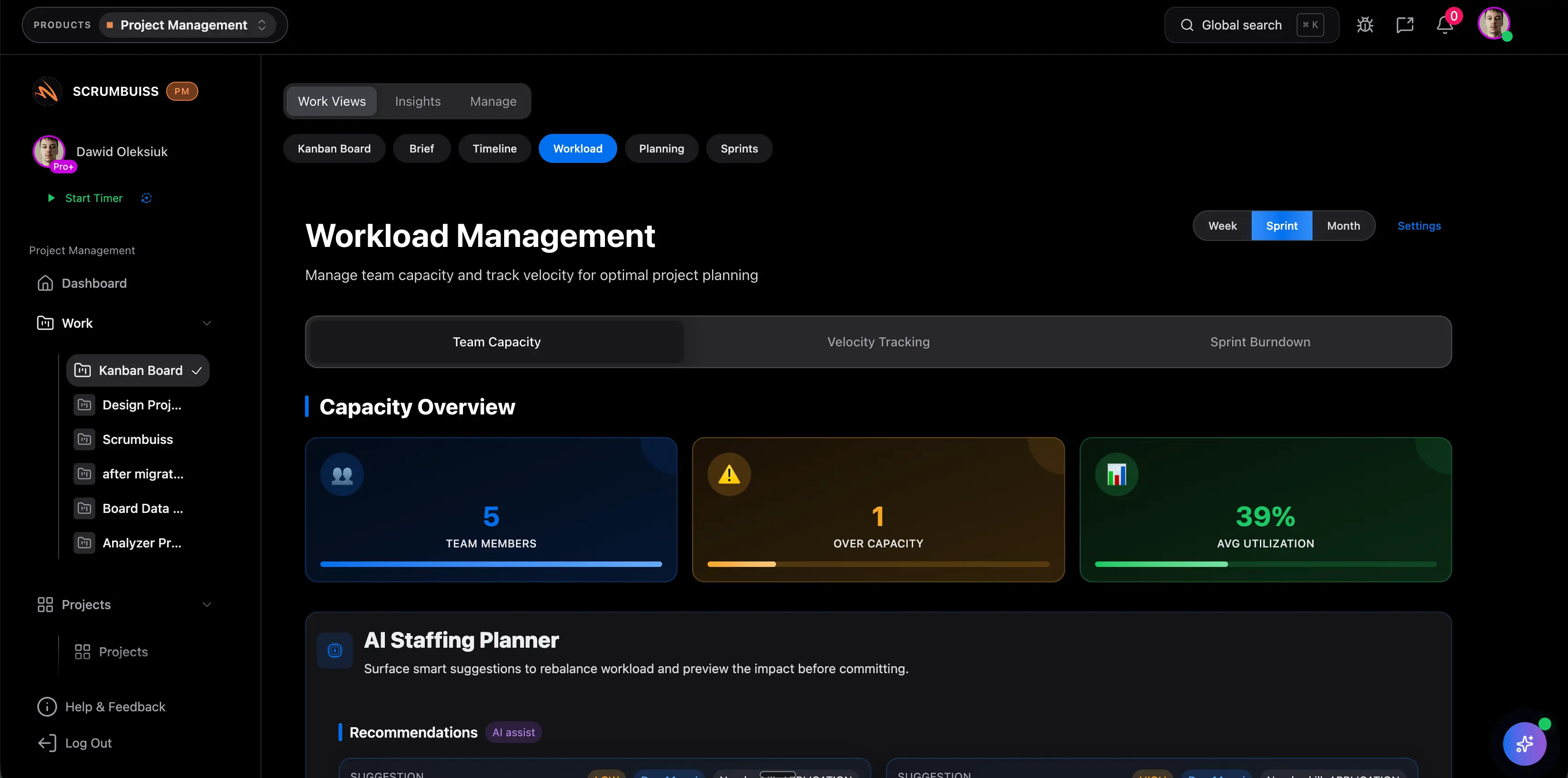
Cross-functional visibility matters, but reporting needs to stay lighter
Choose this profile when many teams need visibility, but the real pain is the amount of manual work it takes to keep dashboards, reporting views, and stakeholder updates consistent.
Strong fit if
- Project managers maintain boards for execution and then separate dashboard views for leadership reporting.
- The team wants cleaner weekly reviews without designing a new reporting ritual each quarter.
- Cross-functional visibility matters, but the delivery workflow still needs more structure than a board alone provides.
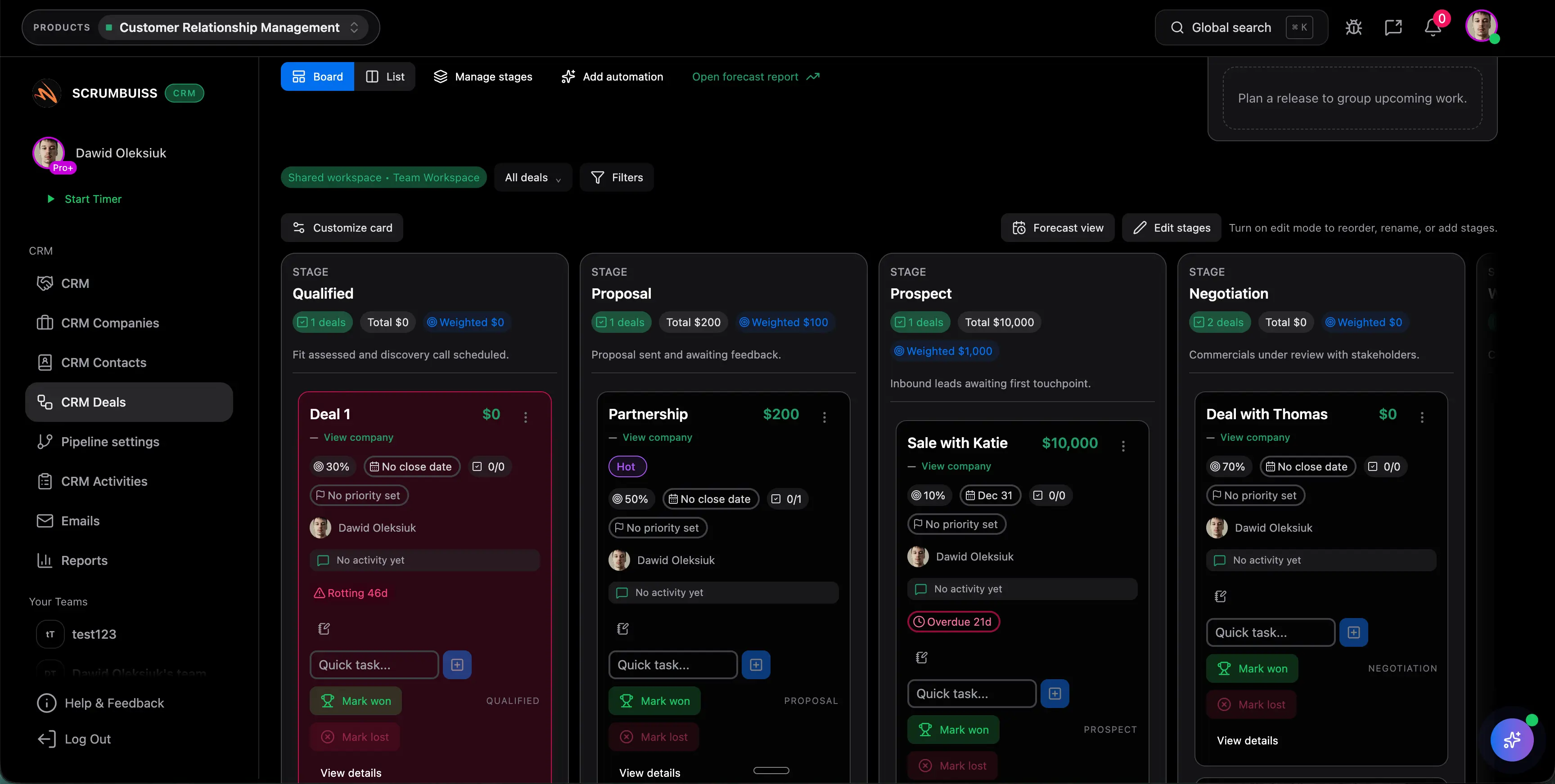
Adjacent workflows around delivery are becoming the bigger issue
This profile fits when Monday.com still handles core work tracking, but the surrounding handoffs around CRM, service work, time, or files are what now create the most friction.
Strong fit if
- Customer context, operational follow-up, or file handoffs live outside the main delivery workflow.
- Teams are evaluating whether Monday.com should remain one layer in a larger stack or whether the operating model should be simplified.
- The organization wants less workflow sprawl as headcount and reporting needs increase.
At a glance
A quick summary of the most common evaluation points.
| Category | Scrumbuiss | Monday.com |
|---|---|---|
| Board flexibility and templates | Uses a more guided operating model so delivery workflows, statuses, and reporting stay easier to standardize as the team grows. | Monday.com is stronger if board flexibility, templates, and department-specific workspace design are the main priorities. |
| Sprint planning and delivery depth | Sprints, dependencies, timelines, and backlog execution stay close to the same delivery workflow used day to day. | Monday.com supports boards, automations, and delivery views well, but buyers should test how much sprint discipline and delivery structure they still need to design themselves. |
| Workload and capacity | Workload and capacity review are treated as part of the operating rhythm, not as a separate planning exercise. | Monday.com provides visual planning and dashboards, but teams should validate whether workload review is strong enough for their real commitment and resourcing process. |
| Automations and routing | Automation supports structured operating flows across delivery, CRM, IT operations, time tracking, and files. | Monday.com is strong in automations and routing for board-driven workflows. Buyers should price the admin effort needed to keep those automations consistent across teams. |
| Stakeholder reporting | Dashboards and project context are designed to reduce the amount of manual status translation required each week. | Monday.com dashboards are a real strength. The practical question is how easy they remain to maintain as the number of boards, audiences, and reporting views increases. |
| Adjacent products and stack sprawl | Project delivery, CRM, IT operations, time tracking, and files live in one product suite, which can reduce handoff gaps between adjacent workflows. | Monday.com spans multiple products and many integrations. Verify whether your workflow stays mostly inside monday work management or depends on other monday products and separate tools. |
| Pricing model | 14-day full-product trial, then Team ($9 monthly / $7 annual) or Business ($17 monthly / $14 annual) per full member. Guests and viewers are free. | Official monday work management pricing shows Free, Basic ($12 monthly / $9 annual), Standard ($14 monthly / $12 annual), Pro ($24 monthly / $19 annual), and Enterprise via sales as of March 12, 2026. |
Key differences
Where teams typically feel the biggest day-to-day impact.
Monday.com is stronger when flexibility is the product
Monday.com earns attention because its boards, templates, automations, and dashboards can be adapted for many departments. If your main requirement is broad flexibility across very different teams, that remains a legitimate strength.
Scrumbuiss is stronger when planning must stay connected to execution
Scrumbuiss is stronger when sprint planning, dependency review, workload visibility, and reporting need to stay inside one delivery operating workflow instead of across boards plus surrounding systems.
Admin overhead becomes a real cost as workflows multiply
The more boards, automations, and reporting layers an organization creates, the more governance it usually owns. Scrumbuiss makes a different tradeoff by using a more opinionated structure to keep that overhead lower.
Workload visibility is treated more like an operating discipline
Many teams do not struggle to see task status. They struggle to see whether people and commitments still line up. Scrumbuiss leans harder into workload and capacity as part of ongoing planning, not only as another view of board data.
Adjacent delivery workflows do not need to live somewhere else
If customer context, operational follow-up, files, and time tracking matter to the same delivery workflow, Scrumbuiss can keep those workflows closer together instead of treating them as separate stack decisions.
The right decision is rarely about feature count alone
A useful evaluation compares one real operating workflow in both products. The better fit is the one that keeps weekly planning, reporting, and handoffs simpler after the initial setup is done.
Evaluation checklist
Use this checklist when comparing tools internally with your team.
- ✓ Are our Monday.com boards still the whole workflow, or only one layer of it?
- ✓ Do sprint planning, dependency review, and workload visibility need to stay closer to execution?
- ✓ How much admin effort does it take to keep custom boards, dashboards, and automations consistent today?
- ✓ Do CRM, operational follow-up, time tracking, or files need to live closer to delivery work?
- ✓ Do we want maximum board flexibility, or a more guided delivery operating model?
Workflow examples
Concrete scenarios you can recreate in a trial to validate fit.
Move from board planning to a repeatable sprint rhythm
Use this test when the board is no longer the hard part. The hard part is creating a repeatable sprint cadence with capacity, dependencies, and delivery review built in.
- Start from a Kanban-style workflow and define the smallest set of stages your team will keep consistent.
- Add sprint planning, dependency review, and workload checks before the team commits to the next cycle.
- Run one full sprint and compare how much planning context survives into execution and reporting.
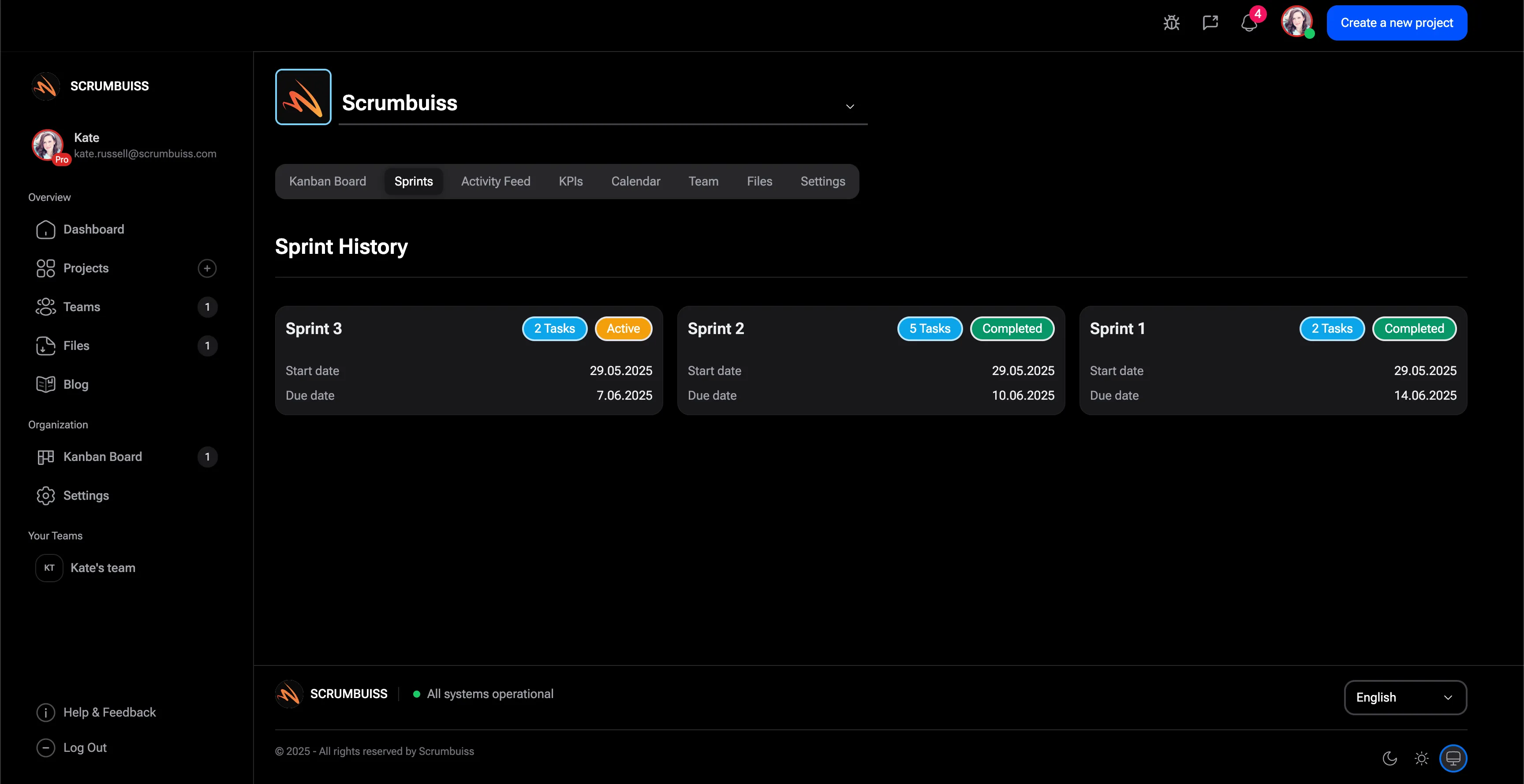
Give cross-functional stakeholders one reporting rhythm
This is the better workflow test when execution is already moving, but leadership reviews still require rebuilding context from several boards or dashboards.
- Keep the live project, key milestones, and owners current in the delivery workspace.
- Review the same dashboard and project context in the weekly stakeholder meeting.
- Compare how much manual translation is still needed to produce a useful update.
Connect handoffs, files, and operational follow-up
Run this scenario when the bigger question is no longer the task board. It is how delivery work hands off into customer follow-up, files, time tracking, or operational tasks.
- Map one real handoff that currently crosses between delivery, customer context, and operational follow-up.
- Rebuild that workflow with shared records, files, and time visibility where needed.
- Check whether the workflow stays easier to follow without recreating stack sprawl.
Potential impact (examples)
Illustrative examples. Your results depend on team size, process, and workload.
Less time rebuilding planning context
Teams can spend less time reconstructing sprint and workload context before each planning checkpoint.
Cleaner stakeholder status reviews
Weekly reporting gets easier when the same workflow used to run delivery also supports the leadership review.
Fewer handoff gaps between adjacent systems
Connected customer, operational, file, or time workflows can reduce the amount of follow-up needed after work crosses system boundaries.
Published pricing comparison
This section uses the public Scrumbuiss pricing page and the official Monday.com pricing page for monday work management reviewed on March 12, 2026. Re-check both vendor sites before purchasing.
| Category | Scrumbuiss | Monday.com |
|---|---|---|
| Free or trial entry | 14-day full-product trial with no card required. | Free plan available, plus a 14-day Pro trial on monday work management. |
| Lowest published paid plan | Team at $7 annual or $9 monthly per full member. | Basic at $9 annual or $12 monthly per seat on monday work management. |
| Next published paid plan | Business at $14 annual or $17 monthly per full member. | Standard at $12 annual or $14 monthly per seat on monday work management. |
| Advanced paid path | Business is the higher public Scrumbuiss plan and covers the broader operating model across delivery, CRM, IT operations, files, and time tracking. | Pro at $19 annual or $24 monthly per seat, plus Enterprise via sales on monday work management. |
| What teams should really price | Model one workflow covering planning, delivery, reporting, and adjacent operational context in a single product trial. | Model seat cost plus the admin time, surrounding tools, and any extra monday products needed to keep boards, dashboards, and adjacent workflows consistent. |
Notes
- Monday.com pricing page covers multiple monday products; the figures above reference monday work management only.
- Published pricing, packaging, and billing options can change.
- If your workflow also needs CRM, development, or service management, verify whether that stays in monday work management, another monday product, or a separate tool.
Pricing notes
A few cost considerations teams often miss during evaluation.
- Do not compare seat price alone. Include the workflow cost of planning, reporting, and adjacent tools around the board layer.
- Monday.com's flexibility is real, but the standardization work behind boards, dashboards, and automations also has a cost as the organization grows.
- Check how many people truly need paid editing access versus guest or viewer access in each setup.
- If CRM, operations, time tracking, or files matter to the same workflow, price the full operating model instead of only the task-board layer.
Migration plan
A pragmatic way to switch without disrupting delivery.
- ✓ Choose one Monday.com workflow that already feels harder to run than it should.
- ✓ List the boards, dashboards, automations, files, and side documents that workflow depends on today.
- ✓ Recreate that workflow in Scrumbuiss with Kanban first, then add sprints, workload, and adjacent products only where they are genuinely needed.
- ✓ Rebuild one stakeholder reporting view and compare the weekly maintenance effort.
- ✓ Pilot for 2-4 weeks and measure planning time, reporting effort, and handoff clarity.
- ✓ Expand only if the more structured workflow proves simpler than your current Monday.com operating model.
What customers say
Real feedback from teams using Scrumbuiss.

Scrumbuiss runs very smoothly and has changed how I organize and execute my projects.

The interface made it easy to assign tasks, set priorities, and monitor progress across our work.
Read more on our Customers page .
FAQ
Is Scrumbuiss always a better Monday.com alternative? +
No. Monday.com is still a strong option when customizable boards, templates, automations, and cross-department flexibility are the main priorities. Scrumbuiss is stronger when the real need is a more structured delivery operating model with less workflow sprawl.
What is the biggest tradeoff between Scrumbuiss and Monday.com? +
The main tradeoff is flexibility versus operating structure. Monday.com gives teams more freedom to shape boards and automations around many kinds of work. Scrumbuiss gives teams a more opinionated delivery workflow so sprint planning, workload, reporting, and adjacent workflows stay easier to run together.
How should we test the difference in a trial? +
Recreate one workflow you run every week from planning through reporting. Include the board, the reporting view, and any files, time, or operational handoffs that matter. Then compare how much admin work and status translation each product still requires after setup.
When is Monday.com still the better fit? +
Monday.com is often the better fit when multiple departments want broad flexibility, template-driven setup, and strong board and dashboard customization without shifting to a more guided delivery model. It can also remain the right choice if your organization already has a mature Monday.com operating standard.
Should we compare only seat price? +
No. Seat price matters, but the larger cost is often the operating model around it: who maintains boards and dashboards, how reporting gets produced, and whether adjacent workflows still require separate products or manual handoffs.
Can Scrumbuiss replace several adjacent tools around Monday.com? +
Often yes, especially when delivery teams also need CRM context, IT operations follow-up, time tracking, and files in the same operating environment. The best way to validate that is to map one real workflow and see which surrounding tools stop being necessary.