Project Kickoff Meeting Guide
A project kickoff meeting aligns the team and stakeholders before delivery begins. It confirms why the project exists, what success means, who owns what, how decisions will be made, and which risks or constraints need attention early.
This guide targets the project kickoff meeting keyword cluster found in SEMrush research. It supports the Scrumbuiss meeting agenda template and Project Brief solution page by explaining what the kickoff meeting must accomplish.
Key Takeaways
- A kickoff meeting should create alignment, not repeat a slide deck.
- The best kickoff agenda covers goals, scope, roles, communication, risks, timeline, and next actions.
- Every kickoff should end with named owners and follow-up actions.
- If key decisions are missing, the kickoff should surface them before delivery starts.
What Is a Project Kickoff Meeting?
A project kickoff meeting is the first formal alignment meeting after a project is approved. It usually brings together the project manager, sponsor, delivery team, stakeholders, and sometimes the client.
The meeting should answer:
- What problem are we solving?
- What is in and out of scope?
- Who is accountable for decisions?
- What timeline or milestones matter?
- What risks, assumptions, or constraints are already visible?
- How will we communicate status and changes?
- What happens next?
Project Kickoff Meeting Agenda
| Agenda item | Purpose |
|---|---|
| Project context | Explain why the project exists |
| Goals and success measures | Define the outcome the team is trying to create |
| Scope and non-goals | Prevent unclear expectations |
| Roles and decision rights | Clarify who owns delivery, approval, and input |
| Timeline and milestones | Align around key dates and dependencies |
| Risks and assumptions | Surface uncertainty before execution |
| Communication plan | Agree on updates, meetings, and escalation |
| Next actions | Assign immediate owners and due dates |
Use a written agenda so the meeting produces decisions instead of scattered notes.
Who Should Attend?
| Attendee | Why they matter |
|---|---|
| Project sponsor | Confirms business value and decision authority |
| Project manager | Owns coordination, plan, and follow-up |
| Delivery leads | Confirm feasibility, capacity, and dependencies |
| Key stakeholders | Provide requirements, approvals, and constraints |
| Client or requester | Clarifies expectations and acceptance needs |
Do not invite everyone who might be interested. Invite the people needed for alignment and decisions.
Kickoff Outputs
After the meeting, the team should have:
- an approved or revised project brief
- confirmed scope and non-goals
- named owners and decision makers
- a visible first set of actions
- agreed communication cadence
- known risks, assumptions, and constraints
- timeline or milestone expectations
- open questions with owners
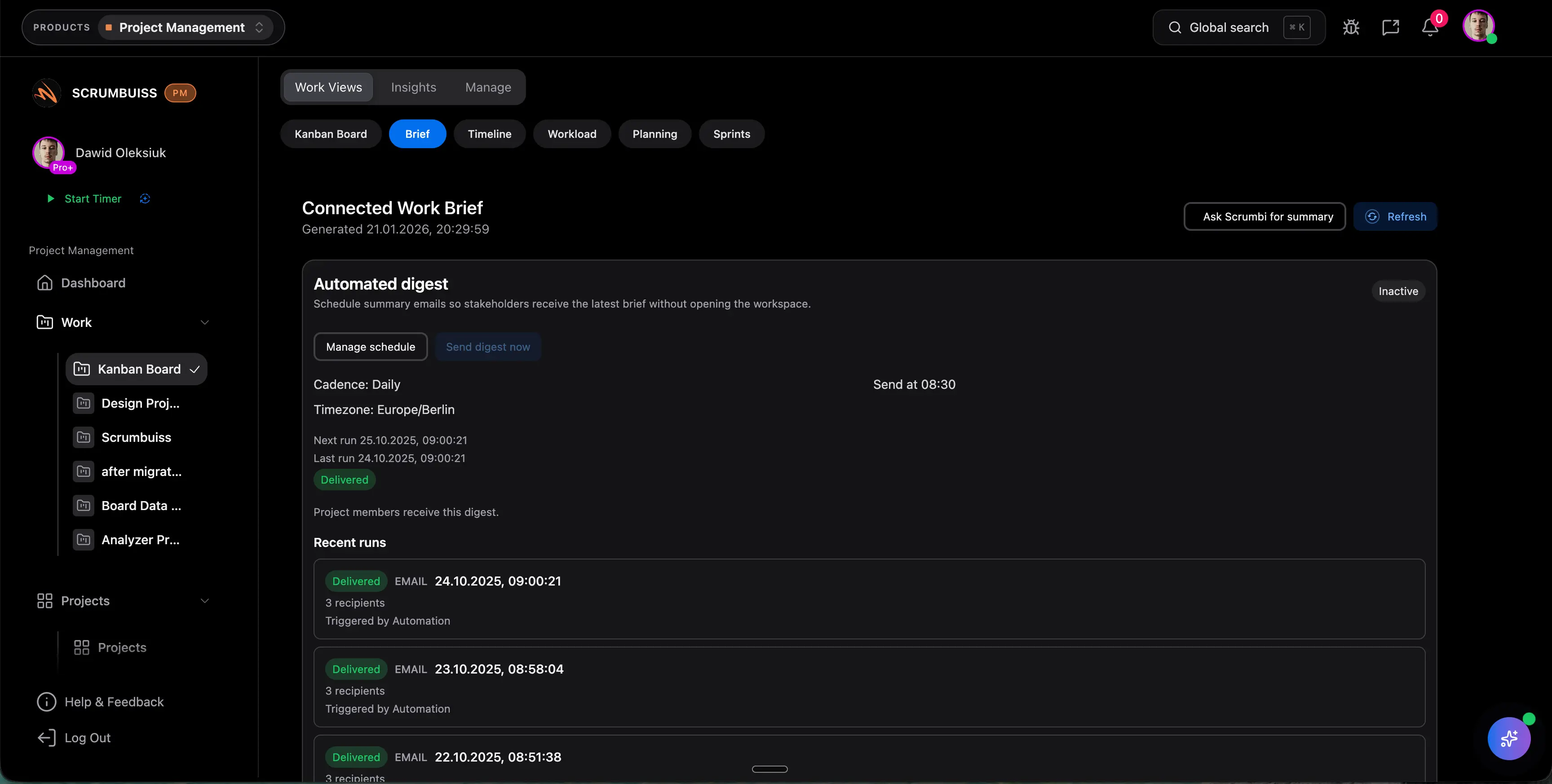
Scrumbuiss helps keep these outputs connected through Project Brief, Files, Dashboard, Gantt Timeline, and Client Portal.
FAQ
Frequently
asked
questions
Related features
Explore the Scrumbuiss features mentioned in this article.
- Project Brief
Create a shareable project brief that stays connected to scope, files, and stakeholder updates.
- Dashboard
Track project progress, blockers, workload, KPIs, status reporting, and analytics context in one live dashboard.
- Gantt Timeline
Plan dependencies, milestones, and schedule changes with a Gantt chart view that stays close to execution.
- Client Portal
Invite clients into a controlled onboarding, file-sharing, and status workflow.
Unlock Success &
Power Up Your Projects
Next to explore
Explore more pages to understand the product suite, common workflows, and evaluation guides.