Project Management Checklist Guide
A project management checklist gives teams a practical way to confirm that the right work, decisions, owners, and evidence are in place across the project lifecycle. It is different from a full project management process because it is used as a control list during delivery, not as the operating model itself.
This page targets the project management checklist keyword cluster found in SEMrush Keyword Magic research. It is intended for teams that want a usable checklist, not another abstract lifecycle explanation.
Key Takeaways
- A project management checklist should cover intake, scope, planning, execution, reporting, risk, handoff, and closeout.
- Each checklist item should produce a decision, owner, artifact, or visible status.
- A checklist is useful only when it prevents missed work without slowing the team down.
- The checklist should adapt by project size, risk, and stakeholder complexity.
Project Management Checklist
| Stage | Checklist item |
|---|---|
| Intake | Request, problem, audience, urgency, and sponsor are clear |
| Scope | Goals, non-goals, deliverables, assumptions, and constraints are documented |
| Planning | Timeline, owners, dependencies, resources, and milestones are visible |
| Risk | Top risks, issues, mitigations, and escalation paths are assigned |
| Execution | Tasks, blockers, files, decisions, and status updates live in one workflow |
| Communication | Stakeholder updates, meeting cadence, and decision owners are clear |
| Quality | Acceptance criteria, review path, and sign-off evidence are defined |
| Handoff | Receiving owner, documentation, access, and support notes are ready |
| Closeout | Acceptance, archive, lessons learned, and follow-up actions are complete |
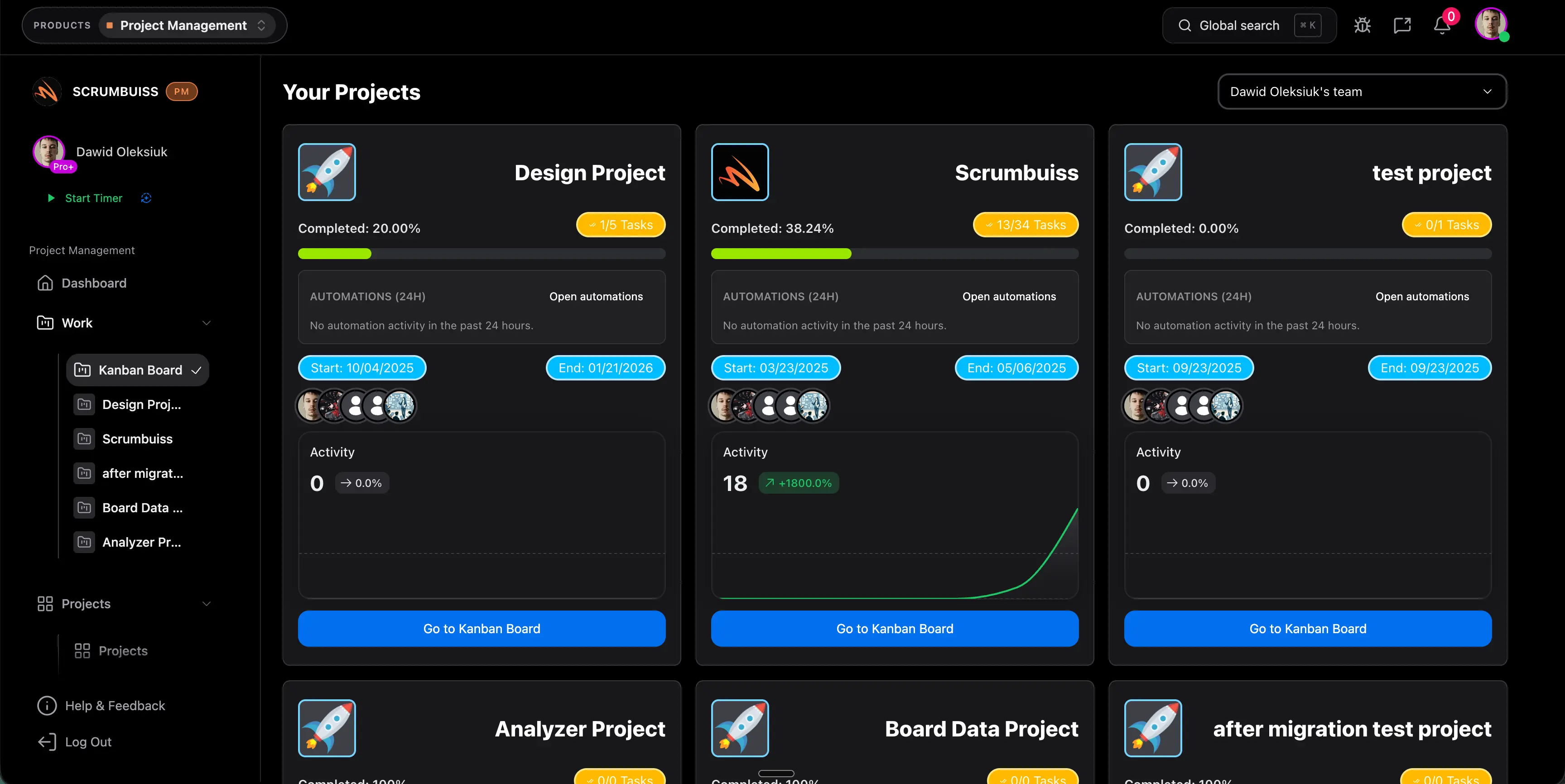
Scrumbuiss supports checklist-driven delivery through Project Delivery, Dashboard, Risk Center, Files, and Gantt Timeline.
How To Use the Checklist
Do not use the same checklist weight for every project. A small internal request may need a short version. A client-facing launch or regulated project needs more evidence.
| Project type | Checklist emphasis |
|---|---|
| Small internal project | Owner, scope, task flow, status, closeout |
| Client project | Scope, communication, approvals, files, handoff |
| Software project | Requirements, dependencies, quality, release readiness |
| Operational project | Risk, support, ownership, transition, monitoring |
Common Mistakes
Treating the checklist as a document archive
The checklist should help people make decisions, not prove that every possible document exists.
Skipping ownership
Every open checklist item should name one owner. Shared accountability usually means no accountability.
Waiting until closeout
Use the checklist during the project. A closeout-only checklist catches problems after they already affected delivery.
FAQ
Frequently
asked
questions
Related features
Explore the Scrumbuiss features mentioned in this article.
- Dashboard
Track project progress, blockers, workload, KPIs, status reporting, and analytics context in one live dashboard.
- Gantt Timeline
Plan dependencies, milestones, and schedule changes with a Gantt chart view that stays close to execution.
Unlock Success &
Power Up Your Projects
Next to explore
Explore more pages to understand the product suite, common workflows, and evaluation guides.