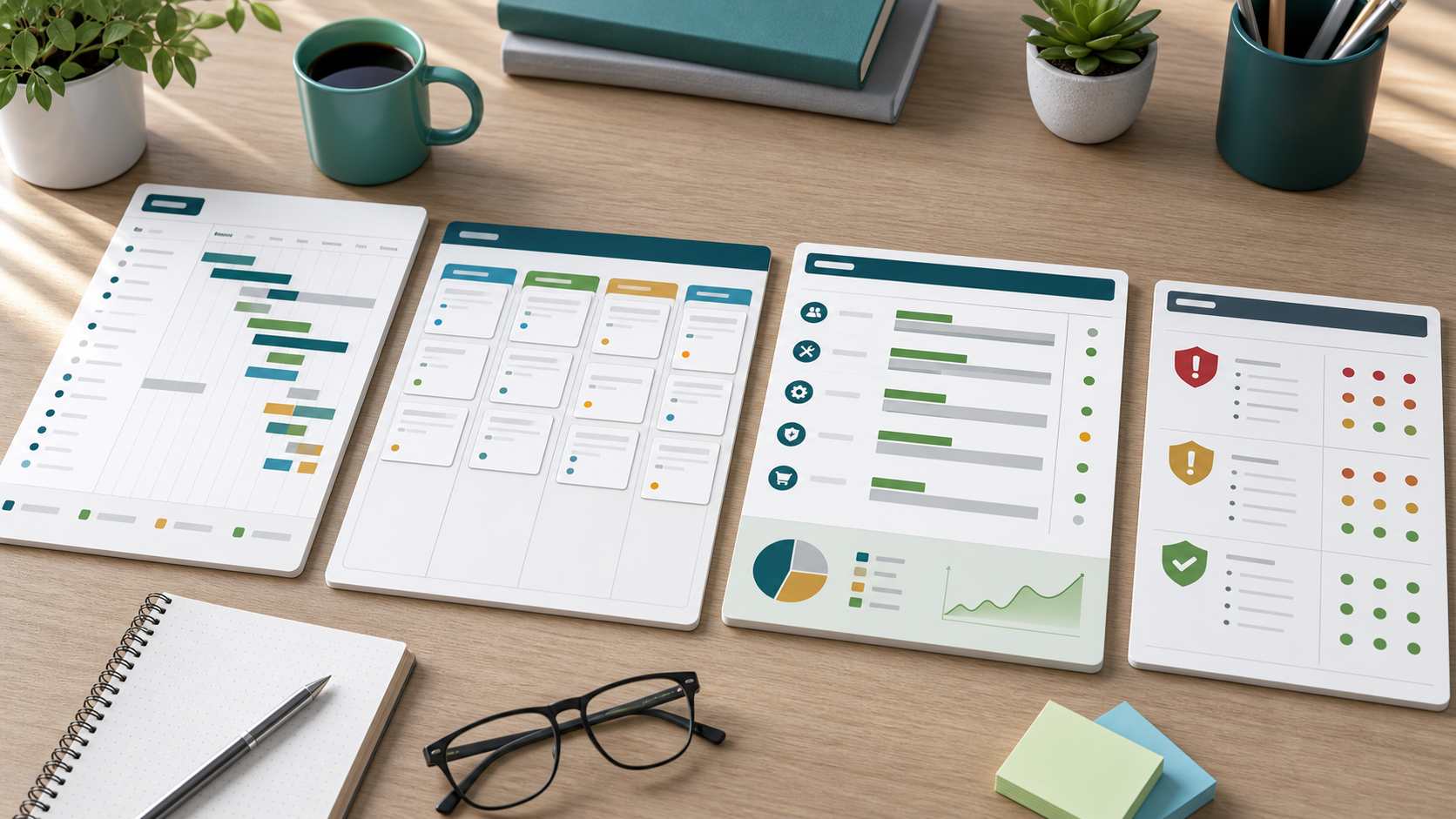
Project Plan Examples Guide
Project plan examples help teams understand what a finished plan should contain before they build their own. The best examples do more than list tasks. They show scope decisions, milestone logic, owners, risk assumptions, reporting cadence, and how the plan will be controlled once work begins.
This guide targets the project plan example keyword cluster found in SEMrush. It is separate from the project plan template guide, which focuses on reusable fields, and from the project plan document guide, which focuses on the approved record.
Key Takeaways
- A good project plan example shows decisions, assumptions, and tradeoffs.
- Examples should be adapted by project type, not copied word for word.
- Software, client, marketing, and operations projects need different emphasis.
- The most useful examples connect scope, schedule, ownership, risk, and reporting.
What Makes a Good Project Plan Example?
A good project plan example answers the questions a real stakeholder would ask:
- What are we delivering?
- What is in scope and out of scope?
- Who owns each workstream?
- Which milestones matter most?
- What could block the plan?
- How will progress be reviewed?
- What decisions need approval?
Scrumbuiss can connect these details through Project Delivery, Dashboard, Activity Feed, and Risk Center.
Practical Project Plan Examples
| Example type | What the plan should emphasize | Common risk |
|---|---|---|
| Software release plan | Scope, sprint sequence, dependencies, QA, release readiness | Hidden technical dependencies |
| Client implementation plan | Onboarding steps, approvals, data, training, stakeholder cadence | Slow client decisions |
| Marketing launch plan | Campaign assets, review dates, channels, launch checklist | Creative review delays |
| Operations improvement plan | Baseline process, change steps, owners, adoption metrics | Low process adoption |
| Internal tooling plan | Requirements, vendor decision, migration, training, support | Unclear ownership after launch |
Example: Software Release Project Plan
| Section | Example content |
|---|---|
| Goal | Release the new reporting workflow to production |
| Scope | Reporting dashboard, export flow, QA, launch communications |
| Out of scope | Billing changes and unrelated dashboard redesign |
| Milestones | Design approval, build complete, QA complete, release approval |
| Owners | Product, engineering, QA, support, marketing |
| Dependencies | API readiness, test environment, data validation |
| Risks | Late QA defects, incomplete release notes, unclear support handoff |
| Reporting | Weekly stakeholder update with risk and milestone status |
How To Adapt an Example
- Keep the structure, but replace generic tasks with your real deliverables.
- Rewrite scope in plain language so exclusions are clear.
- Replace placeholder owners with named accountable people or roles.
- Add dependencies before dates are approved.
- Add risks that match the project type.
- Confirm the reporting cadence with stakeholders.
- Move the final plan into a shared workspace before execution starts.
FAQ
Frequently
asked
questions
Related features
Explore the Scrumbuiss features mentioned in this article.
- Dashboard
Track project progress, blockers, workload, KPIs, status reporting, and analytics context in one live dashboard.
- Activity Feed
Stay up to date with real-time updates on tasks, progress, and team activities.
Unlock Success &
Power Up Your Projects
Next to explore
Explore more pages to understand the product suite, common workflows, and evaluation guides.