Software Go-Live Checklist Guide
A software go-live checklist verifies that a release is ready for users, customers, support teams, and operations. It turns release readiness into a visible decision instead of relying on scattered tickets, chat messages, and last-minute confidence.
This page targets the software go-live checklist terms found in SEMrush Keyword Magic research. It supports the broader software project management guide by focusing specifically on launch readiness.
Key Takeaways
- Software go-live readiness should cover scope, QA, data, deployment, monitoring, support, communication, and rollback.
- Release risks should be visible before the go/no-go decision.
- A checklist item is weak unless it has an owner and evidence.
- Post-launch monitoring should be planned before deployment starts.
Software Go-Live Checklist
| Area | What to verify |
|---|---|
| Scope | Release scope is approved and late changes are controlled |
| QA | Critical test cases pass and accepted defects are documented |
| Data | Migrations, seed data, permissions, and integrations are validated |
| Deployment | Runbook, deployment owner, and release window are confirmed |
| Rollback | Rollback steps, decision owner, and data implications are known |
| Monitoring | Logs, alerts, dashboards, and health checks are ready |
| Support | Support team has known issues, runbooks, and escalation paths |
| Communication | Users, clients, internal teams, and stakeholders know what changes |
| Handoff | Product, engineering, support, and operations agree on ownership |
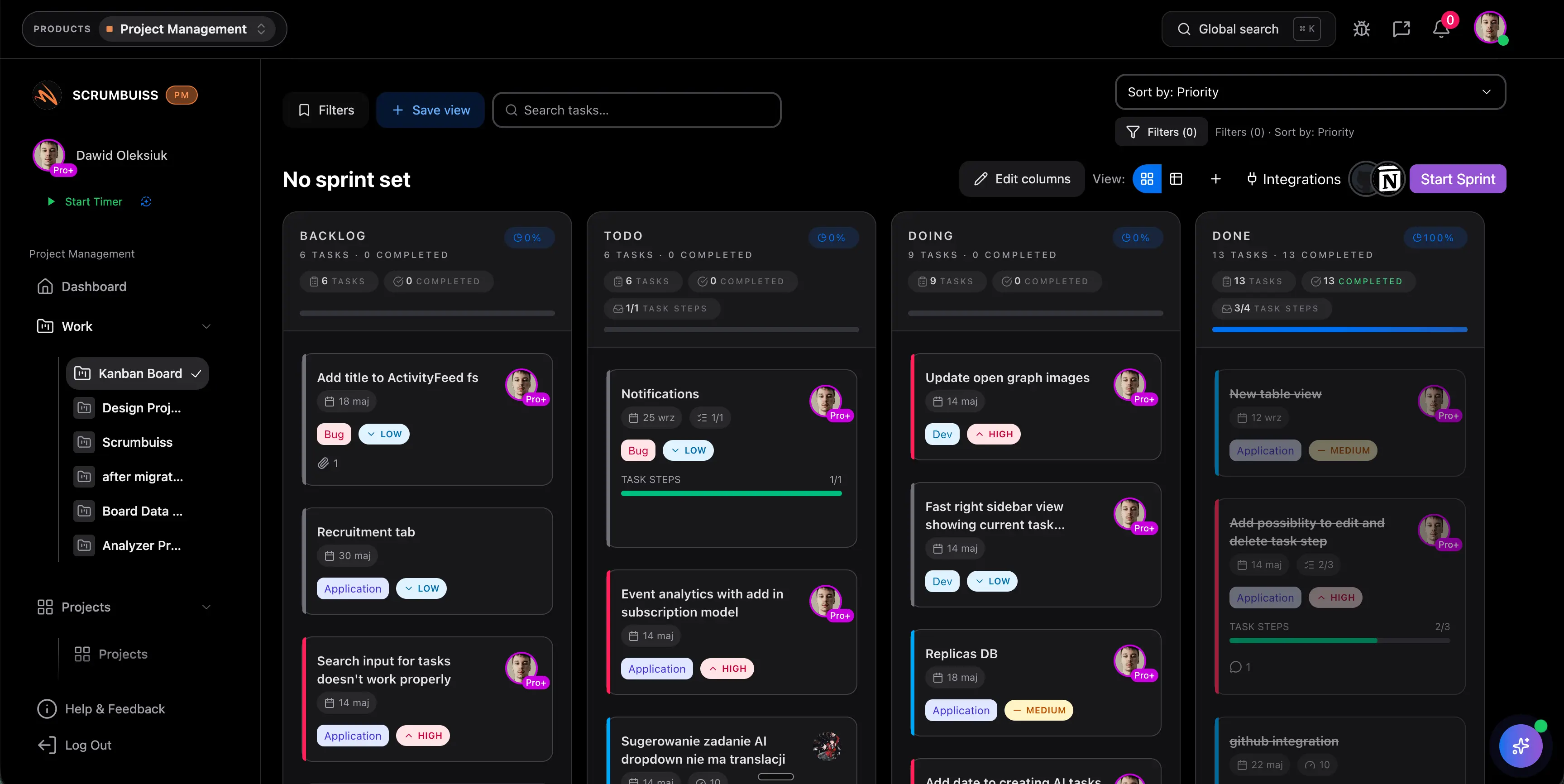
Scrumbuiss helps software teams connect Sprints, Project Delivery, Risk Center, Dashboard, and Files during release planning.
Go/No-Go Review
Use a go/no-go review when release risk is high enough that someone should make an explicit launch decision.
| Signal | Go-live question |
|---|---|
| Severity 1 defects | Are any critical defects unresolved? |
| Migration risk | Has the migration been rehearsed or reviewed? |
| Dependency readiness | Are integrations, vendors, and environments ready? |
| Support readiness | Can support triage launch issues immediately? |
| Rollback confidence | Can the team recover if the release fails? |
If the answer is uncertain, document the risk, assign the owner, and decide whether to defer, reduce scope, or launch with an approved exception.
Common Mistakes
Treating deployment as go-live
Deployment is the technical act. Go-live is the business and user-facing decision that the release can operate safely.
Leaving support out until launch day
Support needs known issues, release notes, escalation paths, and access before users begin reporting issues.
Missing rollback ownership
A rollback plan should name who decides, who executes, and what data or communication consequences follow.
FAQ
Frequently
asked
questions
Related features
Explore the Scrumbuiss features mentioned in this article.
Unlock Success &
Power Up Your Projects
Next to explore
Explore more pages to understand the product suite, common workflows, and evaluation guides.