Incident management guide - reviewed May 19, 2026

Incident Management Software for IT Teams

Use Scrumbuiss to coordinate incidents with clear ownership, impact context, service desk visibility, follow-up actions, and change-related work that stays connected after the immediate response ends.

This page focuses on incident management software for IT operations and delivery-adjacent teams. It does not target field service management, generic site status checking, or enterprise CMDB-heavy service suites.

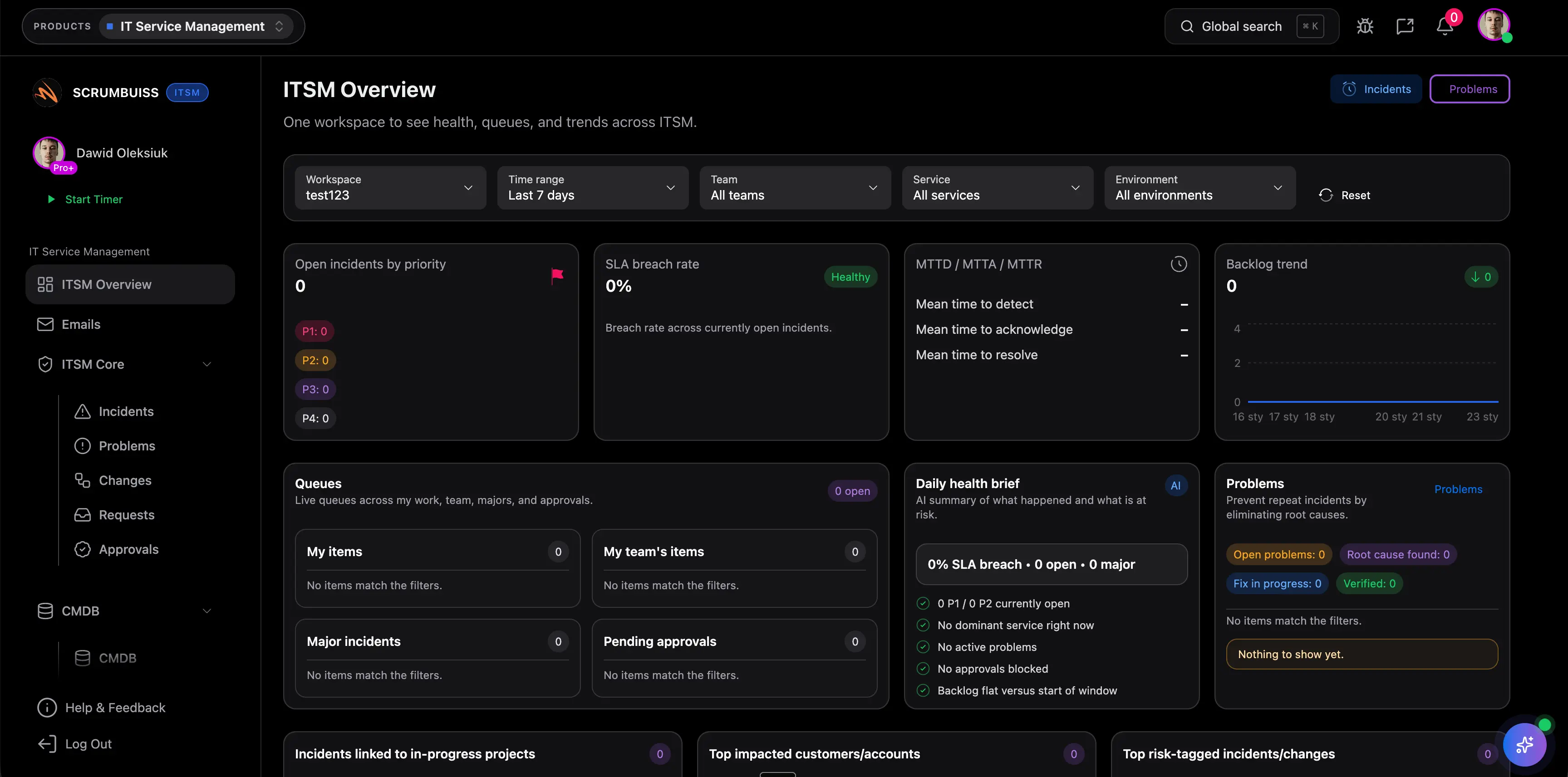
Scrumbuiss incident management software for IT operations

How we reviewed incident management software fit

Reviewed on May 19, 2026. This page evaluates whether incident management should live inside a broader ITSM and delivery workflow, instead of becoming a disconnected ticket queue, chat thread, or post-incident document.

  • Scrumbuiss references come from the ITSM buyer guide, ITSM product page, IT operations use case, Slack integration, risk workflow, root cause analysis template, IT change management template, and incident postmortem template.
  • We used the SEMrush export to separate incident management, service desk, ticketing, and change management intent from unrelated field-service or site-status-checker searches.
  • The page keeps the promise narrow: triage, ownership, follow-up, operational visibility, and learning after incidents.
When Scrumbuiss is a fit

Scrumbuiss fits when incident response needs a readable operating workflow, not only a place to open tickets.

Strong fit for Scrumbuiss

Best when incidents, change follow-up, runbooks, stakeholder communication, and delivery work need to stay close together.

  • The team needs incident ownership, urgency, impact, and next actions visible in one place.
  • Service desk or ticketing work should connect to planned changes, risks, and delivery follow-up.
  • Stakeholders need readable updates without turning chat into the system of record.

Worth piloting carefully

A pilot is useful when tickets already exist somewhere, but incident updates and follow-up still get reconstructed manually.

  • Test one active incident stream and one recurring operational review.
  • Measure whether less status translation happens between support, engineering, and stakeholders.
  • Validate that postmortem actions remain owned after the immediate incident closes.

Probably not the best fit

A larger ITSM suite may fit better when the primary requirement is deep service catalog, CMDB, or enterprise service-governance depth.

  • The organization needs broad enterprise ITSM administration before simpler incident coordination.
  • The service desk is already mature and the missing capability is platform depth, not workflow visibility.
  • The search intent is field service, customer support call-center operations, or public uptime monitoring.

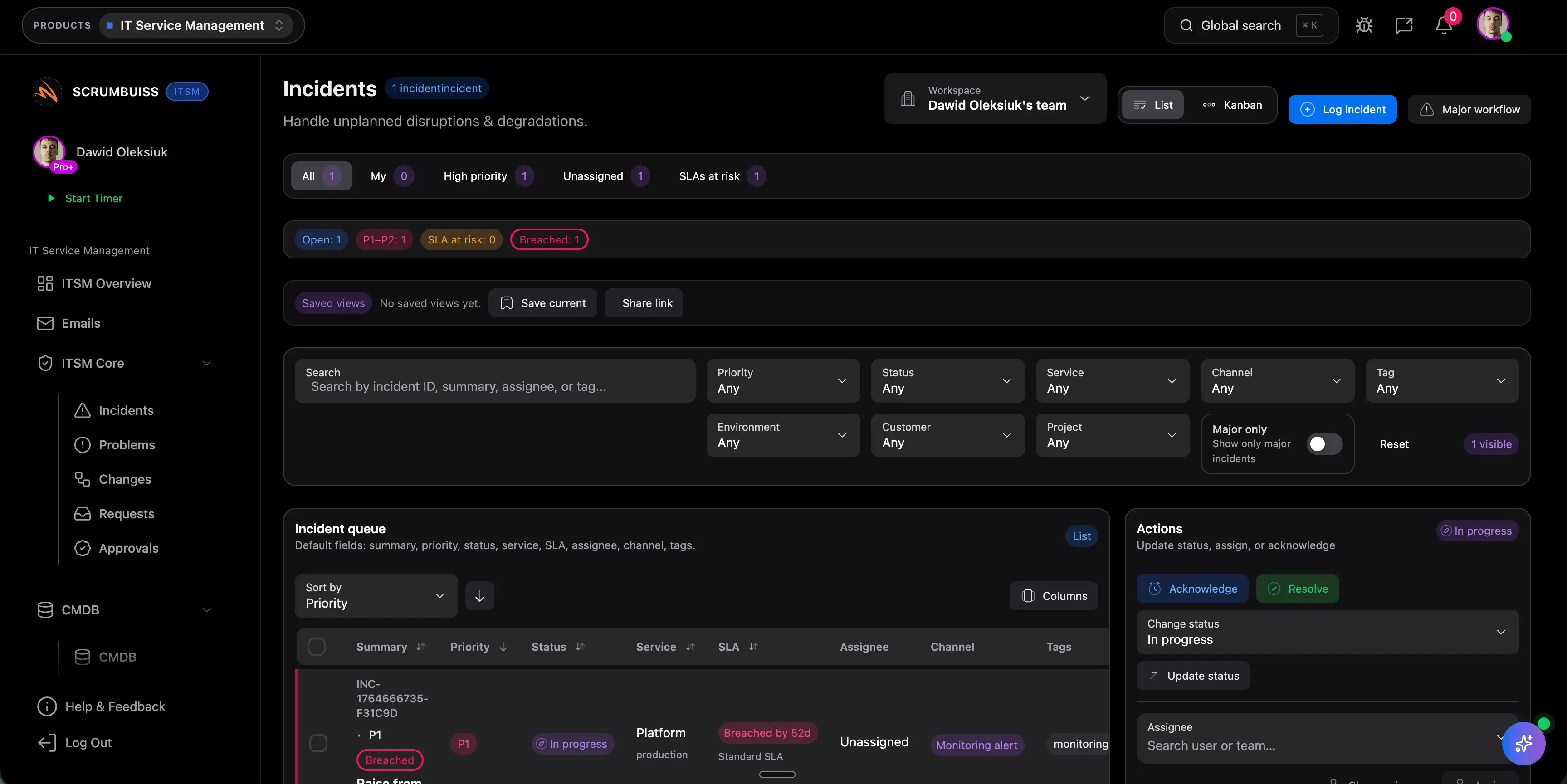
Triage the issue

Capture impact, urgency, ownership, and next action

Incident management software should make the operational picture easier to read while the team is responding, not only after the incident report or ticket is closed.

  • Capture incident reports with clear owner, priority, current status, affected service, and affected work.
  • Keep the response visible enough for technical teams and stakeholders to follow the same story.
  • Use structured fields and activity history so updates do not disappear into chat.
Scrumbuiss incident triage workflow

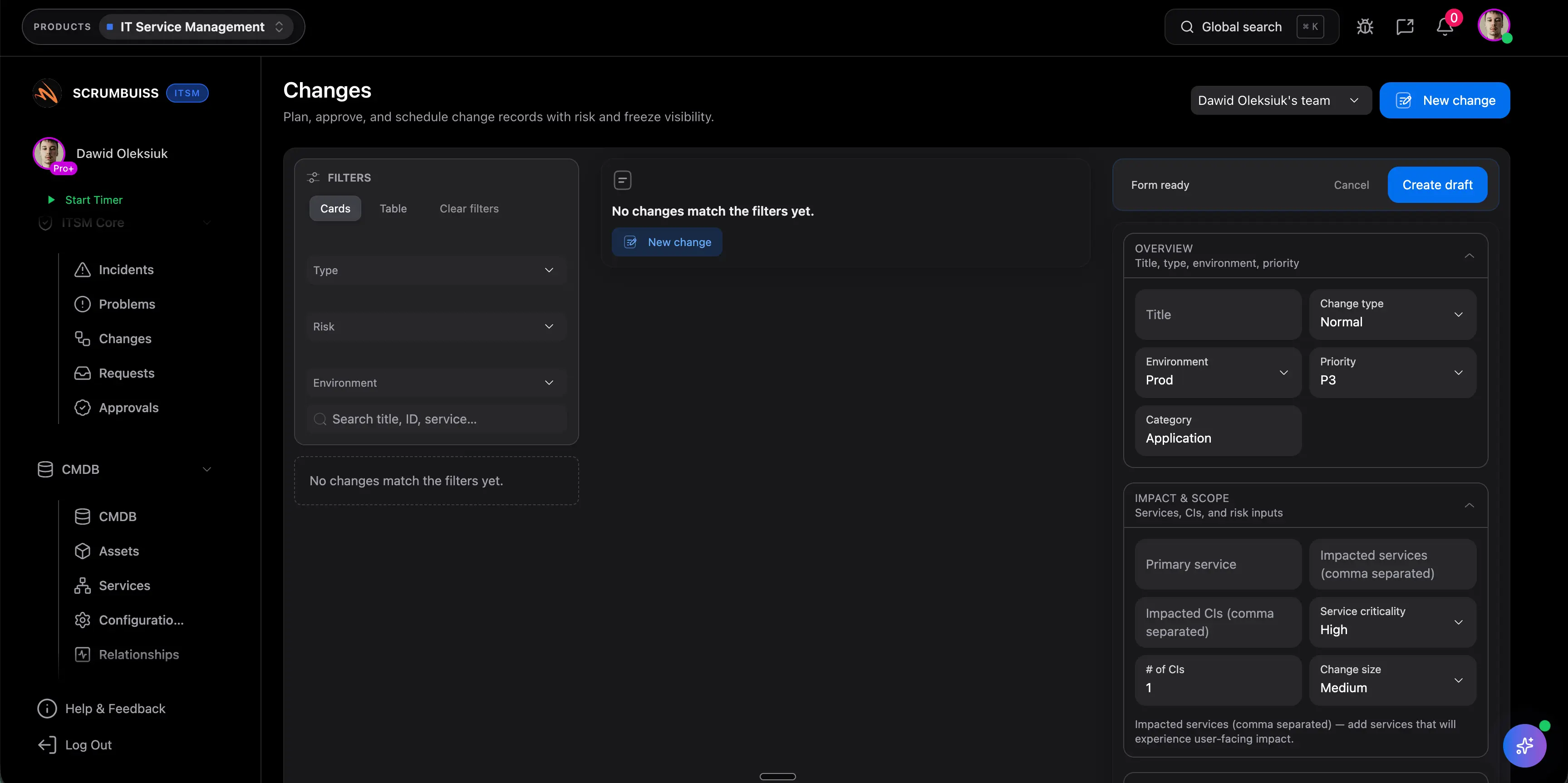
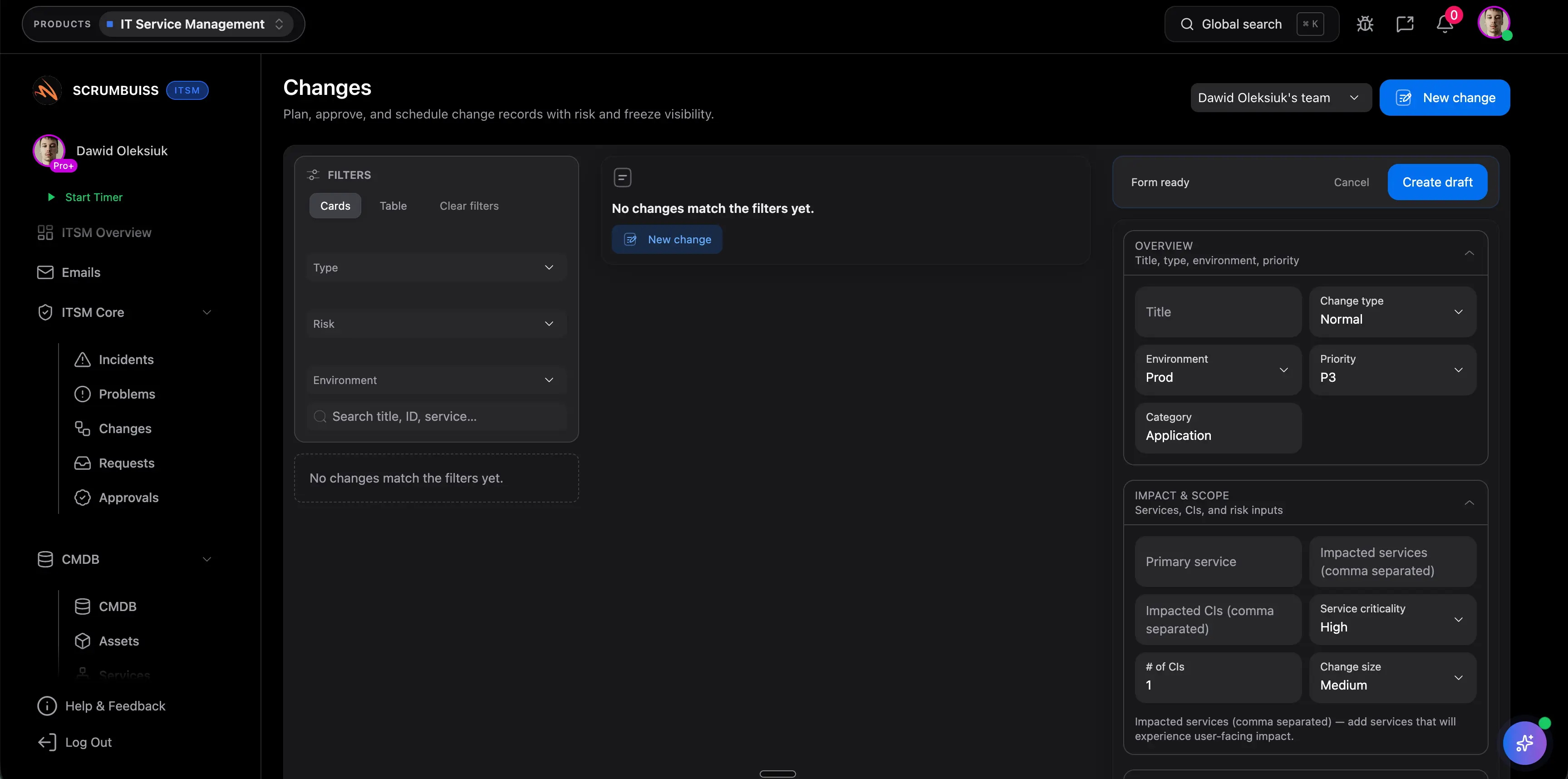
Coordinate changes

Connect incident response to change and service desk follow-up

Many incidents create planned changes, risk decisions, and operational follow-up. Those actions should remain visible after the first response ends.

  • Track follow-up work and change windows alongside incident context.
  • Use Slack-connected updates without making chat the permanent source of truth.
  • Keep risk, RCA findings, and delivery implications visible when an incident affects future plans.
Scrumbuiss change follow-up after incident response

Learn and improve

Turn incident review into owned improvement work

The post-incident process is only useful if findings become visible, assigned work that changes the next plan.

  • Use an incident postmortem template to structure learning without losing ownership.
  • Use a root cause analysis format when the review needs evidence, 5 whys, corrective actions, and verification checks.
  • Attach follow-up actions to real work instead of leaving them in a retrospective document.
  • Review recurring incident themes in operational and delivery planning.
Scrumbuiss incident postmortem follow-up actions

Where to go next

These pages answer adjacent operations questions without making this incident-management guide too broad.

ITSM software

Use this when the evaluation includes incidents, service requests, change management, and operational follow-up.

Scrumbuiss ITSM product

Use this when the category decision is made and you need to evaluate the exact Scrumbuiss workflow.

Risk Center

Use this when incidents create delivery risk, mitigation work, or recurring review needs.

Root cause analysis template

Use this when an incident review needs 5 whys, root cause, evidence, corrective actions, owners, and verification checks.

Incident management software FAQ

These answers keep the page focused on incident response, service desk visibility, and follow-up work.

What is incident management software used for?

Incident management software helps teams capture incident reports, assign ownership, track impact and urgency, coordinate response, communicate status, and carry RCA or post-incident follow-up work into review.

How is incident management different from ITSM?

Incident management is one part of ITSM. ITSM also includes broader service request, change management, problem management, knowledge, and operational workflow questions.

Can Scrumbuiss replace a full enterprise service desk?

Not always. Scrumbuiss is strongest when teams need readable incident coordination, change follow-up, and delivery-adjacent operational work. A larger service-management suite may be better for deep enterprise service-desk governance.