Change Control Process in Project Management
A change control process in project management gives teams a structured way to evaluate changes before they alter scope, schedule, cost, risk, or quality. It does not exist to block every change. It exists to make the tradeoff visible before the project absorbs work it cannot deliver.
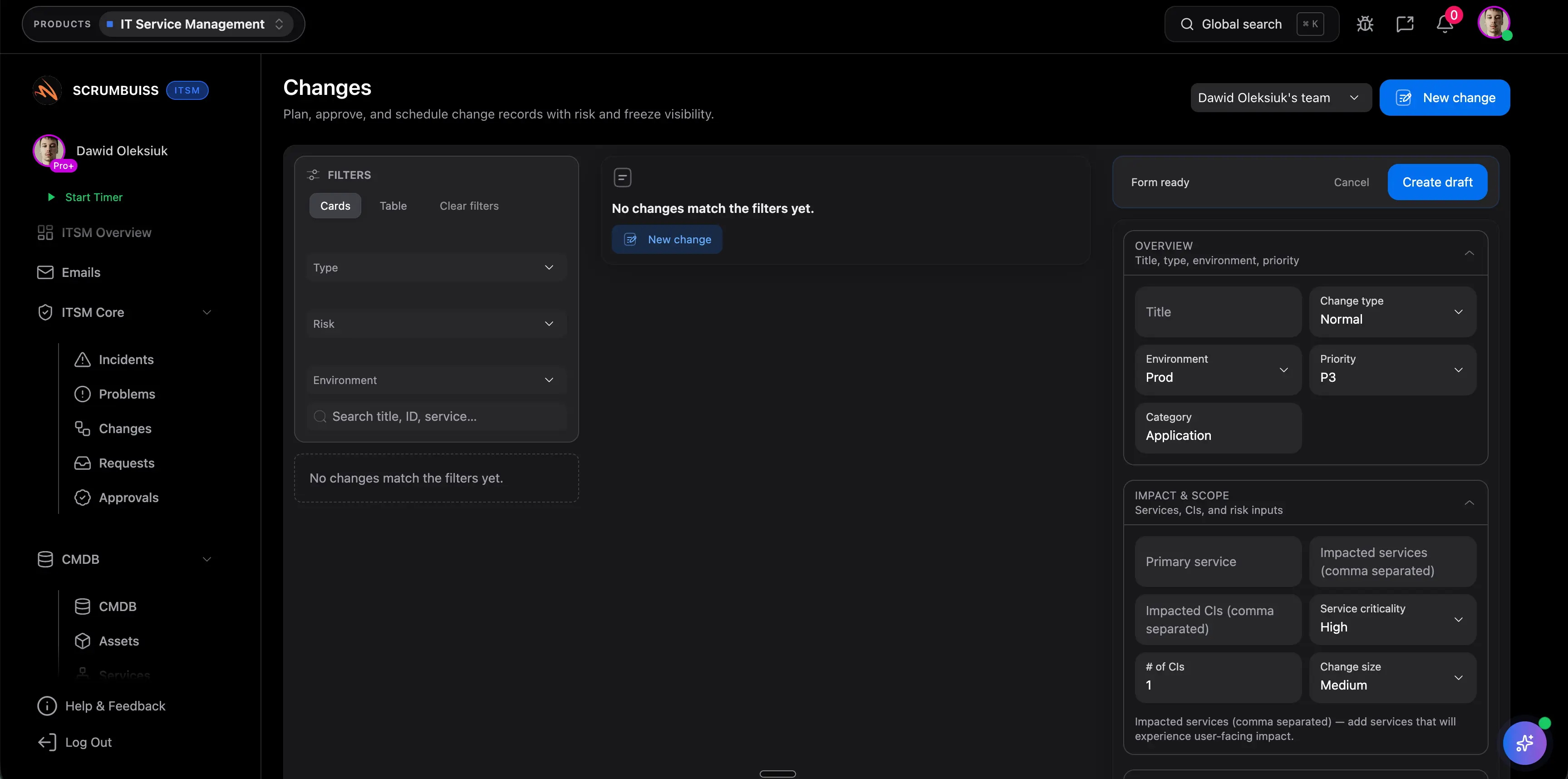
This guide targets the "change control process in project management" keyword found in SEMrush keyword research. It is focused on project-level change decisions, not IT change management templates, so it supports but does not duplicate the Scrumbuiss IT change management template.
Key Takeaways
- Change control protects the project from unreviewed scope, date, and cost changes.
- A good process captures the request, impact, recommendation, approval, and implementation plan.
- Not every change needs a heavy review, but every material change needs a decision record.
- The process works best when it is connected to schedules, risks, budgets, and stakeholder reporting.
What Is Change Control in Project Management?
Change control is the process used to assess and approve changes to an active project. It answers:
- What is being requested?
- Why is the change needed?
- What happens if the change is rejected?
- How will it affect scope, schedule, cost, quality, risk, and capacity?
- Who must approve it?
- How will the approved change be implemented and communicated?
The process is especially important after the team has agreed on scope, timeline, or budget.
Change Control Process Steps
| Step | Purpose | Output |
|---|---|---|
| 1. Submit change request | Capture the proposed change clearly | Request, requester, reason, timing |
| 2. Screen the request | Decide whether it needs formal review | Accepted for review, rejected, or clarified |
| 3. Assess impact | Evaluate scope, schedule, cost, quality, risk, and capacity | Impact summary |
| 4. Recommend action | Give decision makers options | Approve, defer, reject, or re-scope |
| 5. Approve or reject | Make the decision explicit | Decision record and approver |
| 6. Implement | Update plans, tasks, budget, schedule, and owners | Updated project baseline or plan |
| 7. Communicate | Inform affected stakeholders | Change notice and next steps |
Teams using Scrumbuiss can connect change decisions to Project Delivery, Gantt Timeline, Risk Center, Files, and Dashboard.
What To Include in a Change Request
| Field | Why it matters |
|---|---|
| Change summary | Names the requested change |
| Requester | Shows who is asking |
| Business reason | Explains why the change matters |
| Required timing | Identifies urgency |
| Scope impact | Shows added, removed, or altered work |
| Schedule impact | Shows deadline or dependency effects |
| Cost or capacity impact | Shows resource tradeoffs |
| Risk impact | Shows new or reduced risks |
| Recommendation | Gives approvers a clear decision path |
The request should be short enough to use but complete enough to support a real decision.
Change Control vs. Scope Management
Scope management defines what is included in the project. Change control governs what happens when someone wants to alter that scope after commitment.
| Concept | Focus |
|---|---|
| Scope management | Define, validate, and control project work |
| Change control | Evaluate and approve changes to committed work |
| Risk management | Understand uncertainty created by the project or change |
| Schedule management | Update timing when approved changes affect sequence or dates |
These areas should stay connected. A scope change that does not update the schedule or risk view is only partially controlled.
Common Mistakes
Approving changes verbally
Verbal approval can be useful in an urgent moment, but the decision still needs to be recorded with owner, reason, and expected impact.
Treating every change the same
A typo correction should not need the same review as a new deliverable. Use thresholds so the process stays practical.
Forgetting downstream effects
A change can look small while affecting dependencies, capacity, approvals, or reporting. Review the full delivery impact.
Hiding rejected changes
Rejected or deferred changes should still be logged. That history explains why the project stayed focused.
FAQ
Frequently
asked
questions
Related features
Explore the Scrumbuiss features mentioned in this article.
- Gantt Timeline
Plan dependencies, milestones, and schedule changes with a Gantt chart view that stays close to execution.
- Dashboard
Track project progress, blockers, workload, KPIs, status reporting, and analytics context in one live dashboard.
Unlock Success &
Power Up Your Projects
Next to explore
Explore more pages to understand the product suite, common workflows, and evaluation guides.